Used RV purchases are the single largest financial decision in most owners' RV lifecycle. The wrong used coach can drain $15,000 to $40,000 in deferred maintenance over the first 24 months of ownership, often on damage that was invisible to the buyer and not disclosed by the seller. A $495 pre-purchase inspection is the cheapest insurance policy in the entire transaction.
This guide walks through every category an NRVIA-certified A1 RV Repair tech checks during a standard pre-purchase inspection, the deal-breakers that warrant walking away, and the on-site sequence that fits in a half-day visit. The same checklist applies whether the coach is a 28-foot travel trailer or a 42-foot diesel pusher.
What does an RV pre-purchase inspection actually cover?
The standard NRVIA pre-purchase inspection covers 7 system categories with 110 to 140 individual checkpoints depending on coach class. Roof and sealant inspection (15 to 25 points), slide-out diagnostics (10 to 20 points per slide), electrical and battery testing (20 to 25 points), plumbing and water systems (15 to 20 points), propane and appliances (15 to 20 points), chassis and frame (15 to 25 points on motorhomes), and interior and structural systems (10 to 15 points) make up the full protocol.
The inspection produces a written report with photos at every flagged finding, a prioritized work list with cost estimates, and a buy-or-walk recommendation when the findings warrant it. NRVIA inspector certification is the credential that makes the report admissible for warranty work, insurance binding, and buyer negotiation. Inspections without NRVIA certification are often rejected by carriers and warranty providers.
The cost ranges by coach type. Travel trailers and pop-ups run $325 to $495, 30-foot Class A and large Class C coaches run $425 to $695, and Class A diesel pushers with full chassis inspection run $695 to $895. A1 RV Repair runs the inspection mobile at the seller's location in most markets, with the buyer present whenever scheduling allows.
What does the roof and sealant inspection cover?
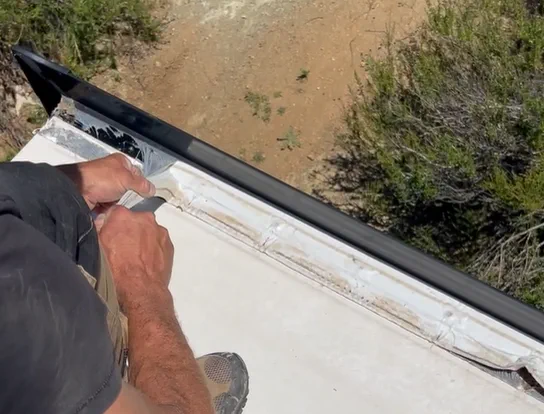
Roof inspection is the single most expensive failure category to miss on a used coach purchase. Substrate rot under an intact membrane can cost $4,500 to $12,000 to repair, and the visible signs are subtle enough that a non-technical buyer almost always misses them. NRVIA pre-purchase roof inspection takes 45 to 60 minutes on a Class A coach and includes 15 to 25 individual checkpoints.
The checkpoints cover material identification (TPO, EPDM, fiberglass, aluminum), substrate sounding for soft spots, sealant condition at every penetration, photo documentation of every fastener and seam, moisture meter readings at known weak points, slide-out roof edge condition, and the roof-to-cap seam at front and rear. RV roof maintenance timeline by type walks through the lifespan expectations that the inspection validates.
The biggest red flag is any soft spot detected during the substrate sounding. Soft spots indicate active or past water intrusion into the underlying plywood, and the damage typically extends 2 to 4 feet beyond the visible area. Substrate replacement on a soft-spot finding runs $2,200 to $4,800 minimum and often climbs higher once the full extent is exposed.
Second red flag is widespread sealant failure across multiple penetrations. Isolated failures are normal on any coach beyond the 4-year reseal mark; systemic failure across 5 or more penetrations indicates the coach has either skipped maintenance or been exposed to extreme weather without remediation. RV roof types compared covers the material-specific failure patterns.
What does the slide-out inspection cover?
Slide-out inspection takes 30 to 45 minutes on a coach with two slides and 60 minutes on a coach with three or more. The protocol cycles every slide from fully retracted to fully extended and back, listening for the seven warning signs that signal mechanism failure: grinding, popping, corner gap, hydraulic fluid leak, sluggish travel, fuse or breaker trips, and water staining. Signs your RV slide-out needs immediate attention covers each signal in detail.
The inspection also checks the gear pack visible condition on Lippert through-frame systems, the timing between top and bottom motors on Schwintek in-wall slides, the cylinder seal condition on Power Gear hydraulic systems, the slide topper integrity, and the floor or wall edge for hidden water damage. Slide topper failure is common on 8+ year coaches and runs $625 to $1,150 to replace.
The most expensive slide-related finding is substrate damage under the slide floor or behind the slide wall. Slide-out water leaks that go undetected for 6 to 24 months saturate the substrate around the slide opening, and repair runs $3,500 to $9,000 depending on extent. The visible sign at inspection is staining at the slide perimeter and a soft floor or wall when pressed.
What does the electrical inspection cover?
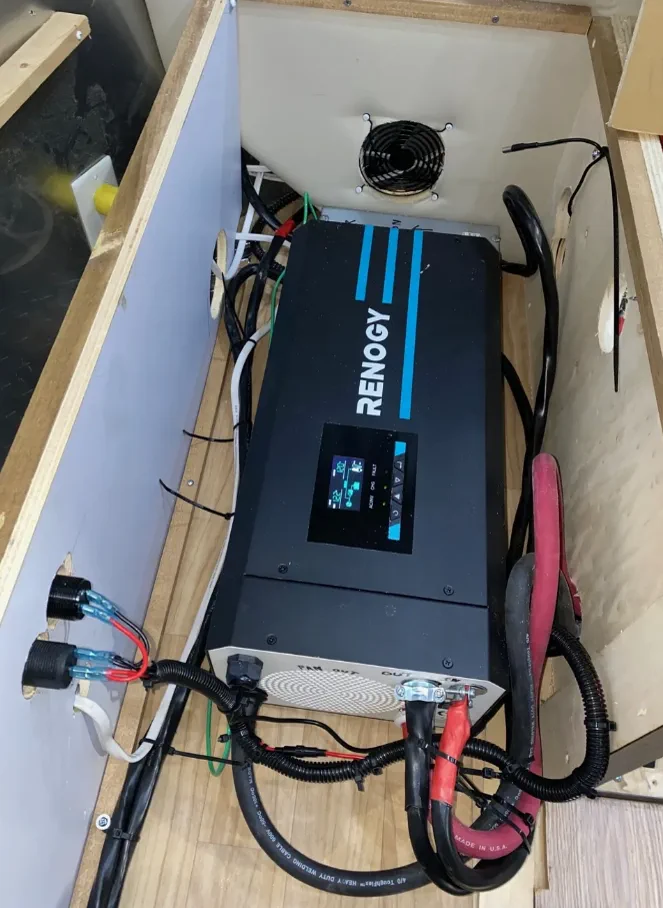
Electrical inspection takes 45 to 60 minutes and verifies shore power on 30A and 50A circuits, inverter output under load, house battery bank voltage and state-of-charge, generator output, alternator charging, transfer switch operation, GFCI function on every outlet, and the converter and isolator wiring. A TRMS multimeter is mandatory for the readings; older needle meters do not capture the harmonic distortion common in modern inverter circuits.
The biggest electrical red flag is reverse polarity at the shore power inlet. Reverse polarity damages every appliance with a switched-neutral design and can shock anyone in contact with the coach exterior. Open neutral is the second biggest red flag because it cascades into every 120V circuit on the coach. Both are diagnosable in the first 10 minutes of electrical inspection.
Lithium battery bank installations are the third major checkpoint. Battle Born, Victron, or Renogy lithium banks installed without RVIA-certified paperwork carry no manufacturer warranty and frequently fail insurance fire coverage. The pre-purchase inspection verifies the installer credentials and warranty registration before the coach changes hands.
Generator condition is checked under load. Onan generators are the dominant brand on Class A and large Class C coaches, and the inspection verifies fuel filter age, oil condition, hour-meter reading, transfer switch operation, and output voltage stability under typical load. A $4,800 generator that fails at hour 1,800 is a different deal than one that fails at hour 4,200. Onan generator service covers the standard maintenance interval.
What does the plumbing and water system inspection cover?
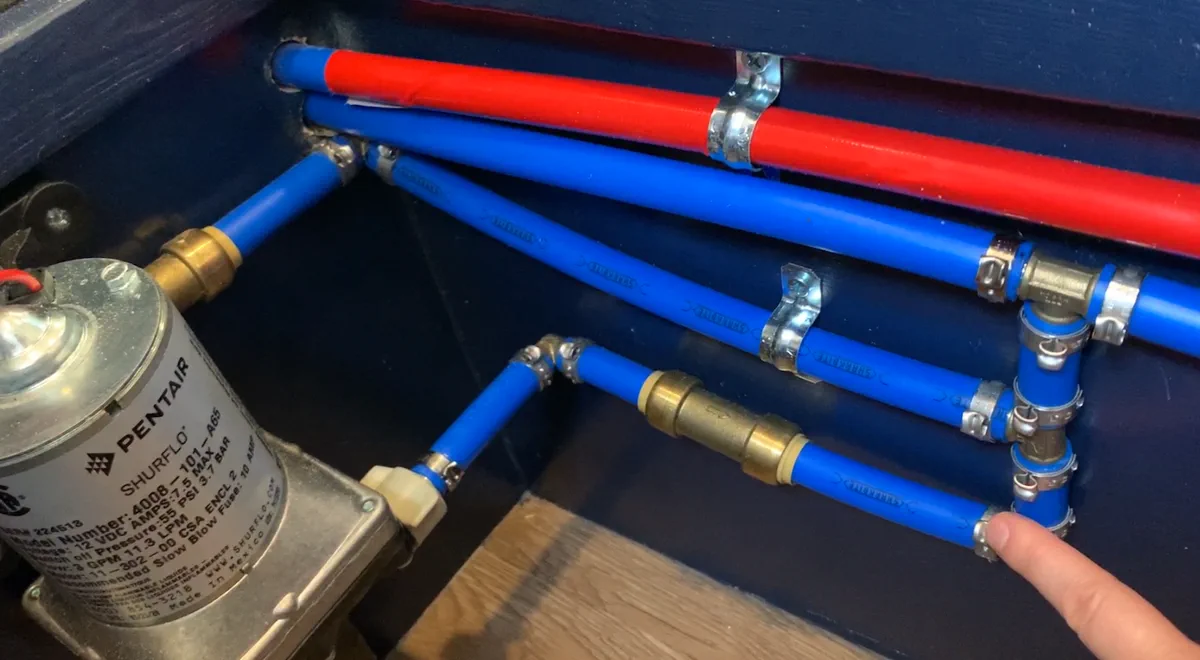
Plumbing inspection takes 30 to 45 minutes and includes a fresh water pressure test, leak-down test, water pump function, water heater operation, tank capacity verification, and inspection of every visible fitting in the under-belly. The pressure test pressurizes the fresh water system to operating PSI and walks the coach looking for visible leaks; the leak-down test then closes valves and measures pressure decay over 10 minutes.
Black and gray tank inspection is the smelly part of the job and the most often skipped by sellers. Tank inspection includes capacity verification, sensor function, valve operation, dump connection condition, and a smell check that detects active cracks or seal failure. A cracked black tank is a $1,500 to $3,500 repair and can be hidden under the coach until the next dump cycle reveals it.
Water heater inspection covers anode rod condition (on suburban units), gas valve function (on propane units), heating element resistance (on electric units), and tank for visible scale or sediment. Water heater replacement runs $485 to $895 if the unit fails post-purchase; the inspection catches the signs that predict that failure within 12 to 18 months.
What does the propane and appliance inspection cover?
Propane inspection is the safety-critical category and is the single most regulated portion of the protocol. The 10-minute leak-down test pressurizes the propane system to operating PSI and measures pressure decay over time. A failing leak-down test is an immediate deal-breaker because the cost to find and repair a propane leak ranges from $345 to $1,800 depending on location.
The inspection then tests every propane appliance under load. Stove and oven burners light cleanly and produce blue flame; refrigerator operates correctly in propane mode and absorption mode; furnace cycles through ignition, burn, and shutdown; water heater fires reliably on propane. Dometic refrigerator cooling-unit condition is the highest-cost single appliance finding, with replacement running $1,800 to $3,500.
Regulator pressure verification closes the propane inspection. The OEM spec is typically 11 inches of water column for the first-stage regulator and 11 to 14 inches for the second stage. An out-of-spec regulator causes appliance soot buildup and is the leading cause of premature absorption-fridge cooling unit failure. LP gas service covers regulator adjustment and replacement.
| Inspection category | Common finding | Repair cost (2026) | Deal-breaker? |
|---|---|---|---|
| Roof + sealant | Substrate soft spot | $2,200 - $4,800 | Yes if extensive |
| Slide-out mechanism | Schwintek motor end-of-life | $485 - $895 | No (negotiable) |
| Slide-out water damage | Substrate around slide opening | $3,500 - $9,000 | Often yes |
| Electrical (lithium) | No installer documentation | $1,200 - $2,800 | Negotiable |
| Plumbing (tank crack) | Black tank seam failure | $1,500 - $3,500 | Negotiable |
| Propane (leak-down) | Failed leak-down test | $345 - $1,800 | Yes until repaired |
| Appliance (fridge) | Cooling unit failure | $1,800 - $3,500 | No (negotiable) |
| Chassis / frame | Surface rust or pitting | $285 - $1,500 | Depends on extent |
| Frame damage | Bent or cracked frame | $5,000 - $15,000+ | Yes |
| Title / history | Salvage or rebuilt | Affects 30-50% of value | Often yes |
What does the chassis and frame inspection cover?
Chassis inspection takes 30 to 45 minutes on a Class A or large Class C coach and includes frame condition, fuel and brake lines, suspension components, tire date codes and DOT compliance, leveling jack condition, and exhaust system. The inspection is the single most safety-critical category on a motorhome and the easiest to skip because access requires getting under the coach.
Tire date codes are the simplest checkpoint and the most often missed. RV tires age out at 7 years regardless of tread depth, and an out-of-date tire is a blowout waiting to happen. The DOT four-digit date code on the sidewall tells the manufacture week and year; any tire over 5 years requires immediate replacement planning. Replacement costs $1,500 to $4,500 per coach.
Leveling jack inspection covers hydraulic line condition, jack cylinder seal, and control panel function. RV leveling service handles the repair side; the pre-purchase inspection catches the signs of impending failure including weeping seals, slow extension, and out-of-square contact pads. Leveling jack rebuilds run $385 to $725.
What does the interior inspection cover?
Interior inspection takes 30 to 45 minutes and includes flooring condition, cabinet and drawer function, window seal integrity, door hardware, vent operation, blinds and curtains, mattress and upholstery condition, and any structural concerns inside the coach. The interior inspection is largely cosmetic but catches the secondary water damage from exterior leaks that the roof inspection might have missed.
The biggest interior red flag is staining or discoloration at ceiling corners, around windows, or at the floor edges. Each location indicates a specific exterior leak source that the exterior inspection should have caught. Staining in the slide-out interior usually traces to slide topper or seal failure; ceiling staining traces to roof penetrations; floor edge staining traces to under-belly leaks or window seals.
Appliance and accessory verification rounds out the interior protocol. Microwave function, TV operation, ceiling fan cycle, USB charging ports, and basic interior lighting all get tested. None of these are deal-breakers on their own, but they accumulate. A coach with 6 to 8 small interior issues usually has 20 to 25 issues in total once a tech goes through systematically.
How does A1 RV Repair schedule and run the inspection?
A1 RV Repair schedules pre-purchase inspections within 2 to 5 days of booking in most markets. The inspection is mobile at the seller's location whenever access allows, with the buyer present whenever scheduling permits. The 3 to 4 hour visit produces field notes and photos; the written report typically arrives by email within 24 hours.
The report includes an executive summary, the full 110+ checkpoint findings with photo documentation, a prioritized work list with cost estimates, and a buy-or-walk recommendation when the findings warrant it. The recommendation is advisory; the buyer makes the final call after considering price negotiation room and emotional attachment to the specific coach.
Coverage spans Florida, Texas, Idaho, Oklahoma, and Washington. Florida coastal coaches in Stuart, Fort Pierce, and Vero Beach see additional UV and salt-related checkpoints. Idaho coaches in Boise or Meridian get freeze-cycle checkpoints. Texas coaches in Austin or Dallas get hail-impact checkpoints. Washington coaches in Seattle or Tacoma get moss and moisture checkpoints.
How do I use the inspection report at the negotiation?
The pre-purchase inspection report is a negotiation tool, not just a buy-or-walk decision. Buyers use the prioritized work list and cost estimates to renegotiate price downward, request specific repairs as a condition of sale, or walk away cleanly if the findings exceed the coach's value. The right approach depends on the size of the findings and the seller's flexibility.
For findings under $1,500 total, most buyers either ignore them or build them into a small price reduction. For findings between $1,500 and $5,000, buyers typically negotiate either a price reduction or seller-paid repairs as a closing condition. For findings over $5,000, buyers usually either walk away or negotiate a substantial price reduction that covers the work plus risk premium.
The deal-breaker findings (substrate rot, frame damage, salvage title, propane leak, flood evidence) almost always warrant walking away regardless of price. The savings from buying a damaged coach cheaply are typically more than offset by the cost of remediation plus the long-tail risk of hidden secondary damage. Pre-purchase inspection service covers the full protocol; used rig advisory covers the broader buyer-side consultation.
For related coverage, how to find the best RV repair shop covers the post-purchase service relationship that affects long-term ownership cost. DIY vs hire a mobile RV technician covers the maintenance decisions that follow the inspection. Mobile RV repair cost in 2026 covers the labor and parts pricing that informs every cost estimate in the report.