RV repair quality varies more than almost any other consumer service category. The same job can run $295 at one shop, $695 at another, and $1,450 at a third, with the gap explained almost entirely by certification, parts policy, and how the shop handles documentation. Owners who learn the 10 vetting questions stop overpaying and stop getting denied on warranty and insurance claims.
This guide names the 10 questions A1 RV Repair would want asked on every intake call, including our own. The questions are the same ones that RVIA and RVDA publish in their consumer-protection materials, distilled to the version that fits one phone call.
Question 1: What is your RVIA or NRVIA certification number?
The first question is also the most important. RVIA technical certification is the credential that coach warranties and insurance carriers actually accept. NRVIA inspector certification is the specialized credential for pre-purchase, post-loss, and condition-of-loss work. Ask for the certification number and verify it on the issuing organization's directory; the lookup is free and takes 60 seconds.
A handyman without an active RVIA or NRVIA number is fine for cosmetic work but should never touch propane, electrical, or chassis systems on the coach. The insurance and warranty exclusions for uncertified work are written into almost every coach policy, and the exclusion fires at claim time, not at repair time. Owners who skip this question on the cheap handyman quote often pay 3 to 5 times more later when the claim denies.
The reason this works as a vetting question is that fake certification numbers fail the lookup. A real cert returns a name, active-status indicator, and certification level. Any shop that hesitates, gives a vague "yes we are certified" without a number, or claims certification has been "filed but is pending" should be excluded. A1 RV Repair posts certification numbers on the truck and the website intake.
Question 2: What is your hourly labor rate?
Certified mobile RV repair labor runs $125 to $185 per hour in 2026, with most established techs landing at $135 to $165. A rate below $115 almost always means uncertified handyman labor; a rate above $185 typically means premium-coach specialists, emergency after-hours work, or expensive-metro pricing. Either extreme should come with an explanation.
The rate is the foundation of every estimate. Once you have the hourly rate, the trip fee, and a reasonable time estimate for the job, you can sanity-check any quote from any shop nationwide. Owners who skip this question lose the ability to audit the invoice, which is why "surprise invoice" complaints are the single most common bad-shop signal in Google reviews.
A1 RV Repair quotes the labor rate on the booking call and confirms it on the invoice with no variance. Mobile RV repair cost in 2026 walks through the full pricing structure including the variance bands for different regions and certifications.
Question 3: What is the trip fee and the diagnostic fee?
Trip fees in 2026 run $0 to $95 inside a 25-mile radius, with $1.25 to $2.50 per mile beyond. Diagnostics run $95 to $185 and take 30 to 60 minutes on site. The two fees structure together: some shops bundle the trip into the diagnostic, some itemize both. The bundling matters because a $0 trip with a 2-hour minimum is more expensive than a $75 trip with a 1-hour minimum on a short job.
Confirm whether the diagnostic fee applies toward the repair if you proceed. Most reputable shops apply it; a shop that charges full diagnostic plus full repair separately is usually a shop to avoid because the policy doubles the cost on every call. Inspection services at A1 RV Repair apply toward the repair when work proceeds at the same dispatch.
One specific red flag is the "free diagnostic" offer. A real diagnostic takes 30 to 60 minutes of paid labor, and nobody works that hour for free. Free diagnostics almost always pair with a marked-up repair or an upsell to parts you did not need. Pay the $95 to $185 for an honest diagnostic and avoid the free-diagnostic trap.
Question 4: Do you offer mobile service or only shop drop-off?
Mobile RV repair service is the right pathway for most work in 2026. Mobile rates run 10 to 25 percent above shop rates but eliminate the tow, the shop storage, and the two-week wait. End-to-end, mobile wins on cost for any job under 8 hours of working time. Shop service makes sense for collision work, body repairs, paint booth work, and any job requiring a hydraulic lift.
Confirm the shop can dispatch a mobile tech for your specific job category. Some shops handle electrical and plumbing mobile but require shop drop-off for slide work or roof reseal. The dispatch policy should match the job. A1 RV Repair runs mobile dispatch for almost every category except collision and paint booth work.
Mobile coverage area also matters. A shop with a 100-mile mobile radius can reach you wherever you store the coach. A shop with a 25-mile radius cannot reach a coach stored in a remote campground or rural storage lot. A1 RV Repair coverage spans Florida, Texas, Idaho, Oklahoma, and Washington with a same-day or 2 to 4 hour response window in covered metros.
Same-day availability is the other factor. A shop that can dispatch today on routine service has the staffing and the parts stock to actually deliver. A shop that defaults to "we can get you in next week" is usually overbooked or under-stocked. Emergency dispatch is the highest-leverage test of mobile capability.
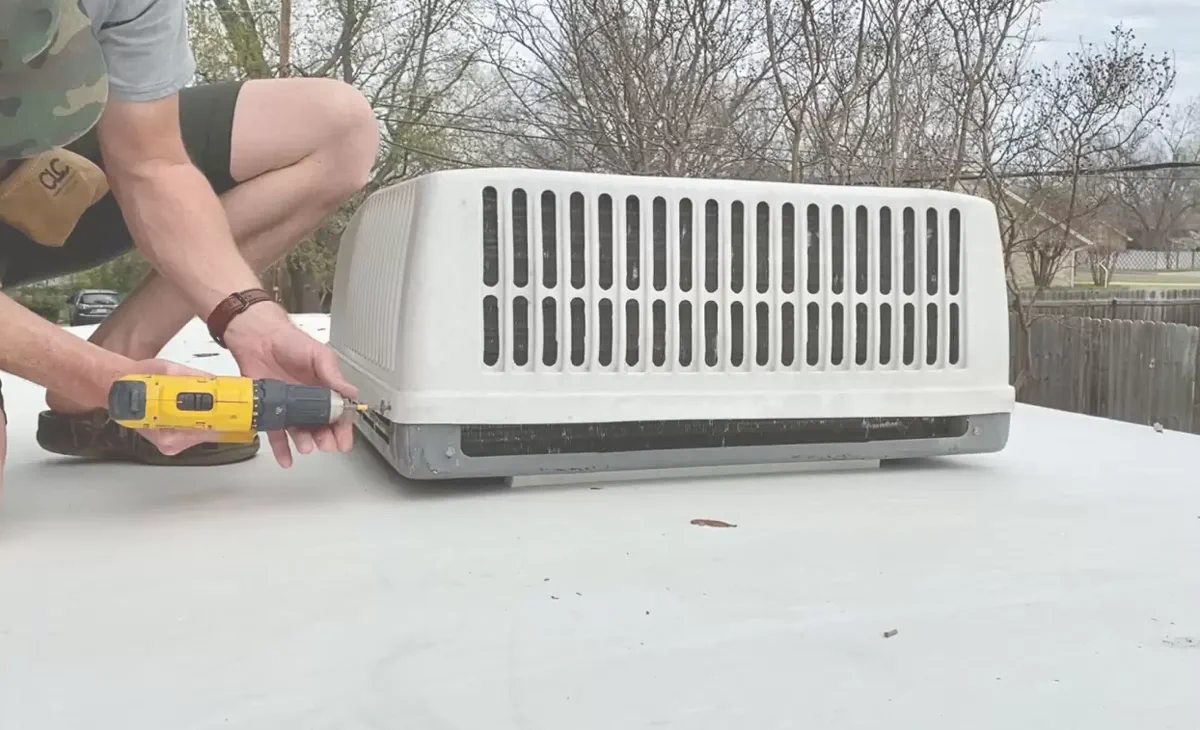
Question 5: What is your parts policy and markup?
Mobile RV repair shops typically mark parts up 20 to 40 percent over wholesale, which lands near retail at Camping World or e-trailer. The markup covers freight, sourcing time, return handling for defective parts, and the warranty pass-through. A shop that refuses to disclose the markup is hiding something; a shop that markets "no markup on parts" is usually padding the labor rate to make up the difference.
Owner-supplied parts are accepted at many shops but usually void the labor warranty on that specific component. If you bring your own Shurflo water pump and it fails in three months, the shop will swap labor at the standard rate, not under warranty. This trade-off is reasonable; just confirm the policy on the front end.
OEM versus aftermarket policy is the third element of the parts question. Warranty work requires OEM parts from the original manufacturer; out-of-warranty work can use aftermarket equivalents that often run 30 to 50 percent cheaper. A1 RV Repair sources OEM from Lippert, Dometic, Dicor, and other coach OEMs for warranty work and offers aftermarket alternatives where the price-quality gap pencils.
Question 6: What is the labor warranty on completed work?
Standard certified labor warranty runs 30 to 90 days at most reputable shops. A1 RV Repair offers 30-day labor warranty on routine service and 90 days on major component replacement like slide motors, AC units, and water heaters. Any shop without a written labor warranty is a red flag because the shop cannot stand behind its own work.
The warranty is also the test of whether the shop has confidence in the repair quality. A shop that walks away with a "good luck" instead of a written warranty is signaling that callbacks are common and they do not want to honor them. The written warranty turns the callback into a non-issue because the shop returns to fix at no charge.
The exclusion language matters too. Most labor warranties exclude owner-supplied parts (already covered above), failures caused by collision or storm after the repair, and any work the owner alters or modifies. Those exclusions are standard. A shop with broader exclusions (climate, normal use, anything not specifically tested at the call) is usually trying to escape the warranty.
Question 7: How do you handle extended warranty and insurance claims?
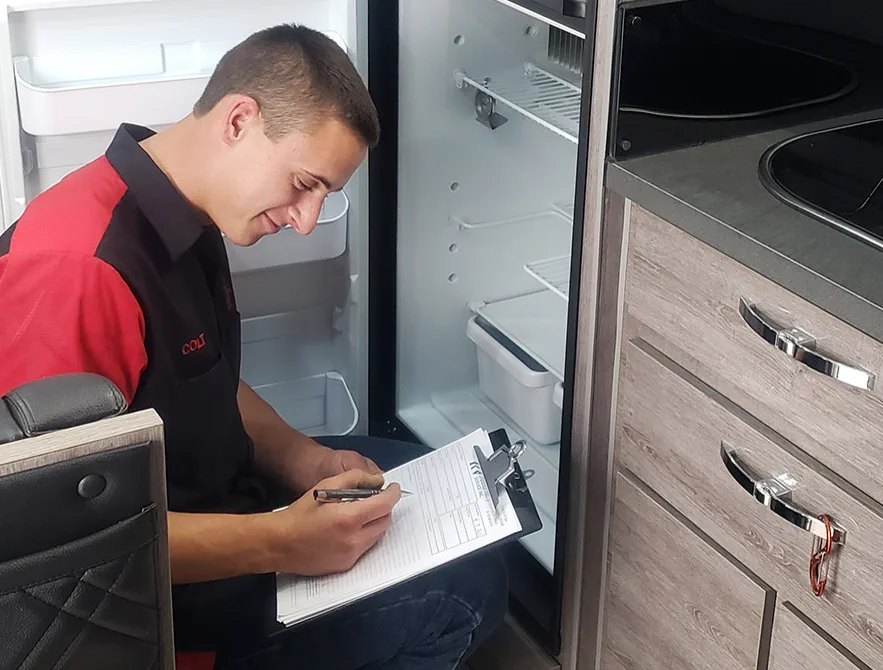
Most RV extended warranties and coach insurance policies reimburse mobile labor only when the technician is RVIA or NRVIA certified and the work is documented with timestamped photos and a written cause-of-loss statement. A shop that does not produce that documentation cannot support claim work, and the owner ends up paying out of pocket on what should have been a covered claim.
Ask specifically about the documentation package. The standard package includes: timestamped before-and-after photos of the failed component, OEM part numbers with serial numbers where applicable, line-item labor with time stamps, a written cause-of-loss statement on shop letterhead, and any weather or event documentation that supports the claim. RV storm damage insurance claims walks through the full documentation requirement.
A1 RV Repair provides RVIA-compliant documentation on every storm-response and warranty invoice. The documentation package adds about 15 minutes to the tech's call time and routinely saves owners thousands at claim time. The carrier-side claim approval rate runs 92 to 96 percent on properly documented A1 RV Repair invoices versus an industry average of 65 to 75 percent.
The warranty handling also extends to extended-warranty companies like Good Sam Extended Service Plan, Wholesale Warranties, and similar. Each carrier has slightly different documentation requirements, and a shop that knows the requirements for each clears claims faster than a shop submitting generic paperwork.
Question 8: What is your typical turnaround time?
Same-day or next-day response is the standard for certified mobile service in 2026. Anything beyond 5 to 7 days for routine service indicates either a backed-up shop, a lack of staffing, or a parts-ordering process that does not anticipate common failures. Slow turnaround does not always mean a bad shop, but it almost always means a shop you should price-shop against.
Distinguish between turnaround for diagnosis and turnaround for completion. A 2-day wait for the diagnostic visit, followed by parts ordering and a 1-week wait for the repair, is a 9-day total turnaround. A same-day mobile visit with parts on the truck completes in one trip. Both shops are legitimate, but the cost and inconvenience differ significantly.
Emergency turnaround is the high-pressure test. Coastal coaches in Stuart, Fort Pierce, or Vero Beach face hurricane-season demand spikes; Texas coaches in Austin or Dallas see hail-season demand. A shop that runs same-day storm response is structurally different from a shop that does not.
Question 9: What parts do you stock on the service truck?
The mobile shop that finishes most repairs on the first dispatch stocks common parts on the service truck. Baseline stock includes Schwintek slide motors, Lippert gear packs, Dometic AC capacitors, Pentair Shurflo water pumps, Dicor lap sealant, common fuses and relays, and standard hardware. A shop without truck-stocked parts pushes a $295 single-visit fix into a $500 multi-visit dispatch.
First-visit completion rate is the metric to ask about. A1 RV Repair tracks first-visit completion at 78 to 84 percent of all calls. Industry average for mobile RV service runs 55 to 65 percent. The difference is parts stock plus the diagnostic-on-arrival process that confirms the issue before parts get pulled from the truck.
Question 10: Will you put the no-surprise-fee policy in writing?
The final question is the synthesis test. The labor rate, trip fee, diagnostic fee, parts policy, and turnaround commitment should all match the invoice exactly. A shop that confirms each line in writing before dispatch is committing to its own quote. A shop that hedges on any one of the lines is reserving the right to surprise you later.
The written policy can be a text confirmation, an email recap, or a written estimate before the call. The format matters less than the commitment. A1 RV Repair sends a written estimate by text or email before every dispatch, confirming labor rate, trip fee, diagnostic cost, parts policy, and expected time on site.
The no-surprise-fee policy is also testable retrospectively. After the work is done, the invoice should match the written estimate within 10 percent on parts and within the quoted hourly rate on labor. Any larger variance should come with an explanation tied to one of the five factors that legitimately move pricing: hidden water damage, seized fasteners, parts availability, secondary system damage, or after-hours timing.
| Question | Good answer | Red flag answer |
|---|---|---|
| RVIA / NRVIA cert number? | "Yes, here is the number" (verifiable) | "We're certified" without a number |
| Hourly labor rate? | $125 to $185 disclosed on call | "We have to see the job first" |
| Trip and diagnostic fees? | Both quoted, diagnostic applies to repair | "Free diagnostic" or bundled labor |
| Mobile vs shop service? | Mobile available for the job | Shop-only for all jobs |
| Parts policy and markup? | 20 to 40% over wholesale disclosed | "We don't markup parts" (then where?) |
| Labor warranty length? | 30 to 90 days written | No written warranty |
| Warranty / insurance docs? | RVIA-compliant photo + narrative | "We don't do that paperwork" |
| Turnaround time? | Same-day or 2-4 hr response | "Next week is the soonest" |
| Parts stocked on truck? | Baseline OEM stock confirmed | "We order parts for every job" |
| No-surprise-fee policy? | Written estimate before dispatch | "Final invoice depends on what we find" |
How does A1 RV Repair score on the 10 questions?
A1 RV Repair publishes the answer to every one of the 10 vetting questions before the call and confirms each on the booking. RVIA + NRVIA certifications with verifiable numbers, $135 to $165 mid-range labor rate, $75 trip inside 25 miles, $145 diagnostic that applies to repair, mobile-first service across all 5 covered states, 20 to 30 percent standard parts markup, 30 to 90 day labor warranty, RVIA-compliant insurance documentation, same-day or 2-4 hour dispatch, and a $0 surprise-fee written policy.
The reason the policy exists is structural. A1 RV Repair runs the dispatch business on referral and repeat business, both of which require consistent quote accuracy. Owners in Florida, Texas, Idaho, and Washington get the same intake protocol regardless of state because the protocol is the differentiator.
For related reading, how much does mobile RV repair cost in 2026 walks through the underlying pricing structure. DIY vs hire a mobile RV technician covers the five jobs that should never be DIY. RV storm damage insurance claims covers the documentation workflow that the right shop produces and the wrong shop cannot.