Mobile RV repair pricing in 2026 has settled into a tight band that experienced owners can audit on the phone before the truck rolls. Three numbers tell you everything: the hourly labor rate, the trip or dispatch fee, and the parts markup percentage. Get those three confirmed and you can sanity-check any estimate from any shop nationwide.
The variables that move the bill are predictable too. Coach size, system complexity, parts availability, and whether the call is routine or after-hours each shift the total by a known multiplier. A1 RV Repair tracks roughly 12,000 service tickets, and the 2026 cost ranges below match what real customers pay for real work.
What does mobile RV repair actually cost per hour in 2026?
The 2026 certified mobile RV repair labor rate runs $125 to $185 per hour, with most established techs landing between $135 and $165. Rates above $185 typically signal premium-coach specialists, recreational vehicle inspection generalists in expensive metros, or after-hours emergency premiums. Rates below $115 almost always mean an uncertified handyman, which most coach warranties and insurance carriers will not honor.
Certification is the line that separates a labor rate from a liability. RVIA-certified technicians carry the documentation that coach warranties accept. NRVIA inspectors add a second tier for pre-purchase and insurance claim work that uncertified labor cannot match.
Regional variance is smaller than most owners expect. Fort Pierce, Austin, Boise, and Seattle all sit within $20 of each other on the certified-tech rate. What shifts more by region is trip fee structure and parts availability, not the labor clock.
How much is a trip or dispatch fee on a mobile RV call?
Trip fees in 2026 range from $0 to $95 within a 25-mile radius and $1.25 to $2.50 per mile beyond that. Some shops bundle the trip fee into a 1-hour minimum, others itemize it on a separate line. The structure matters because a $0 trip fee with a 2-hour minimum is more expensive than a $75 trip fee with a 1-hour minimum on a short job.
A1 RV Repair confirms the trip fee structure on the phone before dispatch. The number on the invoice should match the number quoted at booking with zero variance. If the trip fee climbs after the tech arrives, that is the first sign of a shop that does not honor its own quotes.
| Fee component | Typical 2026 range | What drives the spread |
|---|---|---|
| Certified labor (per hour) | $125 - $185 | Certification level, region, complexity tier |
| Uncertified handyman labor | $65 - $115 | Voids most warranties; not recommended for systems work |
| Trip / dispatch fee (within 25 mi) | $0 - $95 | Bundled minimum vs itemized line |
| Mileage beyond service radius | $1.25 - $2.50/mile | Fuel cost, time, two-way drive |
| Diagnostic-only fee | $95 - $185 | Single-system vs multi-system test sequence |
| After-hours / emergency premium | +25% to +50% | Weekend, overnight, storm-response dispatch |
| Parts markup over wholesale | +20% to +40% | Freight, sourcing time, warranty handling |
| Minimum visit charge | $150 - $250 | Covers truck roll on under-30-minute jobs |
What service-by-service price ranges does A1 RV Repair charge?
Service ranges below cover the work A1 RV Repair quotes most often, with mobile dispatch to your driveway, campground, or storage lot. Pricing assumes a 30-foot Class A or large Class C coach in average condition. Travel trailers and pop-ups typically land at the low end of each range.
The same-day premium adds 25 percent on most jobs. Coastal coaches with corrosion issues, hard-water inland rigs with scale problems, and high-mileage Class A units with sub-floor questions can push the upper bound. For comparison context, RVDA dealer-network data publishes shop-rate benchmarks that track within 10 percent of mobile rates.
The certified-mobile premium versus shop service is real but smaller than owners assume. A typical AC capacitor swap costs $245 mobile and $215 shop, but the shop quote excludes the tow and the two-week wait. End-to-end, mobile wins on cost for any job under 8 hours of working time.
| Service | Typical Price Range | Time on Site | Parts vs Labor Split |
|---|---|---|---|
| AC capacitor replacement | $215 - $325 | 45-75 min | ~30% parts / 70% labor |
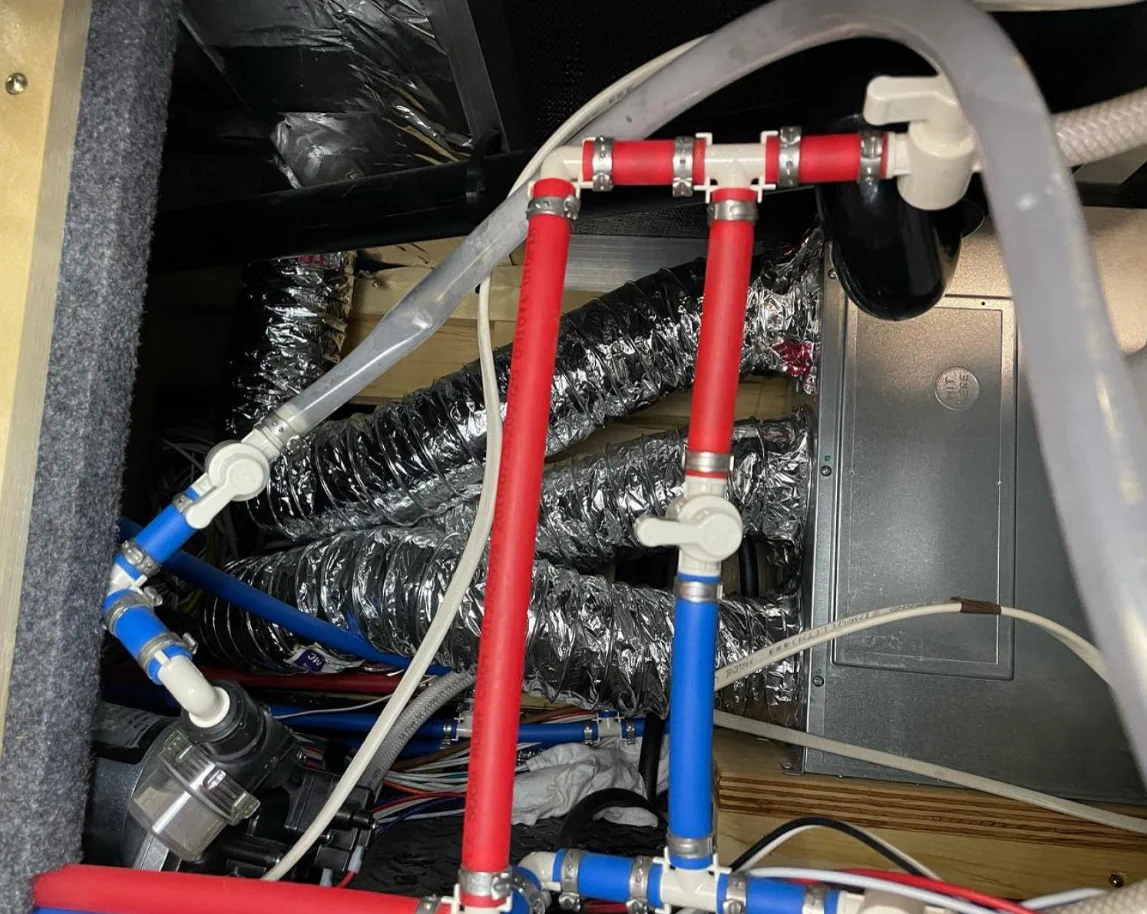
| Water pump same-fitment swap | $185 - $295 | 1 hr | ~50% parts / 50% labor |
| Lap sealant spot touch-up | $185 - $350 | 1-2 hr | ~15% parts / 85% labor |
| House battery swap (lead-acid) | $225 - $395 | 45-90 min | ~70% parts / 30% labor |
| Slide motor replacement (Schwintek) | $485 - $895 | 2-4 hr | ~40% parts / 60% labor |
| Awning fabric replacement | $595 - $1,150 | 2-3 hr | ~65% parts / 35% labor |
| Generator annual service | $285 - $445 | 1.5-2 hr | ~35% parts / 65% labor |
| Leveling jack rebuild | $385 - $725 | 2-3 hr | ~45% parts / 55% labor |
| Pre-purchase NRVIA inspection | $425 - $695 | 3-4 hr | 100% labor (no parts) |
| Full roof reseal (lap sealant) | $650 - $1,400 | 4-8 hr | ~25% parts / 75% labor |
Why does mobile RV repair sometimes cost more than the shop?
Mobile rates run 10 to 25 percent above brick-and-mortar shop rates because the tech absorbs drive time, fuel, and the inability to multitask across bays. A shop tech can move between three rigs in an afternoon; a mobile tech bills one rig from arrival to departure. That structural difference is the entire reason mobile labor sits at $125 to $185 per hour while shop labor often runs $115 to $155.
The trade-off only matters on simple jobs that fit a shop bay. For any work that requires the coach to sit overnight, the shop adds storage at $35 to $75 per day plus a tow at $4 to $8 per mile. A 2-hour AC repair at the shop becomes $215 in labor plus $250 in tow plus $150 in storage; that same call mobile is $295 all-in.
The shop wins on collision work, full body repairs, and any job that needs a paint booth or a hydraulic lift. The mobile tech wins on systems work, diagnostics, and anything where the coach is already parked. RV inspection work is almost exclusively mobile for this reason.
What pushes a mobile RV repair bill higher than the quote?
Five factors push the final bill above the initial estimate, and a good shop will name each of them on the phone before dispatch. Hidden water damage, seized fasteners, parts availability, secondary system damage, and after-hours timing each move the number predictably. Surprises on the invoice almost always trace to one of those five.
Hidden water damage is the biggest unknown. A leaking roof vent that started two seasons ago can hide rotten substrate underneath a perfectly intact membrane, and that substrate work doubles or triples a reseal estimate. Water damage assessment on the same call catches this before the parts go on order.
Seized fasteners are the second most common. A 2008 coach in a salt-air climate has eight years of rust under every screw, and what should be a 30-minute job stretches to 2 hours when the fasteners snap. The fix is allowing 15 to 25 percent contingency on any job involving exterior bay access, slide rails, or A/C mounts.
How are parts billed on a mobile RV call?
Mobile RV repair shops typically mark parts up 20 to 40 percent over wholesale, which lands close to retail prices at Camping World or e-trailer. The markup covers freight, sourcing time, return handling for defective parts, and the warranty pass-through. Most shops will not match online prices because the online price excludes those costs.
Owner-supplied parts are allowed at many shops but usually void the labor warranty on that specific component. If you bring your own Shurflo pump and it fails in three months, the shop will swap labor at the standard rate, not under warranty. This is the trade-off owners accept when they buy parts cheaper online.
OEM-required parts on warranty work cannot be substituted with aftermarket equivalents. A1 RV Repair sources OEM parts directly from Dometic, Lippert, Dicor, and other coach OEMs so the work qualifies for warranty reimbursement. Aftermarket equivalents are an option for out-of-warranty rigs where the price gap is meaningful.
Does RV extended warranty or insurance cover mobile repair?
Most RV extended warranties and coach insurance policies reimburse mobile labor when the technician is RVIA or NRVIA certified and the work is documented with timestamped photos plus a written cause-of-loss statement. Coverage tightens fast for uncertified labor or undocumented work. Owners who hire the cheapest handyman on Facebook discover the warranty exclusion at claim time, not at repair time.
A1 RV Repair provides RVIA-compliant documentation on every invoice. That includes line-item labor with time stamps, OEM part numbers, photos of the failed component, photos of the repair, and a written narrative that adjusters accept without follow-up questions. The documentation step costs the tech an extra 15 minutes per call and saves owners thousands at claim time.
Insurance treatment varies by policy. Sudden weather damage (hurricane, hail, fallen tree) is almost universally covered; gradual deterioration (UV-aged sealant, salt corrosion, slow leaks) is almost never covered. The dividing line is the cause-of-loss documentation, which is why leak source identification matters before the repair quote goes out.
What is the average all-in cost of a mobile RV repair visit?
The median A1 RV Repair invoice in 2026 lands between $285 and $625 all-in, including labor, parts, and trip fee. Simple service like a battery swap, sealant touch-up, or capacitor replacement sits at the low end. Complex jobs like slide motor replacement, full roof reseal, or coach-wide electrical work land at $850 to $2,400 depending on parts cost and time on site.
Annual maintenance bundling drops the per-visit cost. A spring inspection paired with sealant touch-up and a battery check runs $385 to $565 versus $695 to $895 if each item is dispatched separately. That bundling logic is why A1 RV Repair recommends a single spring and single fall visit instead of three or four single-issue calls.
The big outlier is emergency dispatch. After-hours weekend service runs 25 to 50 percent above quoted rates because the tech is on overtime, parts suppliers are closed, and the diagnostic window is compressed. Owners storing in Vero Beach or Dallas who plan ahead with a spring inspection rarely hit emergency rates.
How do I vet a mobile RV repair quote before booking?
A defensible mobile RV repair quote includes five pieces of information before the truck leaves: the hourly labor rate, the trip or dispatch fee, the estimated time on site, the parts cost or "parts at retail" disclosure, and the diagnostic fee if work is not approved. If a shop will not commit to those five on the phone, that is the strongest single signal to call a different shop.
Certification is the other vetting layer. Ask for the tech's RVIA or NRVIA credential number, then verify it on the issuing organization's directory. A real cert number returns a name and an active status on the official lookup tool. A handyman without a number is fine for cosmetic work but should not touch electrical, propane, or chassis systems.
Reviews tell a different story than ratings. Read the lowest-rated reviews on Google Business Profile and BBB profiles, and look for the same complaint repeated across multiple reviews. One angry customer is noise; six complaints about surprise invoices is signal. A1 RV Repair publishes the no-surprise-fee policy because it answers the most common complaint in the entire mobile-tech industry.
Where does A1 RV Repair fit in the 2026 price band?
A1 RV Repair sits at the certified-mobile mid-range: $135 to $165 per hour depending on service complexity, $75 trip fee inside the 25-mile radius, parts at standard retail markup, and a $0 surprise-fee policy. That positioning sits below premium-coach specialists and well above uncertified handyman labor, which is the band where most warranty and insurance work clears cleanly.
Service availability runs same-day or next-day in our covered metros, with a 2 to 4 hour response window on emergency calls. Coverage spans Florida, Texas, Idaho, Oklahoma, and Washington, with the same labor rate honored across the network. Related guides on roof repair timing, solar payback, lithium upgrades, and water pump diagnostics walk through the specific cost math for each of those service lines.