Signs your subfloor needs replacement
Four conditions confirm subfloor rot that warrants replacement, not just sealing.
1. Soft or springy floor underfoot
You can feel the floor flex when you step. Lauan or OSB has saturated and lost structural integrity. Replace - sealing over wet wood doesn't dry it out.
2. Visible mold along baseboards
Black or green colonies along the wall-floor junction. Substrate has been wet long enough for active growth. Containment + remove + reframe.
3. Cabinet base discoloration
Brown rings on the inside of lower cabinets, or musty smell when you open them. Subfloor underneath is wet. Pull and patch the affected section.
4. Slide-room floor edge sag
Floor edge under a slide-room has dropped or feels spongy at the perimeter caulk line. Floor reseal alone won't restore structure.
Subfloor replacement pricing
| Service | Material | On-Site Time | Flat-Rate Range |
|---|---|---|---|
| 4x4 spot patch | Coosa Composites / marine ply | 4-6 hours | $785 - $1,450 |
| Slide-cavity replacement | Coosa Composites / marine ply | 1-2 days | $1,450 - $2,650 |
| Full subfloor (under slide) | Coosa Composites / marine ply | 1-3 days | $1,950 - $3,950 |
| Joist sister-up or replace | Treated lumber / Coosa | 2-4 hours each | $385 - $785 per |
| Vapor barrier install | 6-mil poly | 1-2 hours | $185 - $345 |
| Liquid Rubber belly seal | Liquid Rubber | 2-3 hours | $385 - $585 |
| Flooring reinstall (LVT / vinyl) | OEM-match flooring | 3-5 hours | $485 - $885 |
Brands and materials we use
- Coosa Composites - structural composite, no rot, ground-contact rated
- Marine plywood - structural patches and decking
- Azek - trim and ground-contact components
- Treated lumber - joist sister or replacement
- Liquid Rubber - belly-pan reseal where ground spray reaches
- 6-mil poly vapor barrier
- Stainless fasteners rated for RV use
How do I know if my RV subfloor is rotted from water damage?
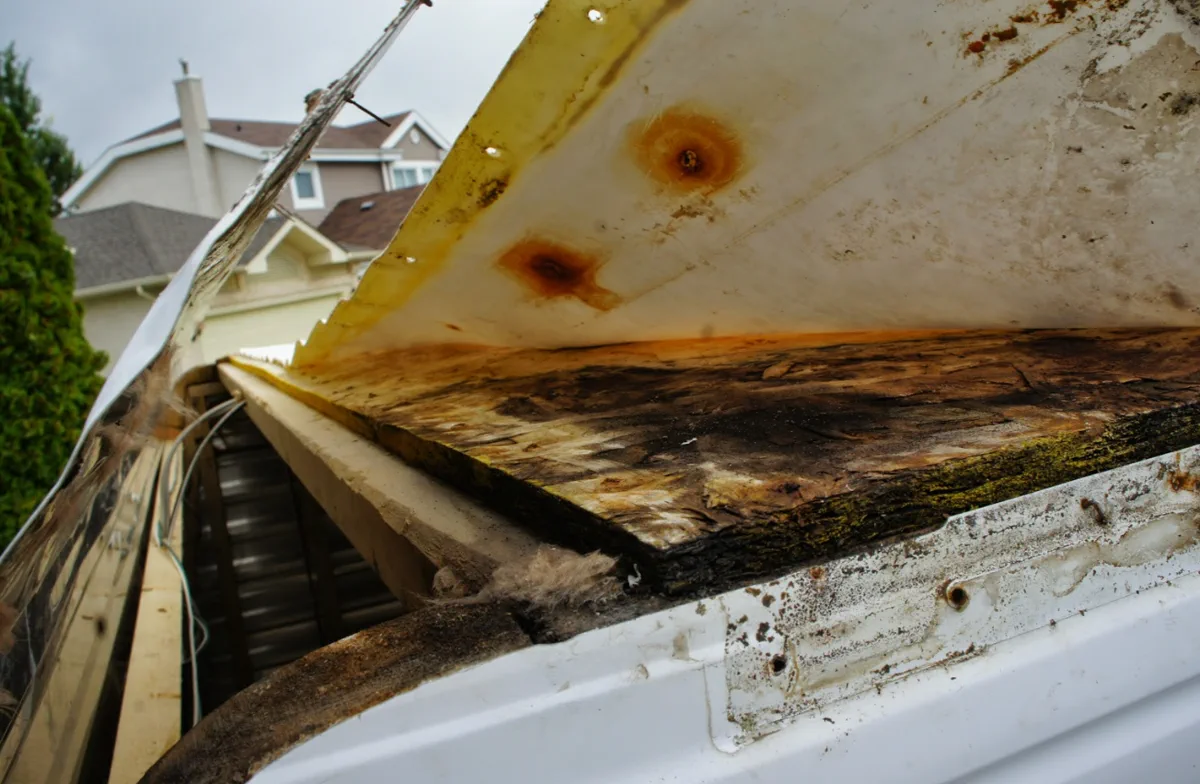
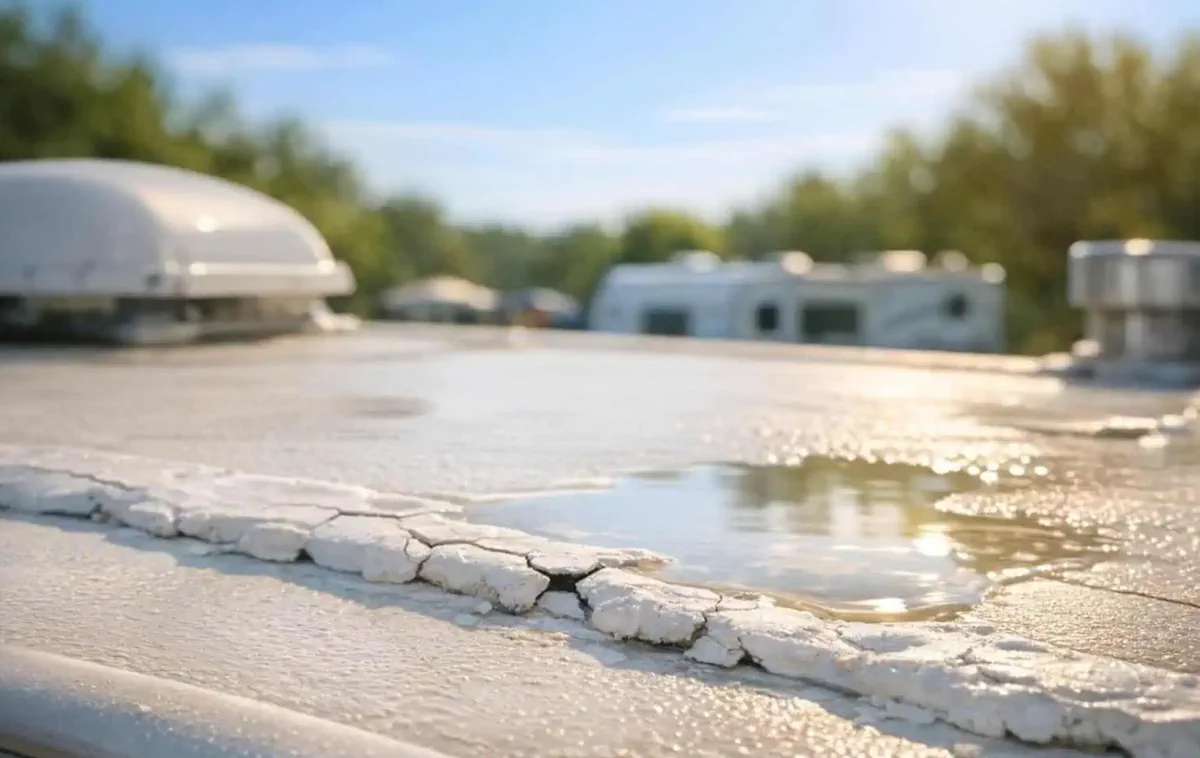
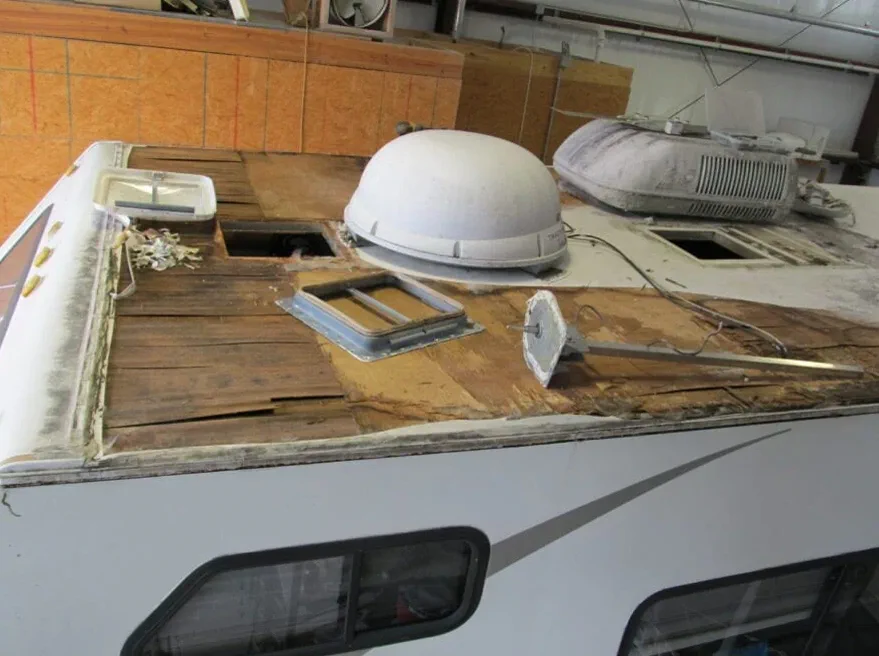
Soft spots under carpet, spongy cabinet bases, or visible mold in wall cavities all point to subfloor rot. Water typically enters through failed Dicor roof sealant, delaminated window frames, or corroded Atwood plumbing fittings. The damage spreads fast - we've pulled 40-square-foot sections of compromised subfloor on a single Winnebago Brave where owners ignored a slow roof leak for 18 months.
Mushiness near the slide-out track, that chemical smell, and visible discoloration on the exterior wall bottom are your red flags. Don't walk on it - water-logged plywood collapses under weight and traps moisture that feeds mold.
A Grand Design owner called us after his fresh-water tank support failed and saturated the galley subfloor. The damage looked small from above - just a dark stain - but when we lifted the flooring, we found three feet of soft plywood extending under the dinette.
We replaced it with exterior-grade marine plywood, installed a new tank mounting plate, and sealed the area with waterproofing membrane. The whole job took a day on-site. Without replacement, that rot would have spread to the frame and cost double.
Subfloor damage red flags:
- Soft or springy floor when you walk
- Visible mold or white mildew patches
- Water stains on exterior walls near the base
- Musty or chemical odors from cabinetry
- Loose or separated wall paneling
- Discolored or peeling exterior trim
What is the full repair process for subfloor replacement?
We start by finding the leak source - roof, window, or plumbing - then remove affected flooring and evaluate the extent of framing damage. Step one is water source repair so we don't replace subfloor just to watch it rot again. Step two is removal: we cut out the damaged plywood in sections, inspect rim joists and floor beams underneath, and document everything with photos for your insurance claim.
Step three is replacement with new marine-grade or exterior-grade plywood, secured with stainless fasteners. Step four is waterproofing and re-integration: we seal all joints, reinstall Schwintek or Lippert slide-out tracks if affected, and restore the wall or cabinet base. Most jobs run 6 to 14 hours depending on square footage and how deep the rot goes.
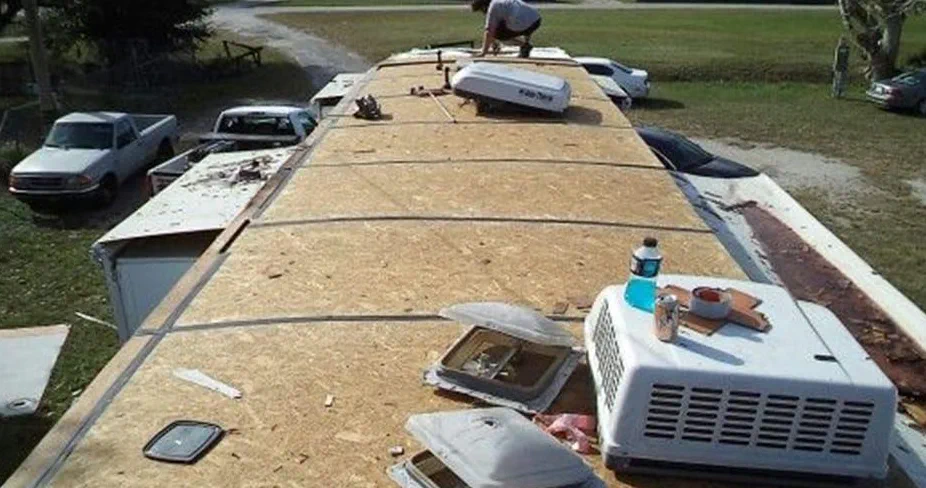
A Keystone owner in Stuart had us out to his toy hauler after a roof delamination near the AC vent. The vent was a Dometic Coleman-Mach unit with failed caulking.
We removed the vent, replaced 35 square feet of subfloor, re-sealed the roof with Dicor sealant, and reinstalled the AC unit on a reinforced backing plate. The owner was back on the road in two days. If we'd just caulked the vent without replacing the subfloor, he would have called us again within a month.
Replacement process steps:
- Leak source identification and repair
- Damaged subfloor removal and framing inspection
- Marine-grade plywood replacement and fastening
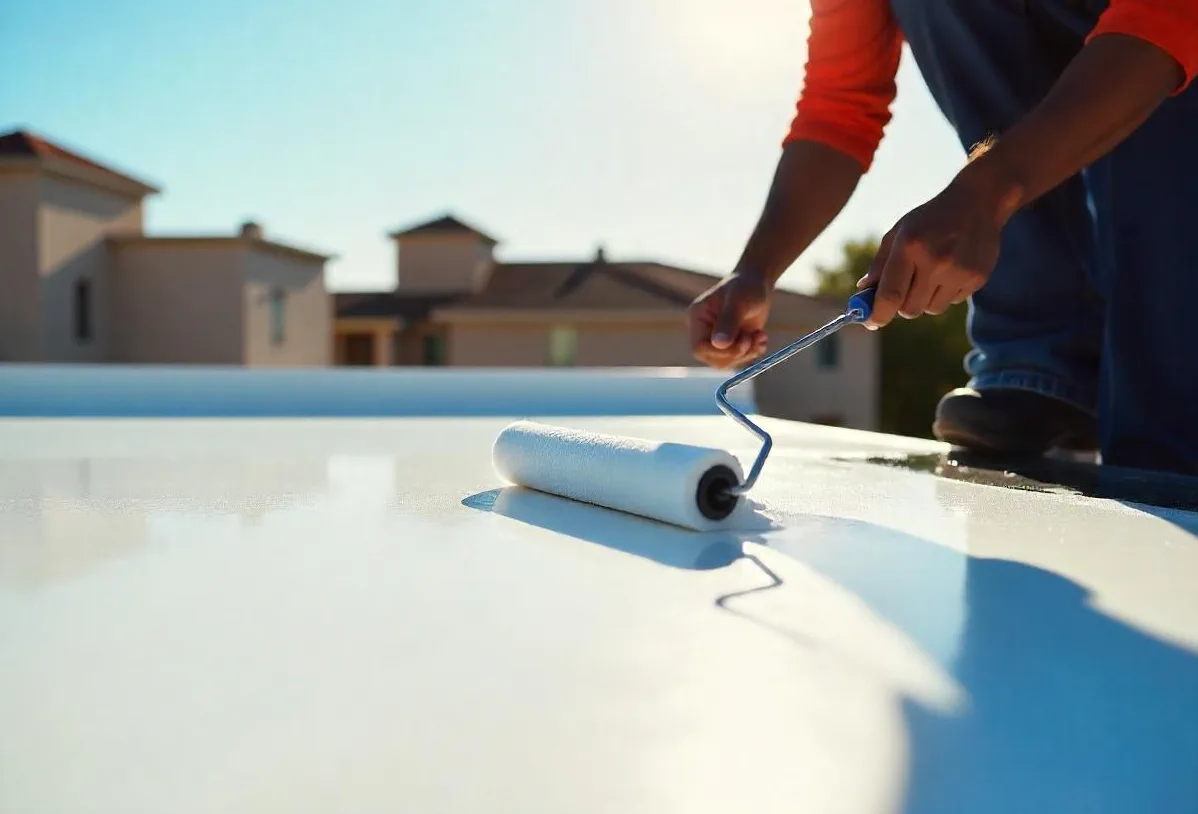
- Joint sealing and waterproofing membrane application
- Wall, cabinet, or slide-out track reinstallation
- Final inspection and moisture testing
What does subfloor replacement actually cost?
Pricing ranges from $2,400 for a small 20-square-foot replacement to $8,500 for extensive damage affecting 80+ square feet and wall framing. The variables are damage extent, accessibility, and whether framing repairs are needed. A simple bathroom subfloor replacement (galley or head area) runs $2,400 to $3,600.
Multi-section damage like kitchen plus slide-out base runs $4,200 to $6,800. Full-wall damage with rim joist repair and exterior wall re-skin runs $6,500 to $8,500.
We quote flat-rate by phone after you describe the damage - no surprise invoices. Marine-grade plywood costs 30-40% more than standard, but it resists re-saturation in humid climates.
A Jayco owner in Boise called with water damage under his kitchen cabinets and dinette. We quoted $3,200 flat for approximately 35 square feet of replacement, new blocking, and cabinet re-mounting.
He asked if budget plywood would work - we said no, because Idaho humidity and seasonal moisture swings would rot cheaper material again in two years. He approved the marine-grade spec. The bill came to exactly $3,200 plus $150 for a new Shurflo pump he needed while we had the floor open.
Cost factors:
- Damage size in square footage
- Depth of moisture penetration into framing
- Wall or cabinet re-installation complexity
- Marine vs. standard plywood material grade
- Roof or window repair required at same time
- Mold remediation if present
What materials and brands do you use for subfloor replacement?
We use exterior-grade marine plywood (1/2 or 5/8 inch depending on span), Dicor polyurethane sealant, stainless steel fasteners, and waterproofing membranes rated for RV use. The plywood is always treated to resist moisture - we do not use standard construction-grade material. Fasteners are 316 stainless or coated deck screws to prevent rust and re-corrosion.
Sealant is Dicor because it bonds to fiberglass, metal, and new plywood without shrinking. If we're replacing wall studs or rim joists, we use pressure-treated 2x lumber to prevent future rot. We reinstall original Schwintek or Lippert slide-out hardware on new bases, and we reuse quality components unless damage is visible.
A Tiffin Allegro owner brought his coach in after a window seal failed and water got under the bedroom floor. The window was a standard RV-grade unit with failed Dicor caulk.
We replaced the subfloor with exterior-grade plywood, re-caulked the window properly with fresh Dicor, and sealed the new plywood edges with a polyurethane membrane. He asked why we didn't patch it - we explained that patching a rotted subfloor is like a band-aid on a broken bone. The whole section needs replacement so load distributes evenly and future leaks are caught early.
Materials spec:
- Exterior-grade marine plywood, 1/2 to 5/8 inch
- Dicor polyurethane sealant for all joints
- Stainless steel 316 fasteners and hardware
- Pressure-treated lumber for framing replacement
- Waterproofing membrane for high-moisture areas
- Original OEM slide-out tracks reused or replaced
How long does subfloor replacement take from start to finish?
Most jobs take 1 to 3 days depending on damage size and whether roof or plumbing work is required. A localized 20-square-foot bathroom or galley replacement runs 6 to 10 hours and can be done in a single day. Multi-section damage like kitchen plus slide-out or extensive wall involvement runs 12 to 20 hours across two days.
Full structural work - rim joists, multiple walls, mold remediation - can stretch to three days. We respond within 2 to 4 hours in our covered metros core areas, and we coordinate with nationwide partners for remote calls. Drying time adds 24 to 48 hours after sealing, so keep vents open and run AC on vent mode.
A Forest River owner in Jacksonville had water damage under his pass-through dinette - about 50 square feet across the kitchen and dinette base. We arrived in 3 hours, removed flooring and cabinetry, replaced subfloor and blocking, reinstalled the dinette legs on new mounting plates, and sealed everything by 5 PM.
He slept in the RV that night but we asked him not to put full weight on the dinette for 48 hours. On day two we spot-checked moisture levels and released the coach. Total time was 16 hours across two mornings.
Typical timeline:
- Initial assessment and quote - 15 to 30 minutes by phone
- Damage removal and prep - 2 to 6 hours
- Subfloor installation and sealing - 4 to 10 hours
- Moisture drying and inspection - 24 to 48 hours
- Cabinet or wall reinstallation - 2 to 4 hours
- Final walkthrough and sign-off - 30 minutes
What warranty covers subfloor replacement, and what does it protect?
A1 RV Repair provides a 90-day workmanship warranty on all subfloor replacement and water damage repair. This covers labor defects, improper sealing, fastener failure, and material installation errors. It does NOT cover future water intrusion from a new leak at a different location, pre-existing frame damage we didn't see, or damage from user neglect like leaving a window open in the rain.
The warranty is void if you don't repair the original leak source or if you ignore our drying instructions. We document the work with photos and provide you with a detailed invoice listing materials, labor hours, and component specs so you have proof for future resale or insurance claims.
A Coachmen owner in Boise had subfloor replaced under his kitchen, and three months later a different leak started at the A/C penetration on the roof. He called expecting us to re-do the subfloor for free.
We explained the 90-day warranty covers the work we did - the kitchen subfloor was still dry and solid. The new roof leak was a separate issue, separate repair.
We fixed the roof AC seal for $400 flat-rate, but the subfloor warranty didn't apply because the damage source was different. He understood and appreciated the clarity.
What the 90-day warranty covers:
- Labor installation defects or improper sealing
- Subfloor material failure or fastener corrosion
- Re-saturation of replaced plywood from original leak
- Water damage to newly installed walls or cabinets
- Mold growth in the area we repaired
- Structural issues from our work