A1 RV Repair Seattle is a mobile RV repair service running from our 3rd Ave staging point in downtown Seattle. Our 50-mile core dispatch covers Bellevue, Lynnwood, Tacoma, Kent, Renton, and the Puget Sound waterfront, with same-day response on calls before 11 AM. Coach-side roof, plumbing, electrical, slides, AC, generator, appliances, awnings, and inspection - chassis-mechanical routes to a regional dealer. Quoted by phone before any truck rolls.
Common Seattle RV problems we solve
Most calls land on this page because something on the rig stopped working at the worst possible time - mid-trip, mid-rain-event, or right before a southbound departure. The six failures below are what shape our daily Puget Sound schedule.
Roof seam ingress after a long fall and winter rain run
Seattle drops 38 inches of rain a year and the October-through-April wet run is essentially continuous. Lap sealant cracks and EPDM seam tape that would last seven years in Arizona fail at the four to five-year mark in the Puget Sound. Once the membrane lifts at a vent or skylight, water finds the substrate inside a single wet front.
Mildew on slide gaskets and around vents after winter storage
Marine-layer humidity averages above 75 percent through the cool months and a closed coach with no airflow grows mildew along slide wiper bulbs, around bathroom and roof vents, and behind the cabover bunk. The wiper bulb hardens and shrinks, the next slide extension tears it open, and rain ingress follows the next week. Fresh-air dehumidification before storage prevents most of it.
Water-damage substrate rot in the wet bay or underbelly
Owners reactivating a rig in April after a wet sit often find soft floor sections near the wet bay, spongy panels around the cabover, or damp underbelly insulation. By the time the smell shows up, the subfloor is already compromised and the next leak gets faster. A moisture-probe map identifies how far rot has spread before any panel comes off.
EPDM membrane fatigue from constant UV-and-rain cycling
Puget Sound rigs see fewer UV-only days than desert rigs but the relentless UV-then-rain cycle is harder on EPDM than either alone. The membrane oxidizes, chalks, and pulls back from screws and lap-sealant beads faster than the manufacturer service intervals predict. By year ten an unsealed EPDM roof is usually overdue for either a recoat or a full membrane replacement.
Pre-departure walkthrough before the southbound snowbird run
Pacific Northwest rigs heading to Arizona, California, or Mexico in October leave Seattle one week and arrive in 95-degree sun the next. Anything that was marginal in the wet north fails in the dry heat - tires that weather-cracked over a wet sit, slide seals that hardened, sealant beads that shrank. A pre-departure walkthrough catches it before the rig is two states away.
PEX line split during a Puget Sound Arctic-outflow cold snap
Seattle winters are mild on average but Arctic-outflow events drop overnight lows into the high teens or low twenties for several nights every couple of years. A rig that skipped a quick blow-out splits PEX at the underbelly run, the low-point drains, and behind the wet bay panel. The damage shows up at the first thaw, not during the freeze itself.
Why Seattle RV owners choose A1 RV Repair
A1 is built around the specific failure patterns the Pacific Northwest marine climate produces - rain-driven roof and water-damage work in fall and winter, mildew remediation in early spring, departure walkthroughs in October. Six things differentiate us:
-
We come to you - campground, driveway, or curb
50-mile core dispatch from our 3rd Ave staging point covers all of King County plus the south Pierce belt to Tacoma. Same-day response on calls before 11 AM. No towing the rig to a shop in 38 inches of annual rain.
-
Quoted by phone before any truck rolls
We give you a price range over the phone based on your symptoms. Final cost is set on-site by the technician after diagnosis - but you know the order of magnitude before agreeing to dispatch.
-
Marine-climate roof and water-damage specialty
Persistent rain, marine-layer humidity, and EPDM-on-UV cycling are what the Puget Sound climate hits an RV with. We run the wet-season roof reseal push every September and the moisture-probe water-damage assessment every spring on reactivated rigs.
-
Mold and mildew remediation expertise
Slide-seal mildew, vent-area mildew, and behind-the-cabover-bunk mildew are routine Puget Sound calls after any rig that sat closed through a winter without active dehumidification. We carry the gasket library, controlled-bleach kit, and moisture probes on every truck.
-
Snowbird departure-and-return service for southbound rigs
Pre-departure walkthroughs in September and October for Puget Sound rigs heading to Arizona, California, or Mexico for the winter. Spring reactivation and water-damage assessment in March and April for the same fleet returning home from desert sun.
-
Coach-side everything except chassis
Roof, plumbing, electrical, slides, AC, generator, appliances, awnings, leveling, and inspection. Chassis-mechanical (transmission, brakes, suspension, DEF) routes to Cummins Pacific in Seattle or the Freightliner dealer in Pacific - we will tell you when that is the right call.
About our Seattle RV repair services
A1 RV Repair Seattle is the mobile arm of A1's Puget Sound operation. We service every coach-side system on a recreational vehicle - roof, plumbing, electrical, AC and heat-pump, slides, generator, appliances, awnings, leveling, water-damage repair, and inspection - at your campground, driveway, storage lot, or curbside in town. The 50-mile core dispatch radius from our 3rd Ave staging point in downtown Seattle covers all of King County, the SoDo and Industrial District core, the Eastside corridor through Bellevue and Sammamish, the Lynnwood and Everett stretch north, and the south King belt through Renton and Kent down to Tacoma.
The work splits into three categories that follow the marine climate. October through April is the rain-driven roof and water-damage peak - perimeter reseal, EPDM seam patch, vent and skylight gasket replacement, and emergency tarp dispatch when a wet front exposes a failed seam (rainfall totals are verifiable in the National Weather Service Seattle climate archive).
March through May is mildew remediation and reactivation - slide-seal swap, vent-area cleanup, moisture-probe mapping, and de-winterization for rigs returning from desert sun. Late August through September is wildfire-smoke roof cleans on rigs hit by Cascade or Eastern Washington fire events (smoke and AQI dashboards are tracked by the Washington Department of Ecology smoke and fire program). Across the year we run NRVIA pre-purchase inspections (NRVIA Level 1 and Level 2 standards) on rigs taking delivery at Apache Camping Center or Poulsbo RV in Fife, plus pre-departure walkthroughs in September and October for the southbound snowbird run, and lap sealant service per Dicor Products lap sealant guidelines.
Every job runs on the same model. You call, we ask the right symptom questions, we quote a price range over the phone, and we dispatch a truck.
The on-site technician confirms final cost after diagnosis. Material on the truck covers the most common Puget Sound failure patterns - anything chassis-side routes to Cummins Pacific in Seattle, the Freightliner dealer in Pacific, or the regional Daimler dealer, and we flag it when that is the right call.
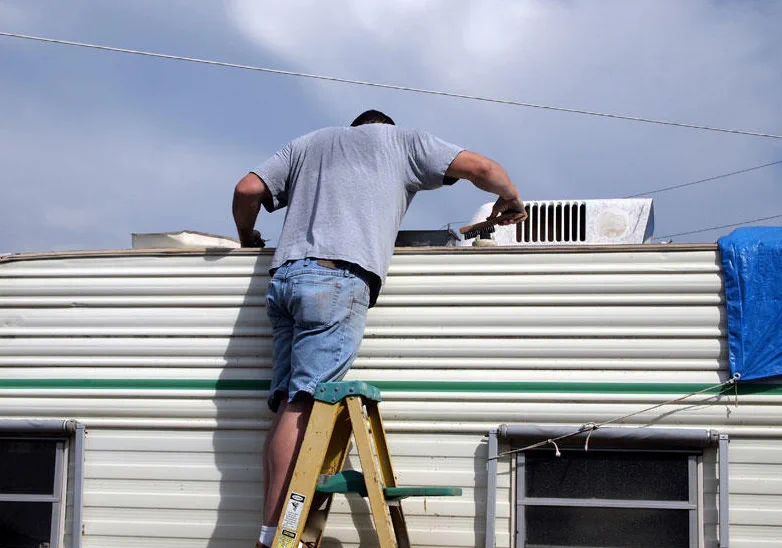
Puget Sound work mix is rain and humidity-driven, not heat-driven. Wet-season truck loadout carries Dicor, Eternabond, EPDM patch material, and gasket library; spring loadout carries moisture probes and slide-seal stock.
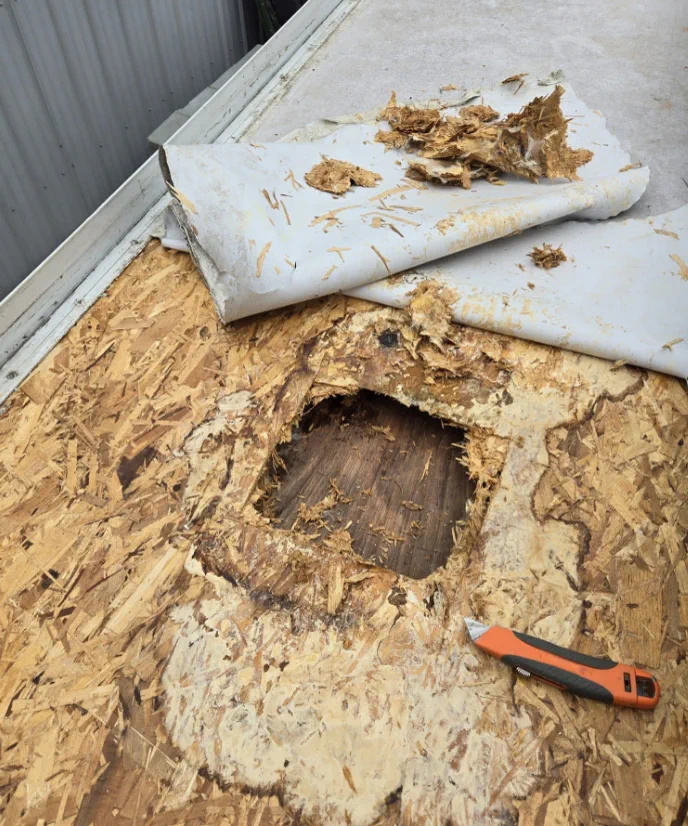
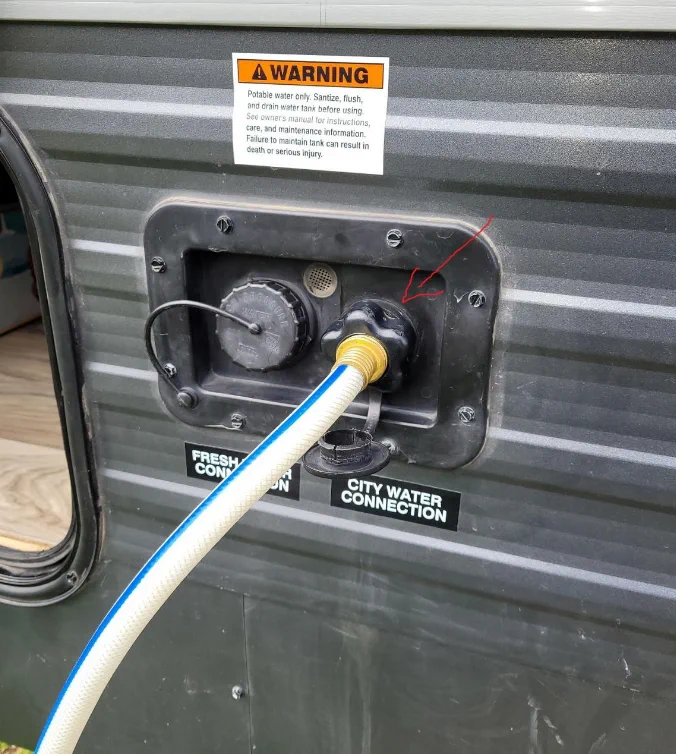
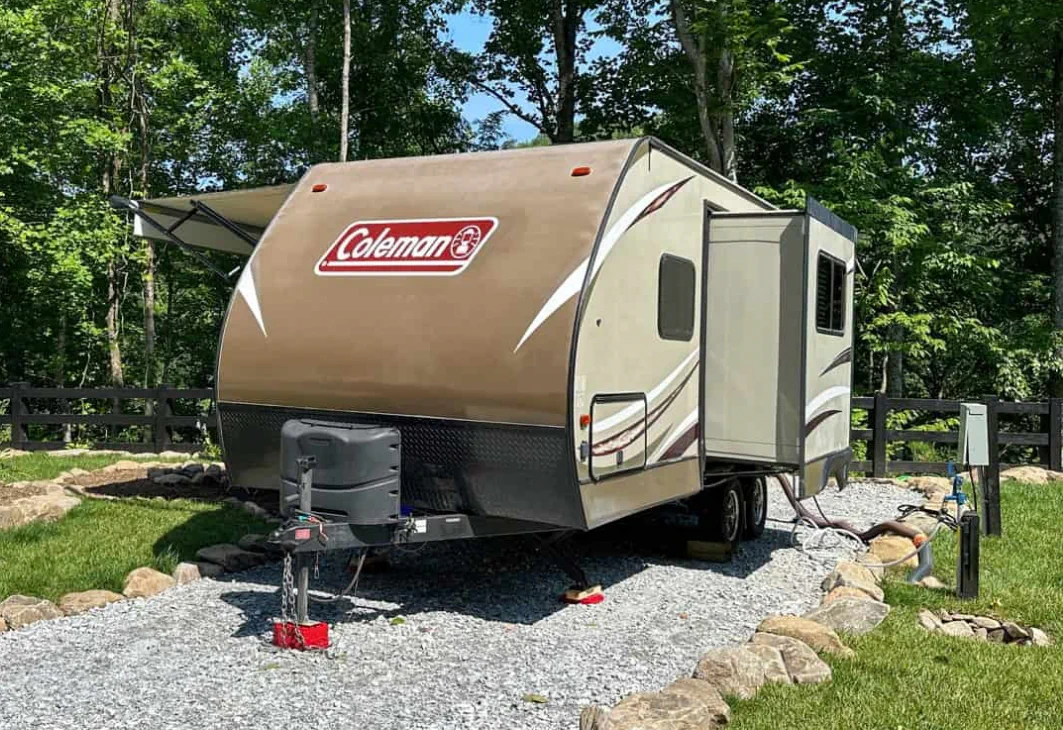
Our RV Repair Services in Seattle WA
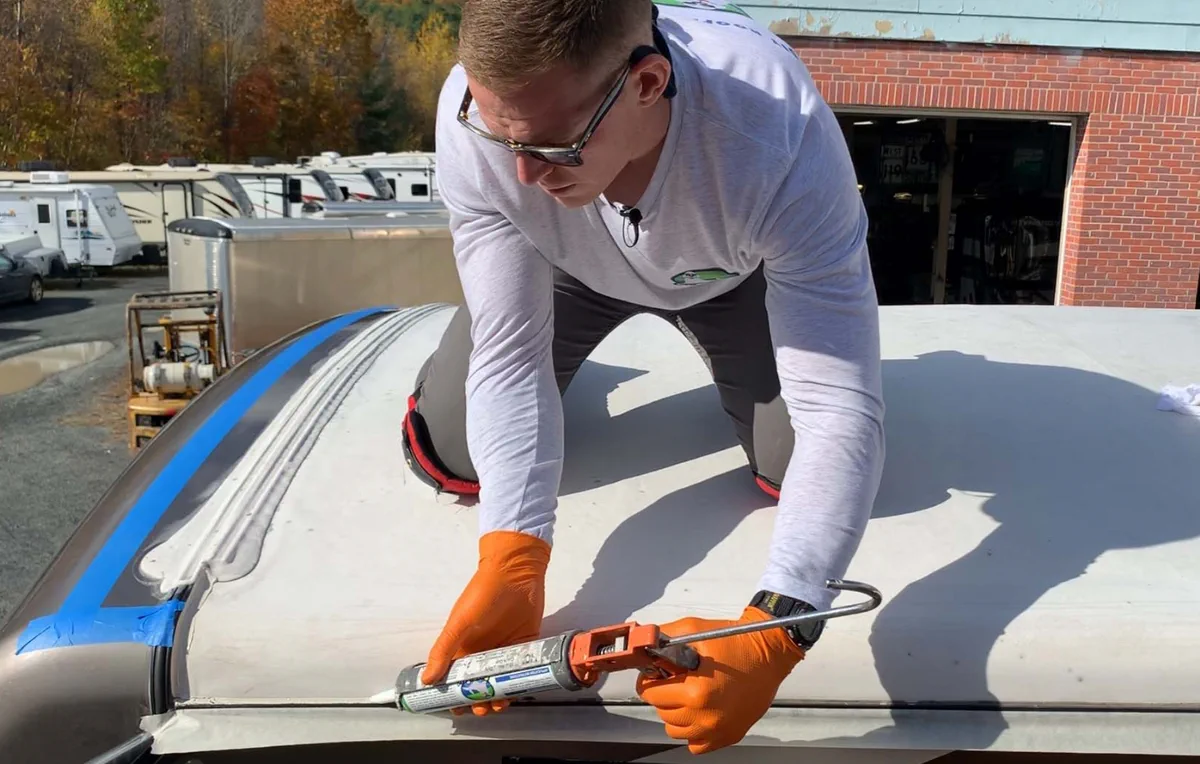
RV Roof Repair
Persistent fall and winter rain finds every weak lap-sealant joint and EPDM seam on a Puget Sound rig within a single wet front. We run the September and October pre-wet-season reseal push, then handle emergency leak dispatch November through March with Dicor, Eternabond, and rolled EPDM on every truck. Most Seattle rigs need fresh seam work at year four or five.
Includes- Pre-wet-season roof reseal
- Lap sealant top-up (Dicor)
- EPDM seam patch and recoat
- Vent and skylight gasket reseal
- Full membrane replacement

RV Plumbing & Water Damage
Puget Sound rigs that sit through a wet winter often reactivate with soft floor near the wet bay, damp underbelly insulation, or substrate rot behind the cabover. We run a moisture-probe assessment in spring, repair PEX freeze splits after Arctic-outflow cold snaps, and rebuild wet-bay sub-floor on rigs where ingress reached the panels.
Includes- Wet-bay water-damage assessment
- Moisture-probe mapping
- PEX freeze burst recovery
- Sub-floor rebuild
- Tank flush (fresh/gray/black)
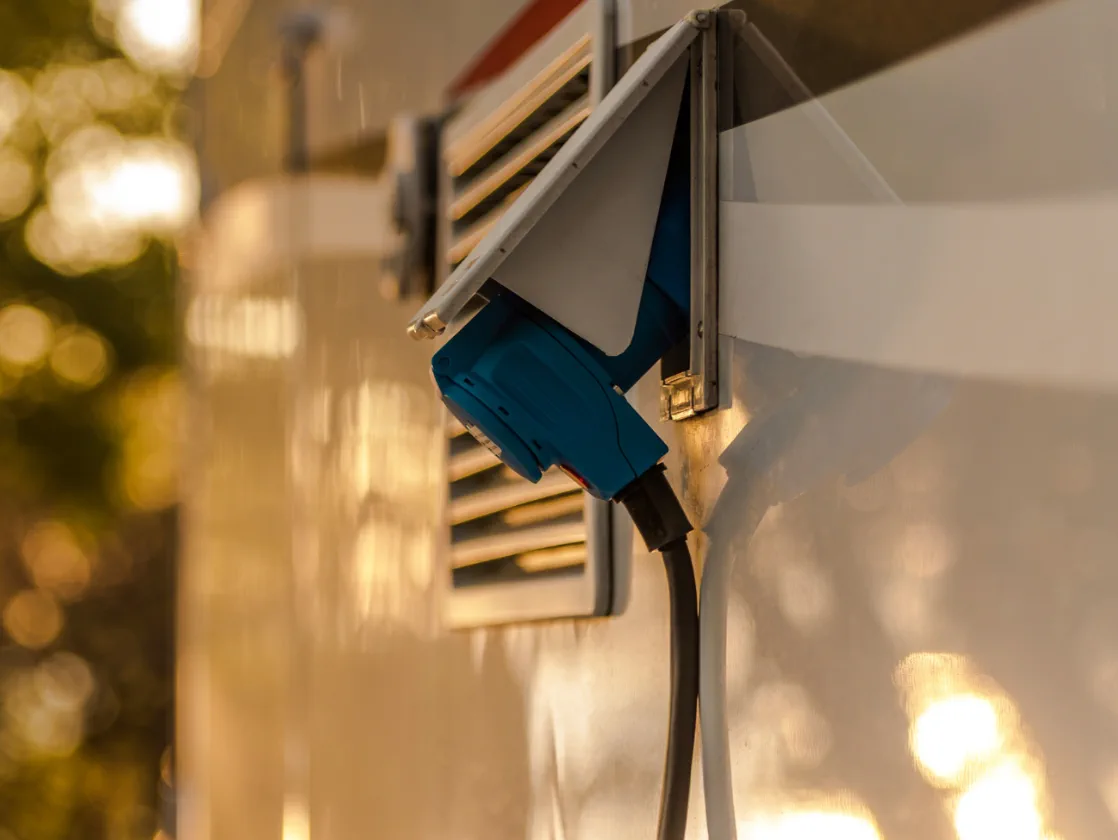
RV Electrical & Solar
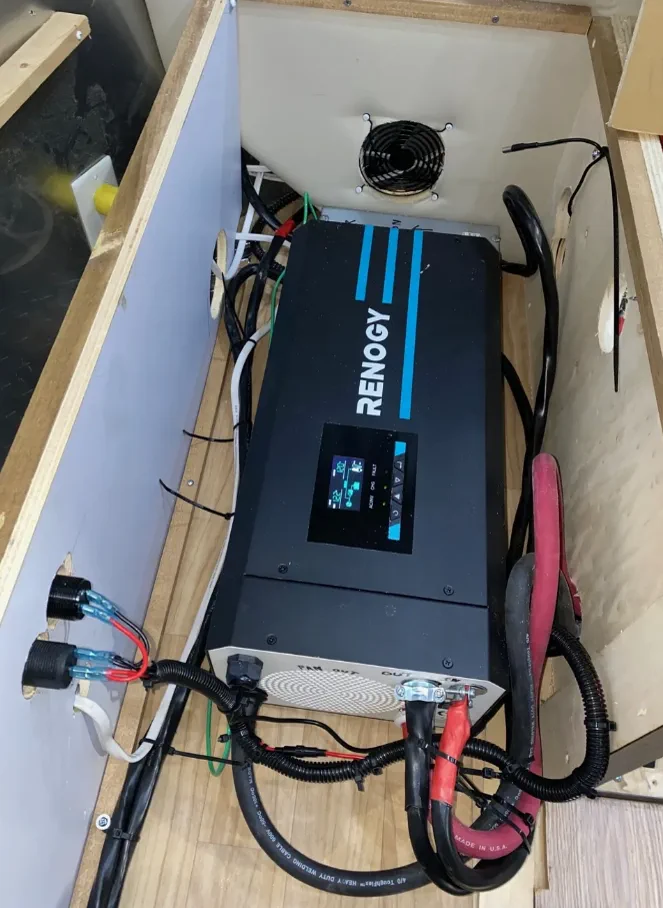
Sprinter and ProMaster van builds make up a meaningful share of our Seattle book - house-battery and lithium retrofits, inverter and converter swaps, and solar troubleshooting in a city that sees 152 cloudy days a year. We also handle 50A pedestal diagnostics on rigs at Lake Pleasant and the south King KOA pulling hard heat-pump load.
Includes- 200Ah lithium retrofit (Sprinter/ProMaster)
- Inverter and converter swap
- Solar 200W to 1000W+
- 50A pedestal diagnostics
- House-battery and BMS diagnosis
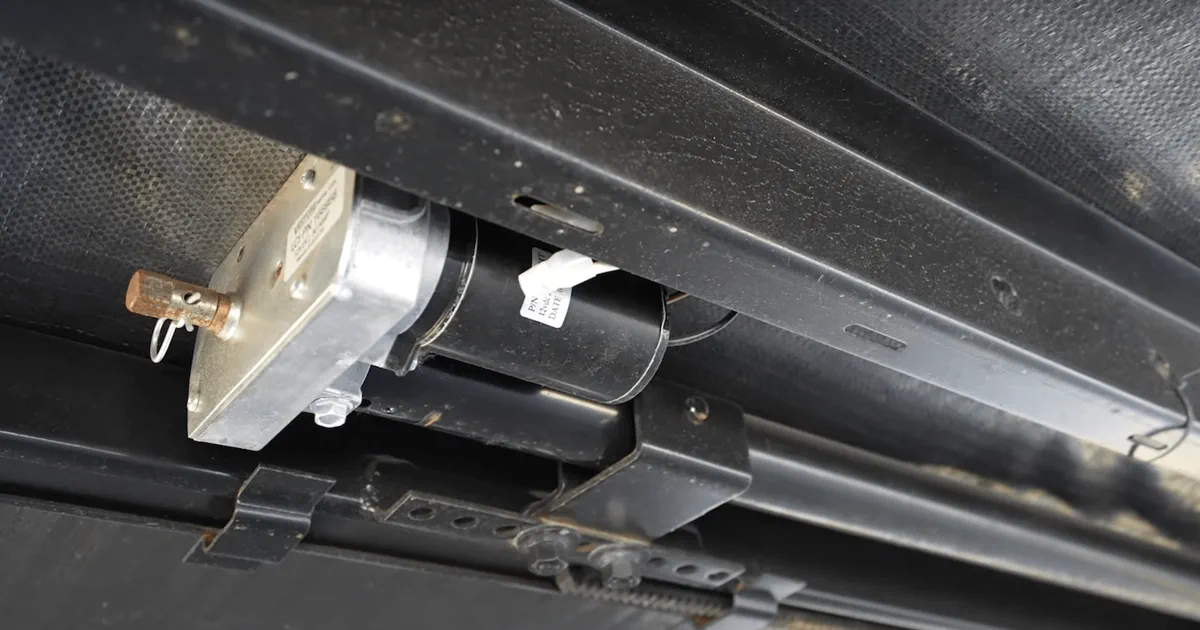
RV Slide-Outs
A Puget Sound winter sit hardens slide wiper bulbs, grows mildew along the gasket bead, and shrinks the corner seals. The first spring extension tears them open and rain ingress at the slide pocket follows the next week. We run a pre-storage seal lubrication in October and a fresh seal pack swap in April for any rig with cracked corners.
Includes- Wiper and bulb seal replacement
- Pre-storage seal lubrication
- Slide-pocket water-damage assessment
- Schwintek motor swap
- Hydraulic seal repair and sync alignment
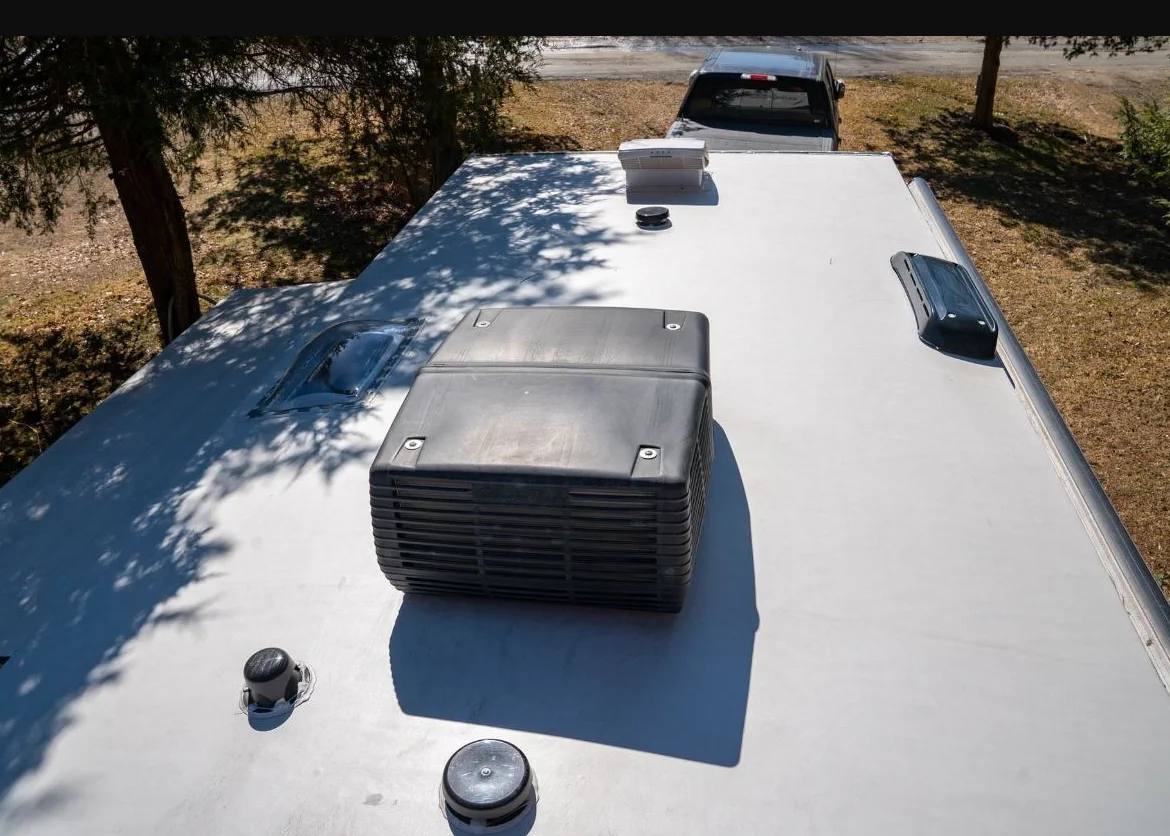
RV AC & Heat Pump
Seattle is not heat-driven the way California or Texas are, but the cool damp shoulder seasons make heat-pump service a steady call - Coleman Mach and Dometic Penguin heat-pump modes carry a coach through 45-degree spring mornings without firing the propane furnace. We coordinate AC and dehumidifier work to dry out a rig that grew mildew over winter.
Includes- Heat-pump diagnostics and service
- AC capacitor swap
- Soft-start install
- Dehumidifier coordination
- Furnace and thermostat service
RV Inspection
We run NRVIA Level 1 and Level 2 pre-purchase inspections on rigs taking delivery at Apache Camping Center in Fife and Poulsbo RV. Pre-departure walkthroughs in September and October catch what wet-north sits left marginal before the rig hits Arizona dry heat. Spring water-damage assessment maps moisture across roof, slide pocket, and underbelly.
Includes- Pre-departure walkthrough (12-point)
- Spring water-damage assessment
- Pre-purchase NRVIA L1 and L2
- Moisture-probe mapping
- Pre-trip inspection
RV parks, dealerships, and storage sites we work near Seattle
- Seattle/Tacoma KOA - Closest full-service campground to downtown at the south end of Kent, big-rig friendly to 55 feet with a Seattle bus shuttle. Roughly 25 minutes from our 3rd Ave staging point. Most calls here are roof reseal, slide-seal swap, and pre-trip inspection on visitors staging Mount Rainier or Olympic Peninsula trips.
- Lake Pleasant RV Park - Closest north-side full-hookup resort, located in Bothell with paved sites, mature tree cover, and direct Seattle access via I-405. Long-stay full-timers and Eastside locals park year-round; we book steady wet-season roof work, lithium retrofits, and Schwintek slide-motor swaps through the season.
- Issaquah Village RV Park - Eastside park tucked along the Issaquah Creek corridor with full hookups and easy I-90 access toward Snoqualmie Pass. Travelers staging Cascades trips run quick same-day jobs here - capacitor, water pump, slide motor - so the rig can roll the next morning.
- Saltwater State Park - Puget Sound waterfront state park in Des Moines between SeaTac and Tacoma with weekend RV camping. Salt-air exposure on the marina-side runs heaviest here in the corridor, so awning fabric, exterior compartment latches, and entry-step motor swaps come up regularly.
- Eagle Tree RV Park - Kitsap Peninsula full-hookup park near Poulsbo, accessed via the Bainbridge ferry from downtown. Long-stay residents and Olympic Peninsula travelers; we coordinate ferry timing on roof reseal, slide-seal, and water-pump dispatch.
- Apache Camping Center / Poulsbo RV - South Everett and Fife dealer and service centers serving downtown Seattle owners since downtown itself has no RV park. We coordinate on warranty overflow and NRVIA Level 2 pre-purchase inspections at $385 to $585 flat.
- Camping World Burlington - Regional Camping World location north of Seattle in Burlington with full inventory and parts counter. Pre-purchase NRVIA inspections and post-delivery break-in walkthroughs are our most common bookings for owners taking delivery there.
Seattle RV repair pricing
Below are typical price ranges for the most common Seattle service calls. Wet-season emergency leak dispatch (November through March) and spring water-damage assessment are scheduled separately from standard service - tell dispatch you have an active leak and we route a sealant truck the same day.
| Service | Typical price range |
|---|---|
| Pre-wet-season roof reseal (perimeter and penetrations) | $185 - $385 |
| Emergency leak tarp-and-trace | $185 plus material |
| EPDM seam patch (per repair) | $245 - $585 |
| Wet-bay water-damage assessment (moisture-probe map) | $185 |
| Sub-floor rebuild (typical wet-bay rot) | $785 - $1,985 |
| Mildew remediation (slide gaskets and vent areas) | $245 - $485 |
| Slide-out wiper and bulb seal swap | $285 - $585 |
| Pre-departure walkthrough (12-point, southbound rigs) | $245 (lot price $145) |
| 200Ah lithium retrofit (Sprinter/ProMaster) | $1,850 - $2,650 |
| Wildfire-smoke roof clean and reseal | $385 - $625 |
| PEX freeze burst repair (per section) | $185 - $385 |
Find A1 RV Repair Seattle on Google Maps
Seattle RV Repair Questions and Answers
How much rain damage can a Seattle RV roof actually take before it leaks?
Seattle drops roughly 38 inches of rain a year per the National Weather Service Seattle office. The heaviest sustained run is October through April.
An EPDM or TPO roof in good condition handles that load fine, but lap sealant and EPDM seam tape both lose elasticity in the 5 to 7-year range. Once a hairline crack opens at a roof penetration, persistent fall and winter rain finds the substrate within weeks.
We run perimeter and penetration reseal at $185 to $385 on-site - Dicor lap sealant top-up, Eternabond seam patch, vent and skylight gasket replacement. Most Puget Sound rigs need this every 4 to 5 years rather than the dry-climate 7-year rule.
I found mildew along the slide gasket and around the bathroom vent - is that normal in Seattle?
It is common in any rig that sits closed through a Puget Sound winter without active dehumidification. Marine-layer humidity averages above 75 percent through the cool months.
A sealed coach with no airflow grows mildew on slide wiper bulbs, around bathroom and roof vents, and behind the cabover bunk. We run mildew remediation at $245 to $485 - controlled-bleach treatment on hard surfaces, gasket and bulb replacement where the rubber has gone soft, and a moisture probe across the headliner and slide pocket.
Pair the work with a small 12V dehumidifier or DampRid set for storage and the next winter holds clean.
We are heading to Arizona for the winter - what should we check before leaving Seattle in October?
Pacific Northwest snowbird departure runs early October through early November. The heaviest week is typically the third week of October once Cascade passes start dropping snow.
We book pre-departure walkthroughs from mid-September. Tire pressure and weather-cracking inspection, brake controller test on the towed segment, slide retract verification, propane regulator test, fresh roof seam check before the rig sits in 100-degree Arizona sun for four months, awning fabric inspection, and a generator load test.
The walkthrough runs $245 at your site or $145 at our 3rd Ave staging point. Returning rigs in March and April get a separate spring reactivation walkthrough.
A PEX line burst during a January cold snap in Seattle - can you do an on-site repair?
Yes. Puget Sound freezes are mild compared to the high desert but cold snaps still hit, especially when an Arctic outflow drops lows into the high teens for a few nights.
Most Seattle freeze splits land at the underbelly run near the slide, the low-point drains, and the section of line behind the wet bay panel. We dispatch with SharkBite couplings, PEX-A and PEX-B fittings, replacement check valves, and a heat gun to thaw any remaining ice in the bay.
On-site PEX repair runs $185 to $385 depending on access and how many sections separated. If the underbelly insulation got soaked we open and dry it before closing up so the next thaw doesn't drip into the subfloor.
Can you do a water-damage assessment after a long rain run revealed a leak?
Yes. Water-damage assessment is one of our most common spring calls in Seattle once owners reactivate rigs that sat through the wet season.
We run a moisture probe across the roof, sidewalls, slide pocket, cabover bunk, and underbelly to map exactly how far ingress has spread. The written report identifies the source, lists every affected substrate area in square feet, and includes timestamped photos for any insurance follow-up.
Assessment runs $185 flat. Sub-floor and panel rebuild work gets quoted separately after we open the bay - typical range is $785 to $1,985 depending on rot extent.
Do you service Sprinter and ProMaster van conversions parked on Seattle streets?
Yes. Urban van builds are a meaningful share of our Seattle book given how many full-time van-lifers stage on Magnolia, Ballard, Capitol Hill, and West Seattle side streets.
We handle house-battery and lithium upgrades, solar troubleshooting, inverter and converter swaps, water and propane system service, and roof rack and accessory mounting. A diagnosis visit is $145 flat. A 200Ah lithium retrofit runs $1,850 to $2,650 flat including the new bank, the BMS, and inverter wiring.
We need a legal parking spot for the truck and schedule before metered hours when possible.
What about wildfire-smoke damage on RV roofs after a bad August or September smoke event?
Late-summer smoke events from Cascade and Eastern Washington fires drop fine particulate onto Puget Sound rigs every August and September. The Washington Department of Ecology smoke dashboard tracks AQI hourly during fire season.
Particulate settles into Dicor lap sealant cracks, around skylight gaskets, and along the AC shroud bead. After two summers it acts like sandpaper on the EPDM membrane and accelerates UV breakdown.
We run a roof-clean and reseal package at $385 to $625 - mild detergent wash, full seam inspection with photos, fresh Dicor top-up wherever the bead is cracked, and a UV-protectant rinse. Most Seattle rigs need this every two to three summers.
What is your radius from downtown Seattle and which Puget Sound cities do you cover?
Our 50-mile core dispatch from our 3rd Ave staging point in downtown Seattle covers SoDo and Industrial District (10 minutes), Bellevue (15 minutes), Lynnwood (20 minutes), Renton (20 minutes), Kent (25 minutes), Tacoma (35 minutes), and Everett (35 minutes). SeaTac airport storage lots, the Sammamish and Issaquah corridor, Bothell, and the Saltwater State Park area near Des Moines all sit inside the core radius.
Olympia and the Cascade foothills extend the footprint to a 4-hour response window during peak summer.
Anything past Olympia south or past Marysville north routes to a sister technician for faster service.
Service scope and Seattle response time
- 10 minSoDo and Industrial District
- 15 minBellevue and Mercer Island
- 20 minLynnwood and Renton
- 25 minKent (Seattle/Tacoma KOA) and Bothell (Lake Pleasant RV)
- 35 minTacoma and Everett
- 25-50 min50-mi core dispatch (King County)
- 4 hrOlympia, Marysville, and Cascade foothills
Same-day Puget Sound dispatch for calls before 11 AM. Wet-season emergency leak response overrides standard scheduling November through March.
Plan roof reseal at the 4 to 5-year mark in the Puget Sound rather than the manufacturer's 7-year rule. Slide-seal lube is twice a year - October pre-storage and an April spring check.
We do not handle chassis-side mechanical, transmission, brakes, suspension, or DEF-system work. Those route to Cummins Pacific in Seattle, the Freightliner dealer in Pacific, or the regional Daimler dealer.
Coach-side everything else stays in our truck. Service-area extension calls into Olympia, Marysville, Bremerton, and the Cascade foothills roll with a 4-hour response window during peak summer weekends.
Related services and nearby cities
Wet season hits hardest on roof, plumbing, and water damage - browse RV roof repair, water damage repair, plumbing, and slide-out service. For pre-purchase work and pre-departure walkthroughs see RV inspection and electrical and solar.
Sister Puget Sound cities we cover from 3rd Ave: Bellevue, Tacoma, Lynnwood, Everett, and the broader Washington page.
More Washington cities A1 serves nearby: RV repair in Marysville, RV repair in Olympia, RV repair in Tukwila, RV repair in Bremerton, Gig Harbor, WA mobile RV repair, Bellevue, WA mobile RV repair, Bellingham, WA mobile RV repair, Burlington, WA mobile RV repair, Everett RV repair, Kent RV repair, RV repair in Lynnwood, RV repair in Monroe. Statewide dispatch at routes the closest mobile tech.