How much does a lithium battery upgrade actually cost on a typical RV?
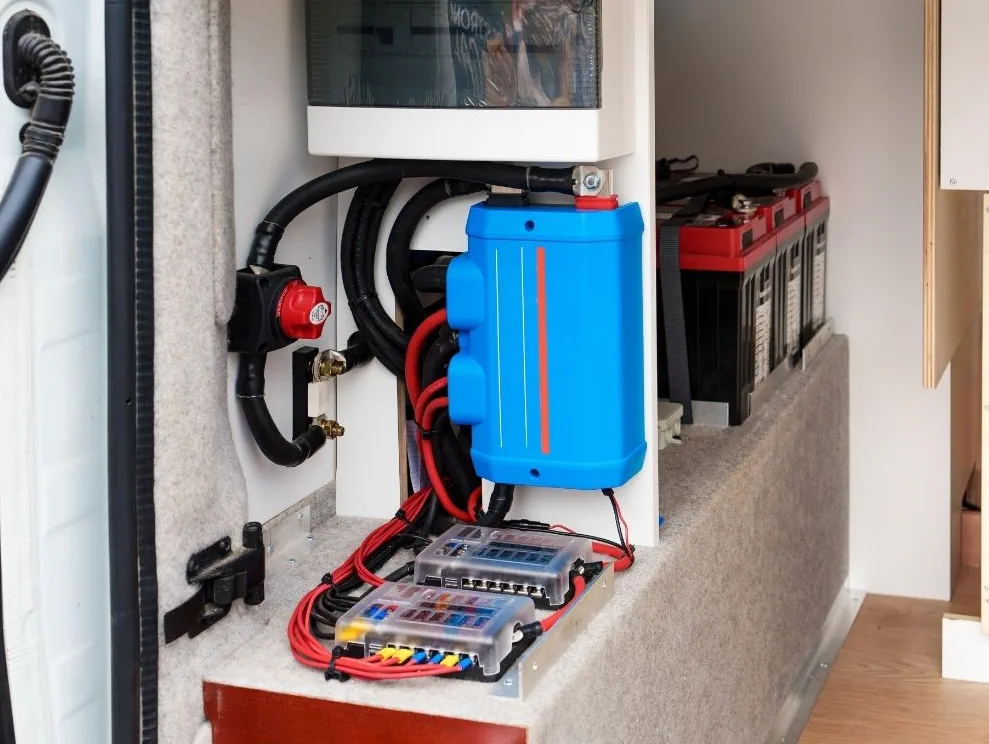
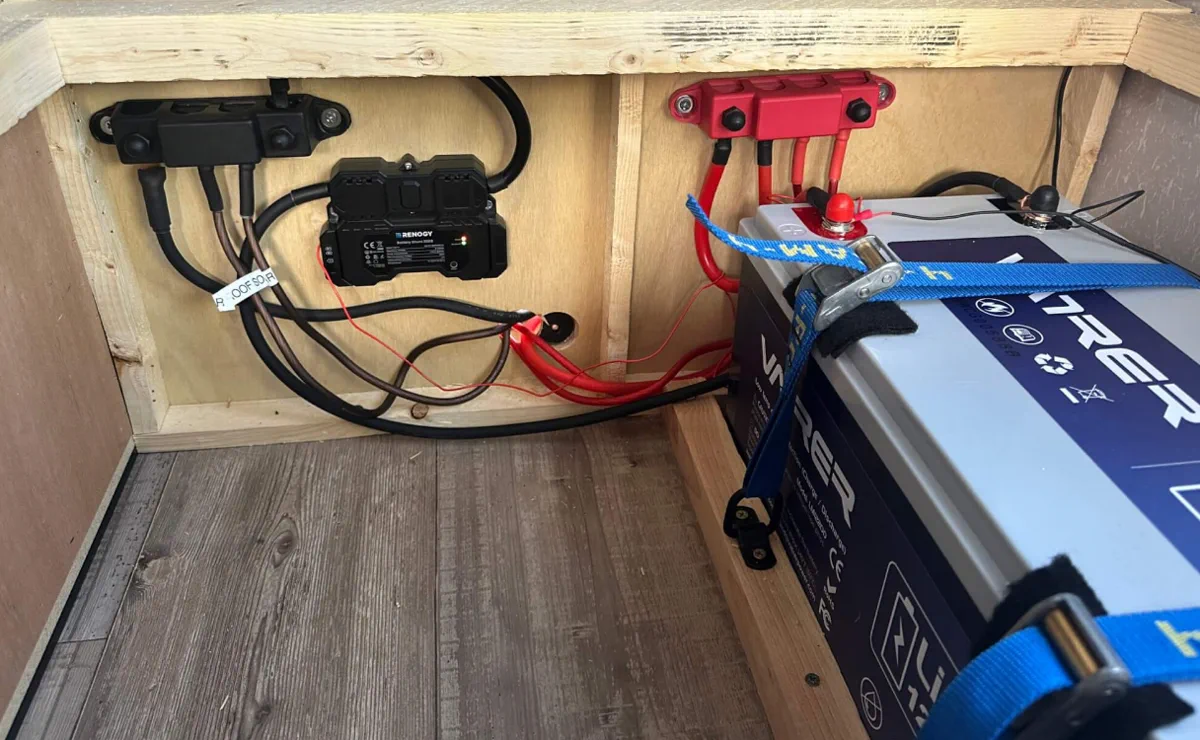
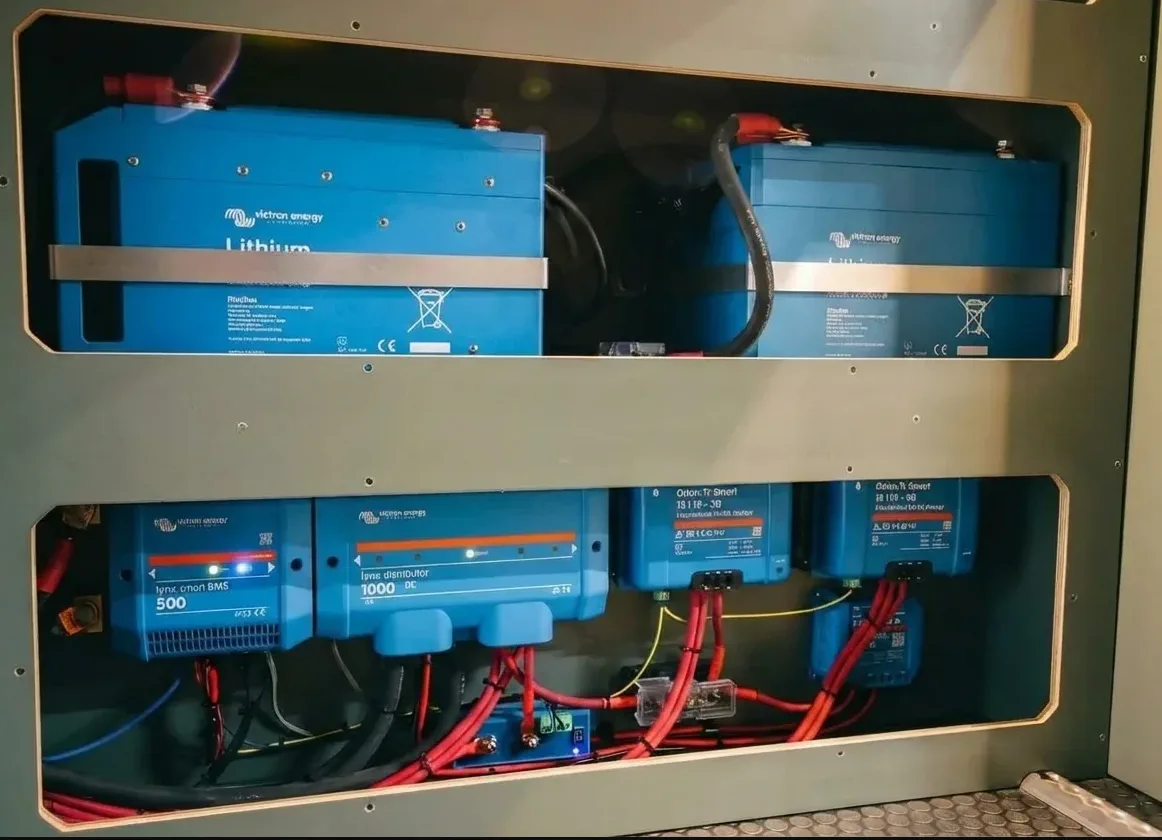
A 200Ah Battle Born or Renogy lithium swap with a Victron BMS, new busbars, and ANL fusing runs $1,850-$2,950 installed. A 400Ah dual-bank build paired with a matched Magnum or Victron inverter-charger lands $3,250-$4,950.
Those ranges account for whether your existing converter can handle lithium charge profiles - many older units can't, and forcing a lead-acid converter onto a lithium bank shortens cell life and can cause overcharge faults, so we sometimes swap the converter as part of the same job. We also check your chassis wiring gauge and breaker sizing before we button anything up, because lithium's higher sustained discharge current can trip undersized fuses that AGM never stressed. Cycle life runs 3,000-5,000 versus 400-800 on lead-acid AGM, so most owners net out ahead inside 5-7 years even at the higher upfront cost.
Will Florida heat actually kill my inverter or converter early?
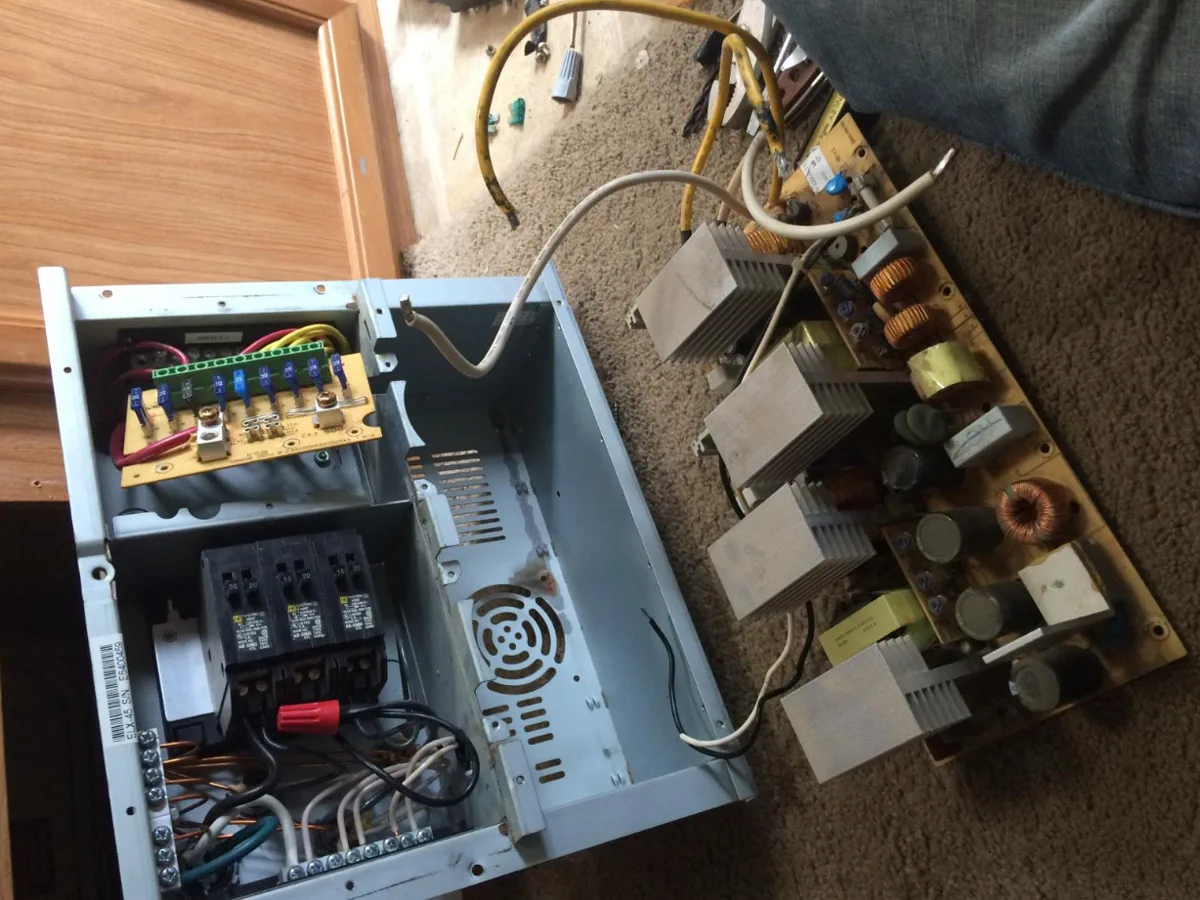
Yes. Inverters and converters mounted in unventilated bays in Florida summers routinely see internal temps of 140-160 degrees F, and that sustained heat is the main killer of two components: electrolytic capacitors, which dry out and lose capacitance, and MOSFETs, which degrade faster at high junction temps and eventually fail under load.
When we get a call about an inverter that's shutting down mid-afternoon or a converter that stopped bulk-charging, heat damage is the first thing we check. The fix isn't just swapping the unit - we re-mount with active ventilation, sometimes cutting a louvered vent into the bay wall, and we spec units rated for high ambient when we know the rig lives in the Florida service area year-round.
Many of our techs also add temp-compensated charging settings on the BMS so the charge profile adjusts as battery temp climbs through a Florida afternoon. Skip that step and a replacement unit in the same unventilated bay will fail on the same timeline as the original.
Can you wire a Renogy or Go Power solar array on my existing roof without leaks?
Yes. We mount panels using Z-brackets or VHB tape depending on your roof material and panel weight, then seal every penetration and bracket foot with Dicor lap sealant - the same compound used on factory roof seams.
Cable runs go through the fridge vent or a dedicated sealed cable gland, never a raw hole, and we use tinned marine wire throughout because standard copper corrodes faster in the humidity cycles an RV roof sees. Inside, we route through a Renogy or Victron MPPT controller sized to your array and battery bank.
Once the install is done, we pressure-test every sealed point and walk you through the controller display so you know what normal charging looks like. If your roof already has soft spots or failing lap sealant, we flag those before we mount anything - adding panel weight to a compromised deck accelerates the damage underneath.
My breaker keeps tripping when I run the AC and microwave together. Is that fixable?
Yes, and it is one of the more common complaints we get from rigs on 30-amp service. Running a rooftop AC and a microwave simultaneously can pull 25-28 amps on its own, leaving almost no headroom for anything else on the circuit.
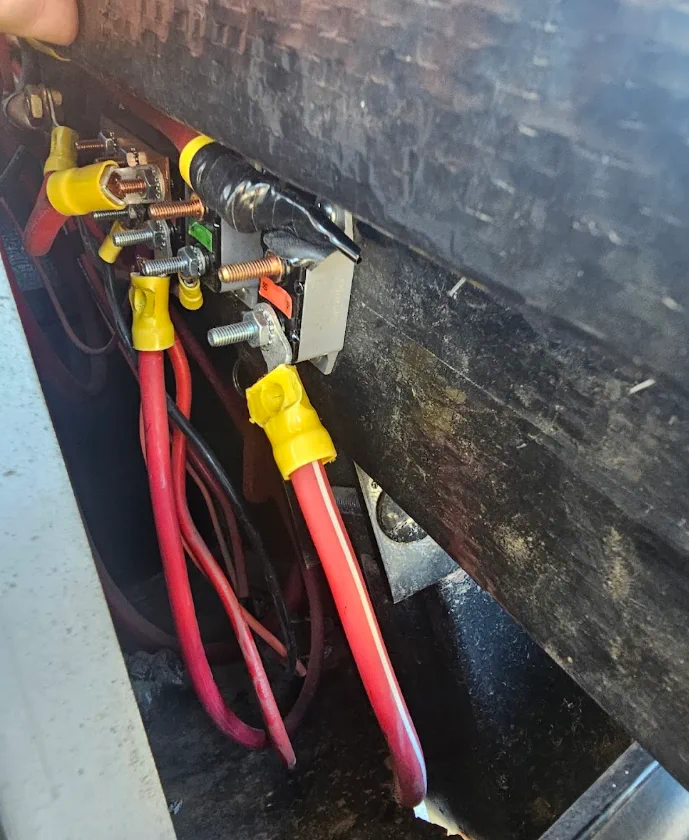
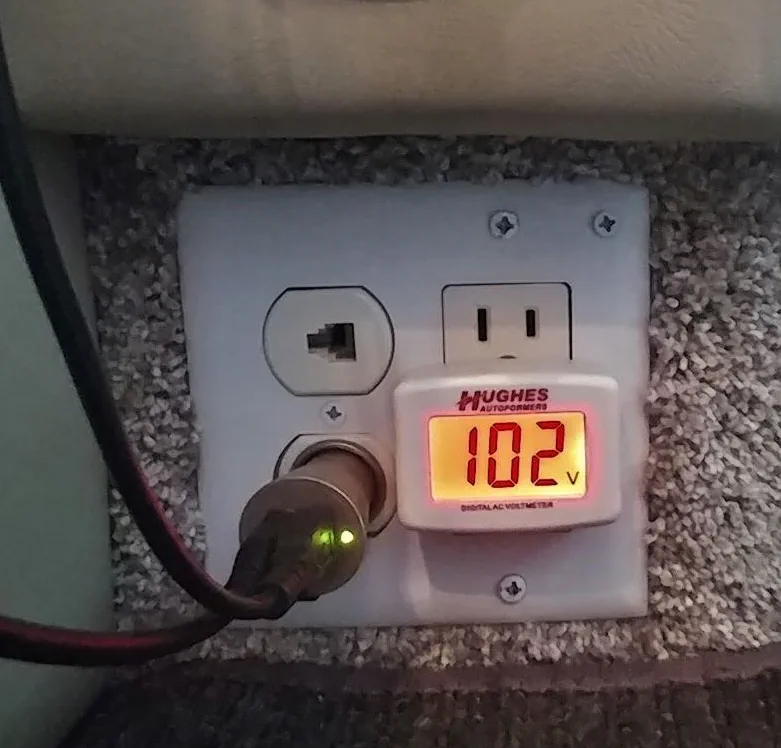
When we arrive, we start at the pedestal - low shore voltage (below 108V) makes the AC draw more current to compensate, which trips a breaker that would otherwise hold. If pedestal voltage is solid, we test the panel under load and check whether the breaker itself has weakened with age, which happens after years of repeated heat cycling.
The most common fixes are a breaker swap, a soft-start kit on the AC compressor (which cuts startup surge by roughly half), or a load-management device that automatically sheds the microwave circuit when the AC kicks on. Most repairs land in the $185-$485 range depending on which combination applies to your rig.
How do you know if it is the shore inlet, the converter, or the auto-transfer switch?
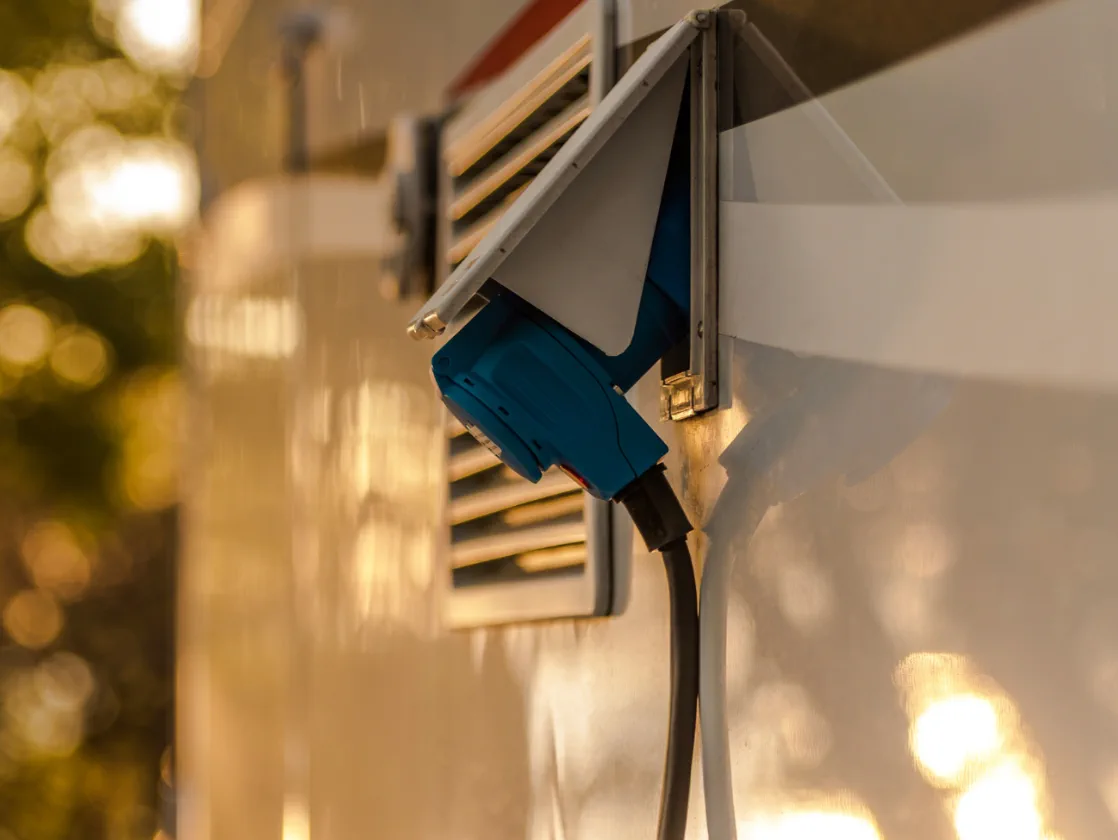
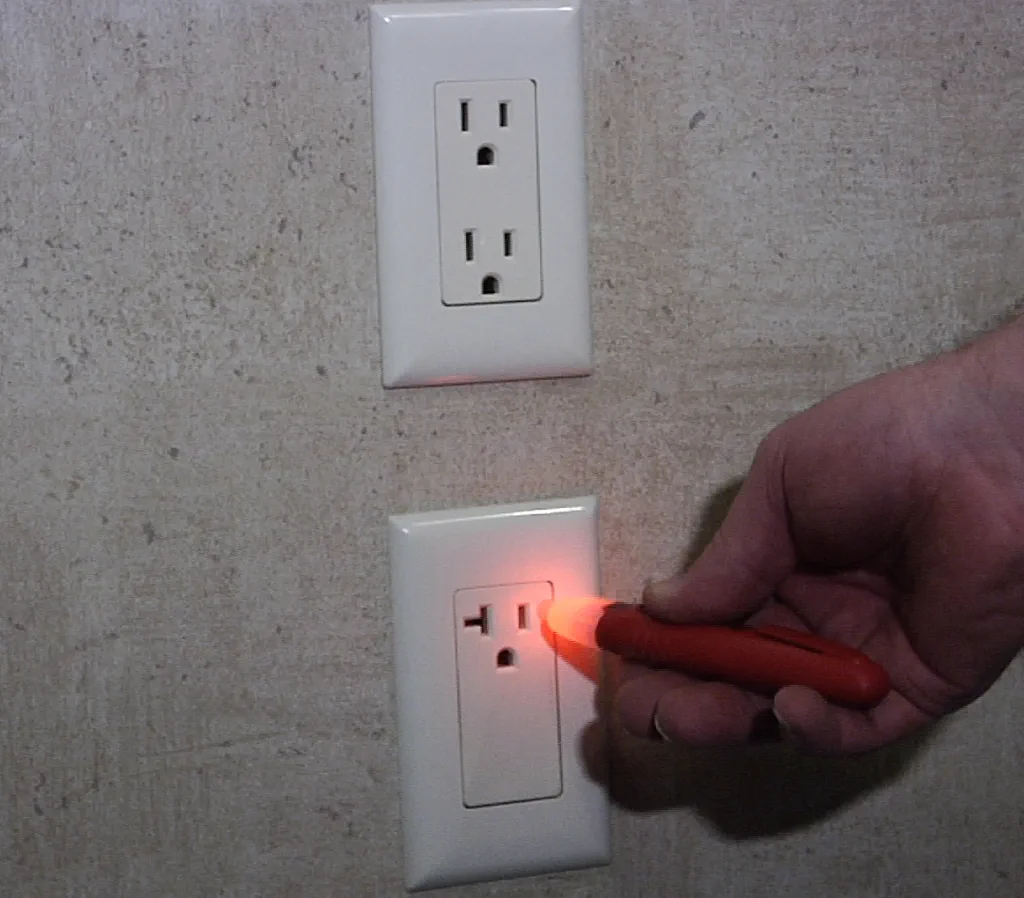
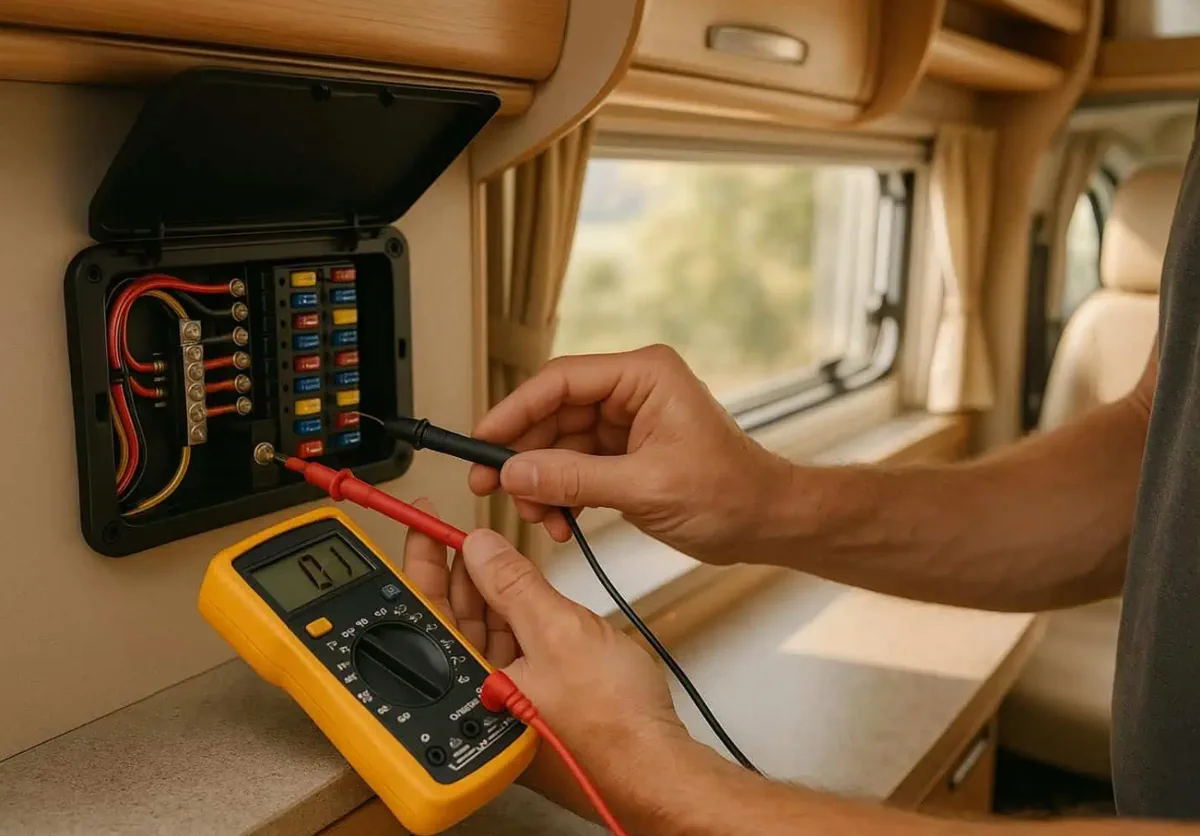
We trace voltage end-to-end with a calibrated meter, starting at the shore inlet pins and working inward. No 120V at the inlet means the inlet itself has failed - corroded pins, a cracked housing, or a burned contact are the usual culprits, and we rebuild or replace the inlet on-site.
If we see 120V at the inlet but it isn't reaching the converter, the auto-transfer switch is the next suspect - a welded contact or failed relay coil will pass generator power but block shore power, or block both, depending on how it failed. If 120V is making it through to the converter but the battery side reads less than 13.4V, the converter is the fault. We identify which component is causing the problem before we quote anything, because each fault carries a different flat-rate range and there's no reason to replace a converter when the real problem is a $40 relay.
Will lithium batteries handle Idaho winter temperatures?
Standard lithium iron phosphate cells stop accepting a charge below 32°F - pushing current into a cold cell causes lithium plating on the anode, which permanently reduces capacity and can create an internal short over time. Discharge is a different story; most LiFePO4 cells will deliver power down to -4°F, so you can run your furnace and lights through a cold night as long as the batteries are already charged before temperatures drop.
For Idaho winter installs, we spec heated lithium models or wire self-regulating heat pads controlled by a low-temp cutoff through a Victron BMS, which prevents charging from starting until the cells are above 32°F. In Boise and Meridian where overnight lows are moderate, a modest heat pad draw is usually enough. If you're running the rig through hard mountain winters with sustained sub-freezing days, heated cells with an integrated BMS are the cleaner solution - less to wire, less to fail.
Can you add an inverter to my existing rig without rewiring the whole coach?
Yes, and most installs don't touch the main coach wiring at all. The standard approach is a dedicated inverter sub-panel: we identify which circuits you actually need on battery power - typically the residential fridge, TV bay, a couple of bedroom outlets, and sometimes the microwave - and pull those loads onto a small sub-panel fed by the inverter.
Your 30-amp shore power loads, the roof AC, and the water heater stay exactly where they are. Magnum MS series and Victron MultiPlus units handle this cleanly because they have built-in transfer switching, so the transition from shore power to inverter is automatic and seamless.
A typical install runs 4-6 hours and $1,250-$1,950 depending on inverter size and how many circuits we're moving. If your existing battery bank is undersized for the loads you want to run, we'll tell you before we start - adding a 2,000-watt inverter to a single Group 24 battery won't serve you well, and we'd rather have that conversation upfront.
Is a Hughes Autoformer worth the money in Florida campgrounds?
If you camp in older Florida parks where shore voltage sags to 105V on hot afternoons, a Hughes Autoformer is worth serious consideration. Low voltage is harder on air conditioner compressors than almost any other condition - when voltage drops, amperage rises to compensate, and that extra heat shortens compressor life fast.
The Autoformer boosts incoming voltage by roughly 10%, keeping your compressor in its design range instead of laboring through a long summer afternoon. We sell and install the 30-amp and 50-amp models for $585-$885, which includes a proper pedestal connection check and a voltage reading before and after to confirm the unit is doing its job. We have replaced enough surge-killed and low-voltage-killed AC units to say with confidence that the math works in the Autoformer's favor for anyone spending regular time in older campgrounds.
Are you RVIA and RVDA certified for warranty work?
Many of our techs hold RVIA and RVDA certifications, and the rest bring years of hands-on RV repair experience. For warranty work, what matters most is documentation - we record serial numbers on every replaced component, register Magnum, Progressive Dynamics, and Battle Born units in your name with the manufacturer, and provide itemized receipts that satisfy both manufacturer warranty claims and insurance adjusters.
When we close out a job, you get a paper trail that shows part numbers, installation date, and who did the work. That matters if you need to call a manufacturer's warranty line six months from now or file a claim after a shore-power surge. If a component requires dealer-level registration to activate coverage, we walk through that process on-site before we pack up.
Can you respond if I am stranded outside our covered metros?
Yes. Outside our direct service areas in our covered metros, we dispatch through a nationwide certified-tech partner network that covers all 50 states.
Many of our partner techs hold RVIA and RVDA certifications, and the rest bring years of hands-on RV repair experience. When you call, we gather your location, a description of the problem, and your rig details, then coordinate dispatch from the closest verified partner who carries the right parts for the job. The same flat-rate quoting model applies - you get a number before anyone turns a wrench - and the repair carries the same 90-day workmanship warranty regardless of which state you're in.