RV roof material decides the maintenance schedule, the reseal cost, the lifespan, and the climate where the coach performs best. Most owners inherit whichever material the factory shipped and assume "RV roof" is one product category, when in reality the three materials behave differently enough that the same crack in TPO and EPDM gets fixed two different ways.
The good news is that all three are field-serviceable by a certified mobile tech. A1 RV Repair stocks Dicor self-leveling lap sealant for EPDM and TPO calls, heat-weld tools for TPO seam work, and gel-coat patch kits for fiberglass repairs. The right tool depends on which roof is overhead.
What are the three main RV roof types and how do they differ?
TPO (thermoplastic polyolefin) is a white or off-white plastic membrane with heat-welded seams. The material reflects 70 to 80 percent of incident solar radiation and resists UV degradation longer than older rubber compounds. TPO dominates the 2010-and-newer factory installs on Class A, Class C, fifth wheels, and travel trailers.
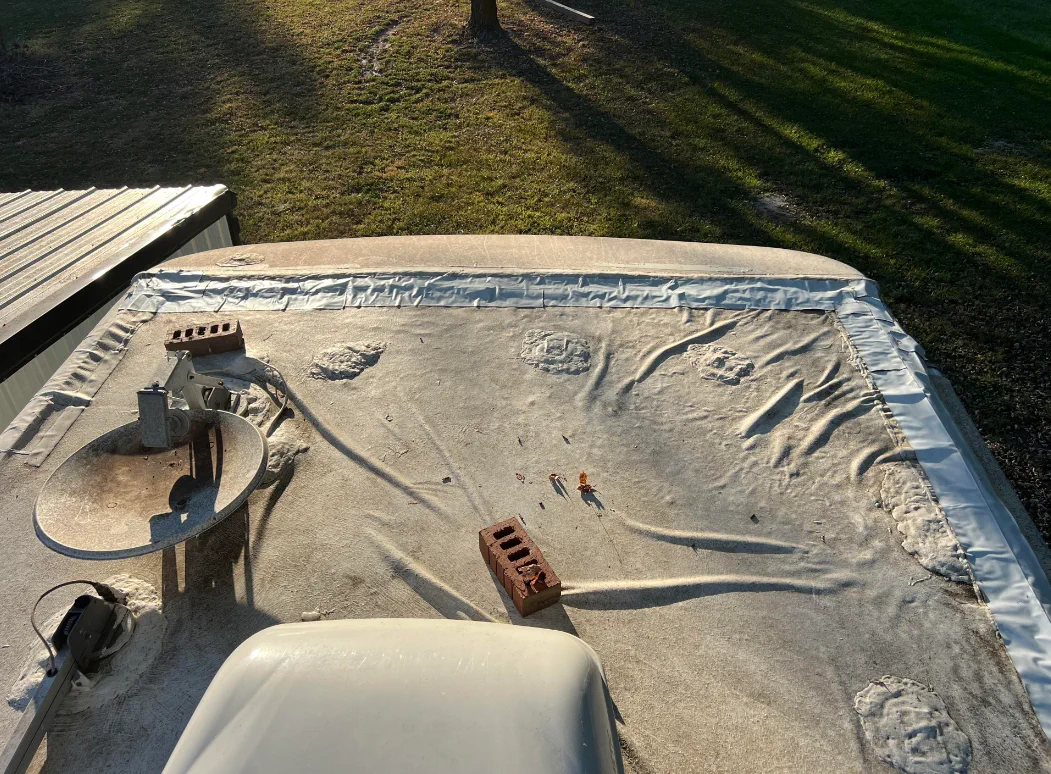
EPDM (ethylene propylene diene monomer) is a darker gray or black rubber membrane with chemically bonded seams sealed under lap sealant. EPDM is the industry workhorse from the early 1990s through the mid-2000s and remains common on budget-tier coaches today.
The material absorbs more solar radiation than TPO but flexes better in cold and resists impact damage from branches and hail.
Fiberglass is a hard gel-coated panel bonded to the coach roof structure. The material lasts longer than either membrane option but costs significantly more to repair per square foot.
Fiberglass shows up on premium Class A coaches, high-end fifth wheels, and a small number of luxury travel trailers. RVIA service documentation classifies the three as the only widely deployed roof systems in the North American RV market.
How long does each RV roof type actually last?
TPO membrane delivers 12 to 18 years of service life with proper sealant maintenance, climate-appropriate storage, and timely seam-weld inspection. The upper bound applies to coaches stored under cover in dry climates with annual lap sealant touch-up. The lower bound applies to uncovered coaches in salt-air or high-UV regions where membrane chalking accelerates.
EPDM rubber lasts 10 to 15 years on the same maintenance discipline. The material is more forgiving of skipped reseal cycles than TPO because the rubber chemistry self-heals minor surface oxidation, but it loses adhesion at seams faster. Most premature EPDM failures A1 RV Repair sees start at a vent gasket or skylight perimeter, not the membrane field.
Fiberglass roofs deliver 18 to 25 years of service when the gel coat is polished annually and recoated at the 8 to 12 year mark. The fiberglass panel itself often outlasts the rest of the coach. The maintenance task on a fiberglass roof is gel-coat care, not membrane reseal.
Which RV roof material is best for hot climates?
TPO performs best in hot climates because the white surface reflects 70 to 80 percent of incident solar radiation, which reduces both interior cooling load and substrate thermal stress. EPDM holds up structurally but runs 25 to 35 degrees hotter at the surface, which accelerates heat transfer through the substrate into the coach and shortens A/C duty-cycle efficiency. Fiberglass with a fresh gel coat performs comparably to TPO when maintained.
For coaches stored or operated in Port St. Lucie, Fort Pierce, Austin, or Dallas, the white-membrane advantage is meaningful. Interior temperatures run 8 to 12 degrees cooler at peak afternoon on TPO versus EPDM, which translates to lower generator runtime when boondocking and lower utility cost on shore power.
For cold-climate coaches in Boise or Bellingham, the thermal-reflection advantage matters less because peak summer temperatures rarely push the substrate envelope. EPDM's superior cold-flex behavior becomes the larger factor; the rubber stays pliable down to negative 40 degrees while TPO begins to stiffen below freezing.
| Material | Lifespan | Reseal interval | Full replacement cost (30-ft) | Best climate fit | Typical coach class |
|---|---|---|---|---|---|
| TPO (thermoplastic) | 12-18 yr | 5-7 yr full / annual touch-up | $3,800 - $7,500 | Hot, high-UV | 2010+ Class A, C, 5W, TT |
| EPDM (rubber) | 10-15 yr | 5-7 yr full / annual touch-up | $3,500 - $6,800 | Temperate, cold | 1990s-2010 mid-market |
| Fiberglass (gel coat) | 18-25 yr | 8-12 yr recoat / annual polish | $8,500 - $16,500 | All climates with maintenance | Premium Class A, luxury 5W |
| Aluminum (legacy) | 25-40 yr | N/A (seam-sealed) | $5,500 - $9,500 | All climates | Pre-1990 Airstream + select bus conversions |
How do I identify which roof type is on my RV?
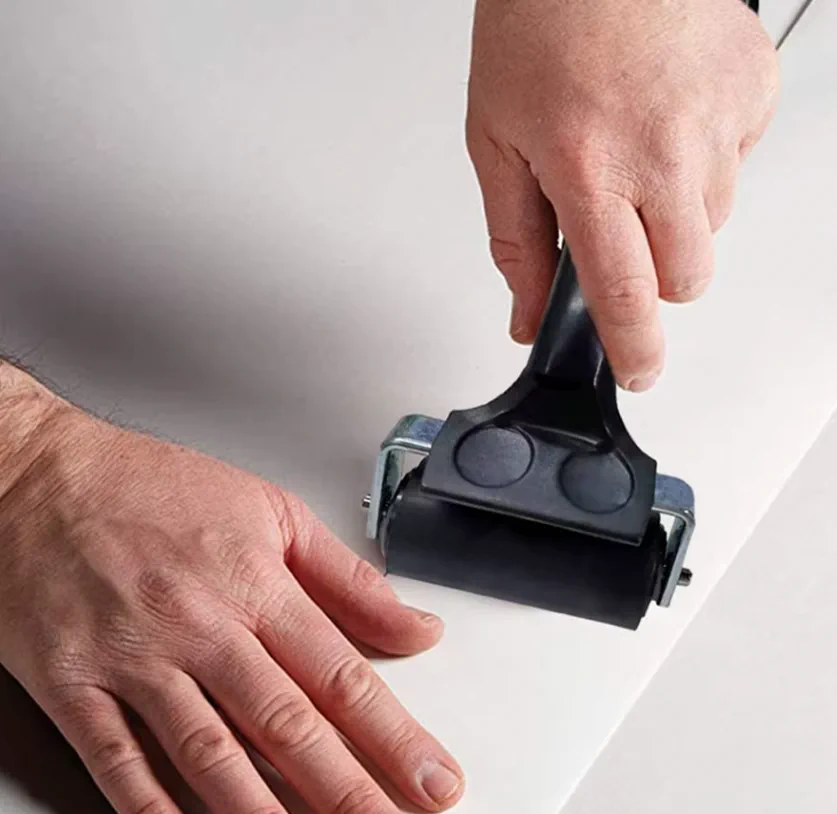
The fastest identification is visual. TPO is white or off-white, feels smooth and slightly plastic, and has heat-welded seams that look like a thin raised line about 1/4 inch wide. EPDM is darker gray to black, feels rubbery and slightly tacky to the touch, and shows chemically bonded seams covered in a wider strip of lap sealant. Fiberglass is glossy and hard, with visible gel-coat finish and no fabric backing exposed through any cracks.
The owner manual usually identifies the material in the roof maintenance section, which is the most reliable confirmation. Manufacturer build sheets also publish the spec by model year. For coaches without manual access, the VIN decoded against the OEM database confirms the factory roof material on most 2005-and-newer models.
If visual identification is ambiguous, an A1 RV Repair tech can confirm during a leak survey by touch, by seam construction, and by gel-coat hardness test. The identification matters because the reseal materials and labor procedure differ; using EPDM-spec lap sealant on a TPO seam produces a bond that fails inside 18 months.
How much does each roof type cost to repair?
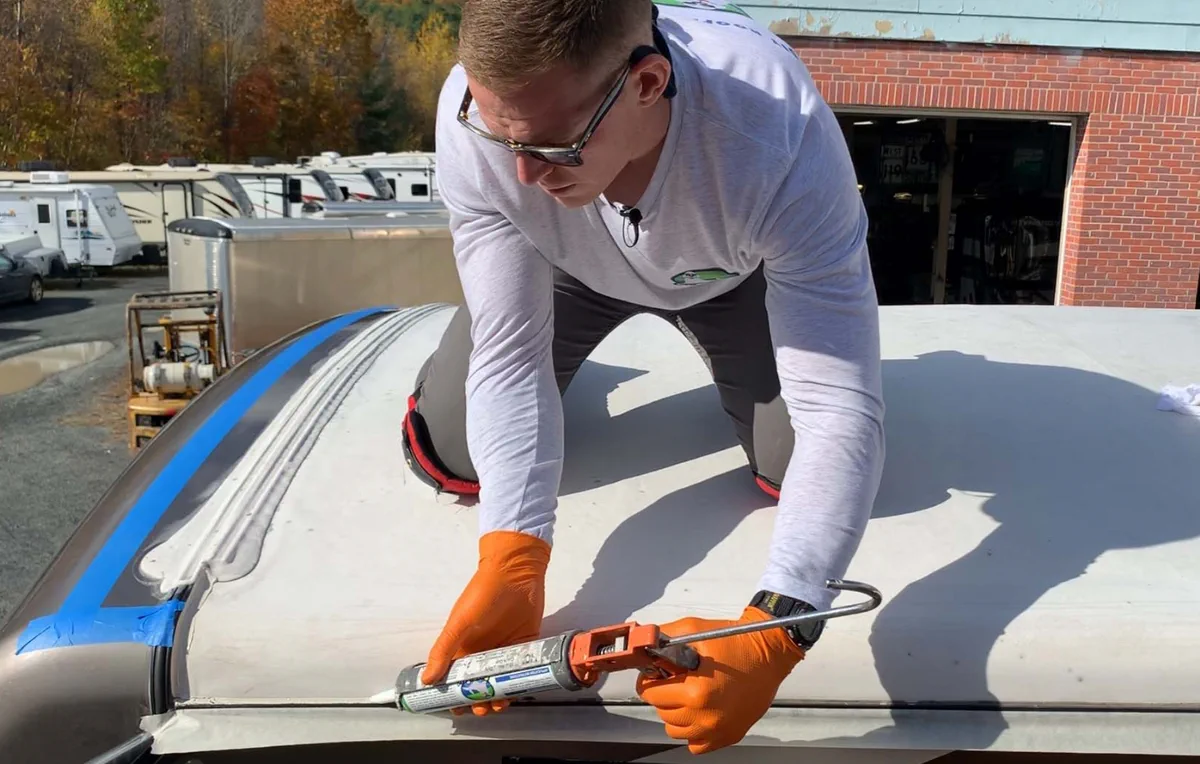
Repair cost shifts predictably with material. EPDM is the cheapest to service because lap sealant work is inexpensive and the membrane forgives surface oxidation. TPO is mid-range because heat-welding tools require more skilled labor. Fiberglass is the most expensive per repair but needs intervention least often.
The table below shows what A1 RV Repair quotes on common roof service calls for each material. Pricing assumes mobile dispatch to your driveway or storage lot on a 30-foot Class A or large Class C coach. Travel trailers and pop-ups land at the low end of each range.
| Service | TPO | EPDM | Fiberglass |
|---|---|---|---|
| Spot sealant touch-up | $225 - $385 | $185 - $350 | $285 - $495 (crack patch) |
| Single seam reseal | $385 - $725 | $300 - $650 | $485 - $895 |
| Vent or skylight reseal | $295 - $545 | $245 - $485 | $345 - $625 |
| Full surface reseal | $795 - $1,650 | $650 - $1,400 | N/A (recoat instead) |
| Liquid recoat system | $1,400 - $2,800 | $1,200 - $2,600 | $1,800 - $3,500 (gel-coat refresh) |
| Spot membrane patch + substrate | $895 - $1,950 | $800 - $1,800 | $1,250 - $2,400 |
| Full membrane replacement | $3,800 - $7,500 | $3,500 - $6,800 | $8,500 - $16,500 |
For specific service ranges and seasonal timing, best time of year for RV roof repair walks through the climate-by-region calendar that applies to all three materials. Dicor sealant specifications publish material compatibility charts for TPO, EPDM, and fiberglass that confirm which product belongs on which roof.
Can I replace an EPDM roof with TPO during a full reroof?
Yes, TPO replacement on an EPDM-equipped coach is a common upgrade and runs $3,800 to $7,500 for the membrane swap on a 30-foot coach. The substrate inspection is identical to a like-for-like reroof, but the new membrane uses heat-welded seams instead of chemical bonds. Most owners upgrading to TPO are doing it for the lower-cooling-load advantage in hot climates and the slightly longer service life.
The substrate decision drives total cost. If the wood decking under the old EPDM is dry and structurally sound, the membrane swap is the entire job.
If moisture has reached the substrate, substrate replacement adds $1,200 to $4,500 depending on the affected area. Substrate rot is found in roughly 35 percent of full-reroof jobs A1 RV Repair sees on coaches over 12 years old.
The upgrade is not always the right call. For cold-climate owners in Boise or Monroe, the EPDM cold-flex advantage offsets the TPO heat-reflection advantage, and the same-material reroof is often the better technical choice. TPO and EPDM replacement service starts with a substrate inspection before the membrane material is locked in.
How often does an RV roof need to be resealed?
Lap sealant on the seams, vents, and skylight perimeters needs annual visual inspection and touch-up where chalking or cracking is visible. The full membrane reseal cycle is every 5 to 7 years for both TPO and EPDM, with fiberglass moving to an 8 to 12 year recoat cycle instead. Skipping the annual touch-up is the most common cause of premature roof failure A1 RV Repair sees on intake.
The sealant has a useful life of its own. Dicor self-leveling lap sealant typically holds a clean cure for 4 to 6 years before chalking begins. After that point the seal still functions as a top layer but no longer flexes with the membrane underneath, and water finds a path through the seam.
Per EPDM Roofing Association technical data, the same chemistry that governs commercial flat-roof reseal cycles applies to RV-grade membranes. The big difference is that an RV coach flexes constantly during travel, which stresses the seam-and-sealant interface harder than a stationary commercial roof.
Are fiberglass RV roofs really more expensive to repair?
Fiberglass repairs cost more per repair but require less frequent intervention. A gel-coat crack repair runs $385 to $695 versus $185 to $350 for an EPDM lap sealant touch-up. The trade-off is the reseal interval: fiberglass needs full recoat every 8 to 12 years, while EPDM and TPO need full reseal every 5 to 7 years.
The lifetime maintenance cost actually favors fiberglass for owners who keep coaches more than 8 years. Three EPDM reseals over 18 years run $1,800 to $3,500 in labor and materials; one fiberglass recoat over the same 18 years runs $1,800 to $3,500 standalone. The break-even point sits around year 10.
For owners selling the coach inside 5 years, the materials are economically similar because reseal intervals do not fully align with ownership. Rubber roof coating is the closest service equivalent across all three materials and lets owners refresh a tired roof before resale. Pre-purchase RV inspection documents roof material and remaining reseal life on every used-coach buy.
What is the cheapest long-term roof material for an RV?
EPDM is the cheapest at purchase, lowest at single repair, and the most forgiving of skipped maintenance, which makes it the budget-tier winner on first-cost terms. TPO costs slightly more upfront and per repair, but delivers 2 to 4 more years of service life and better thermal performance, which pays back the difference in most ownership horizons. Fiberglass is the most expensive upfront and per repair, but the longest service life makes it the lowest cost-per-year for owners who keep coaches 10-plus years.
The right choice depends on planned ownership horizon, climate, and coach class. A weekend-camper buying a used 2015 travel trailer with EPDM should keep the EPDM and budget for 5-year reseals. A full-timer buying a new Class A in Texas heat should accept the TPO premium for the cooling-load advantage. A premium-coach buyer keeping the rig 15 years should view fiberglass as the long-term economic winner despite the higher first cost.
For the math on planned reseal timing across all three materials, see best time of year for RV roof repair. Mobile RV repair pricing walks through the labor rate that applies to all three roof types in 2026.