How much does a full lap sealant reseal cost on a typical RV?
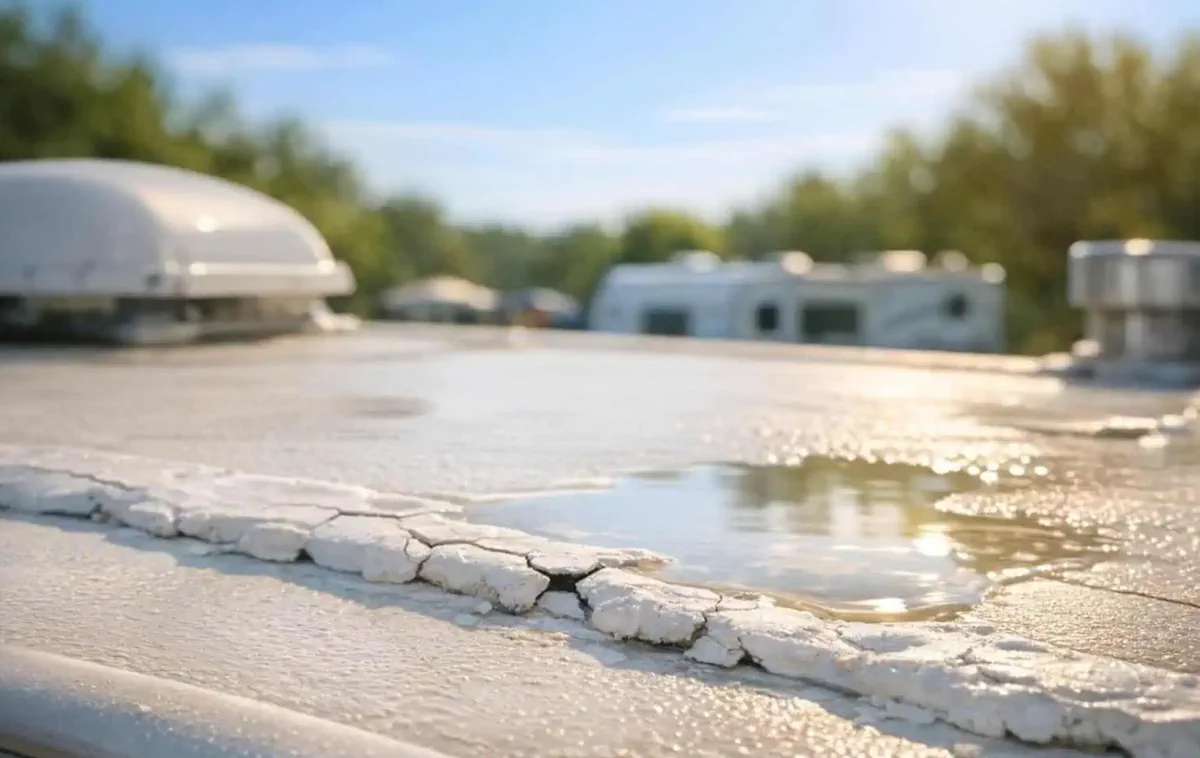
Full strip and reseal of every lap joint with fresh Dicor 501LSW runs $785-$1,250 depending on rig length and how much old sealant we have to scrape before the new material goes down. The scraping step is where most of the labor lives - dried, cracked Dicor doesn't release cleanly, and rushing it leaves ridges under the new bead that compromise the seal within a season.
Spot reseals where only two or three joints are failing run $245-$485. We quote flat-rate by phone before dispatch, so the number on the invoice matches what you heard. If we get up on the roof and find delamination or soft spots under a failing joint, we'll call you before continuing - that's a separate repair, but catching it early keeps it from becoming a full decking replacement.
What is the difference between EPDM and TPO RV roofs and how do you tell?
EPDM is a rubber membrane - cut a corner and the cross-section is black or dark gray all the way through. TPO is a thermoplastic membrane that's white through the entire cross-section, not just on the surface.
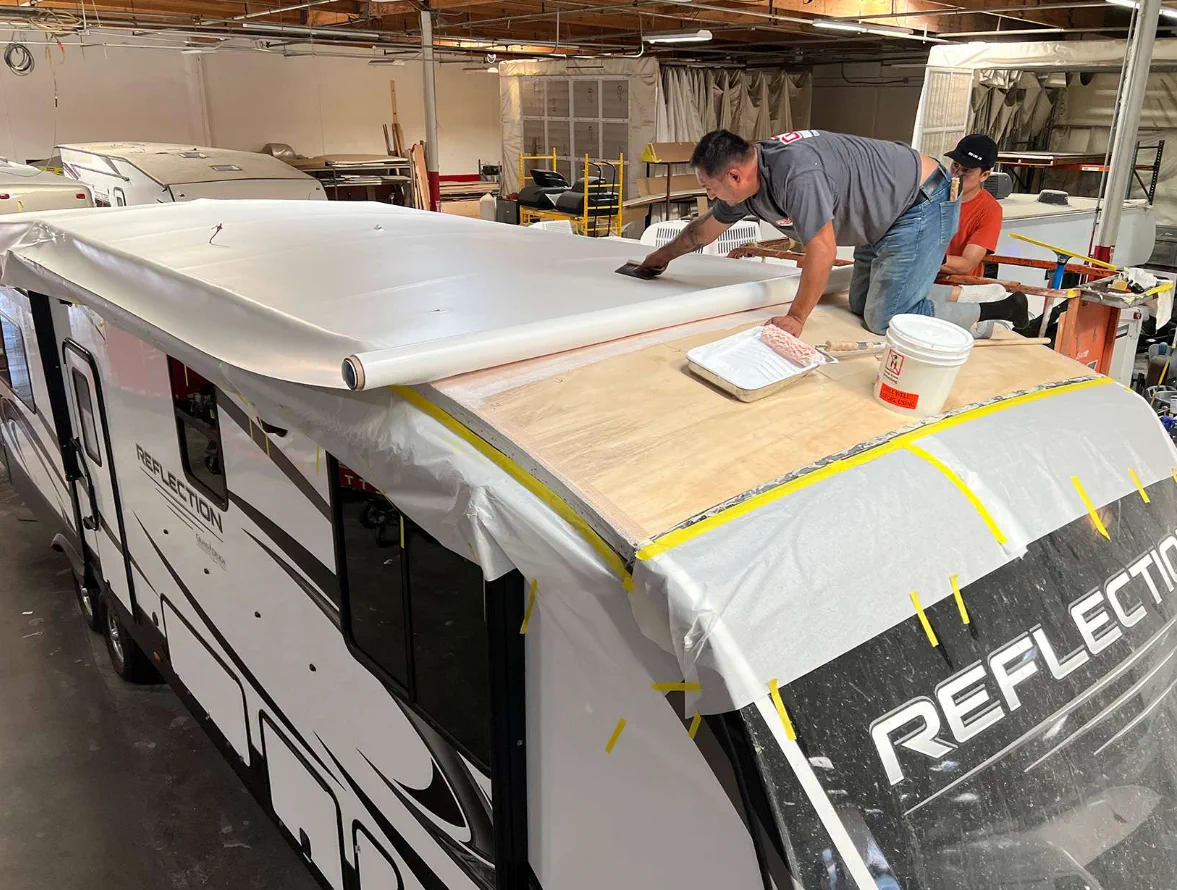
EPDM was the industry standard for most rigs built before roughly 2015; TPO has become the dominant choice for newer builds because it reflects UV more effectively and resists surface chalking longer. The distinction matters because the repair chemistry is completely different - EPDM takes a lap sealant like Dicor and an EPDM contact-cement patch, while TPO needs a TPO-compatible primer and a heat-welded or chemically bonded TPO patch.
Using the wrong product on either membrane means the repair lifts within a season and lets water back in. When the roof is painted over or heavily weathered and we can't tell by eye, we pull a small corner sample from a seam edge and check the cross-section before we open any materials.
How fast can you get to my RV if water is actively coming through the ceiling?
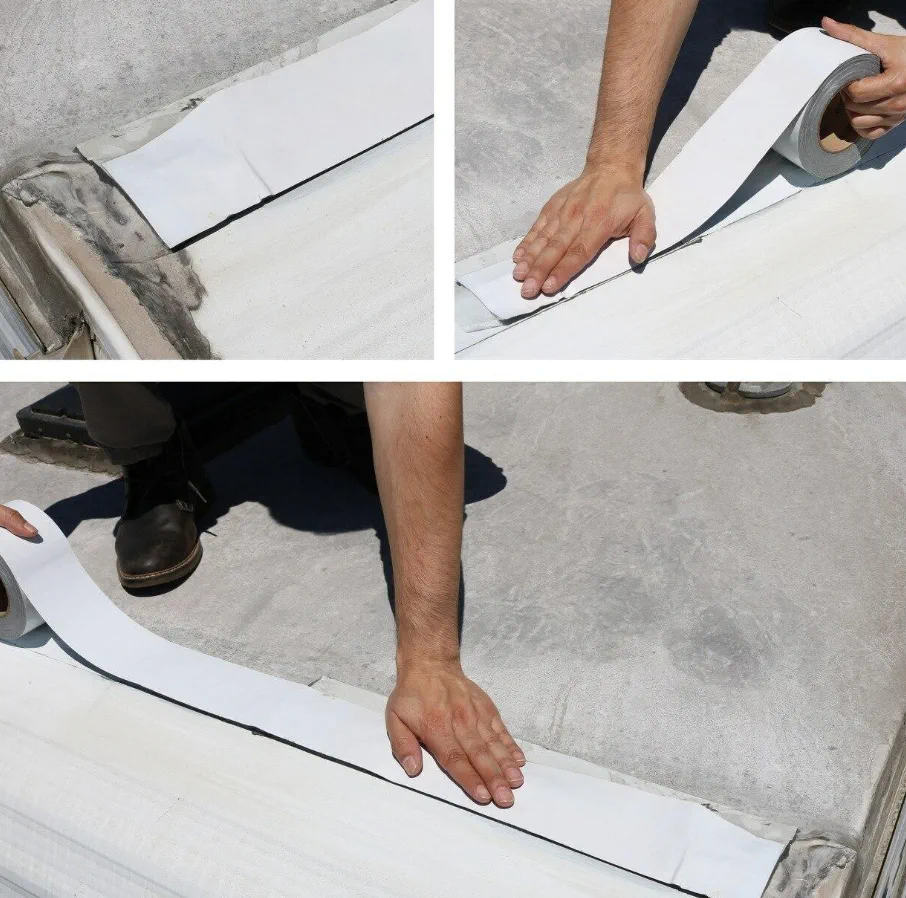
In our our covered metros core service areas, we target a 2-4 hour response when water is actively coming through the ceiling - that's treated as an emergency call, not a scheduled job. The truck rolls with tarps, Eternabond tape, a wet-vac, and enough sealant to stop the immediate intrusion on the first visit, so your rig is dry before we leave even if the permanent repair gets completed the next day.
On arrival, we trace the entry point first because water rarely drips straight down from where it entered - it travels along rafters and laminate before finding a ceiling seam. If the ceiling material or insulation is saturated, we pull what's needed to check for mold and assess whether the decking underneath is compromised. Outside our our covered metros footprint, we dispatch through our nationwide certified-tech partner network, and response times follow that partner's local availability.
Can you patch my roof or do I need a full replacement?
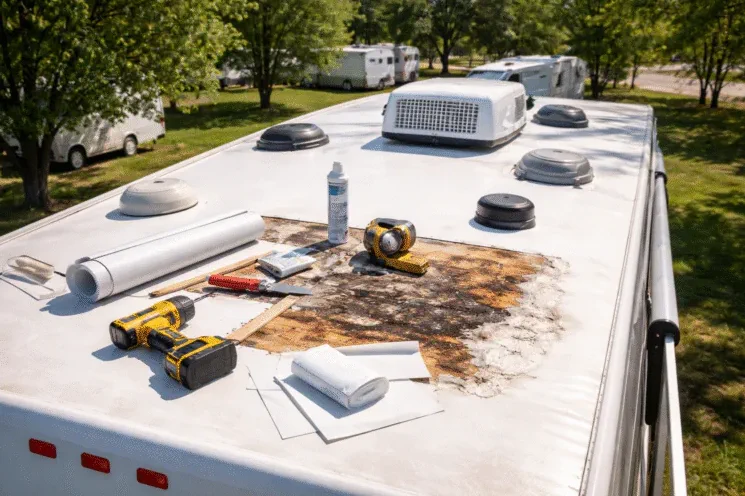
If damage is isolated to one to three spots and the underlying decking is dry, we patch and reseal those areas only - cut out the compromised membrane, dry the substrate if there's any trapped moisture, apply the matching material, and seal the edges. That approach holds well for punctures, small tears, and localized seam failures.
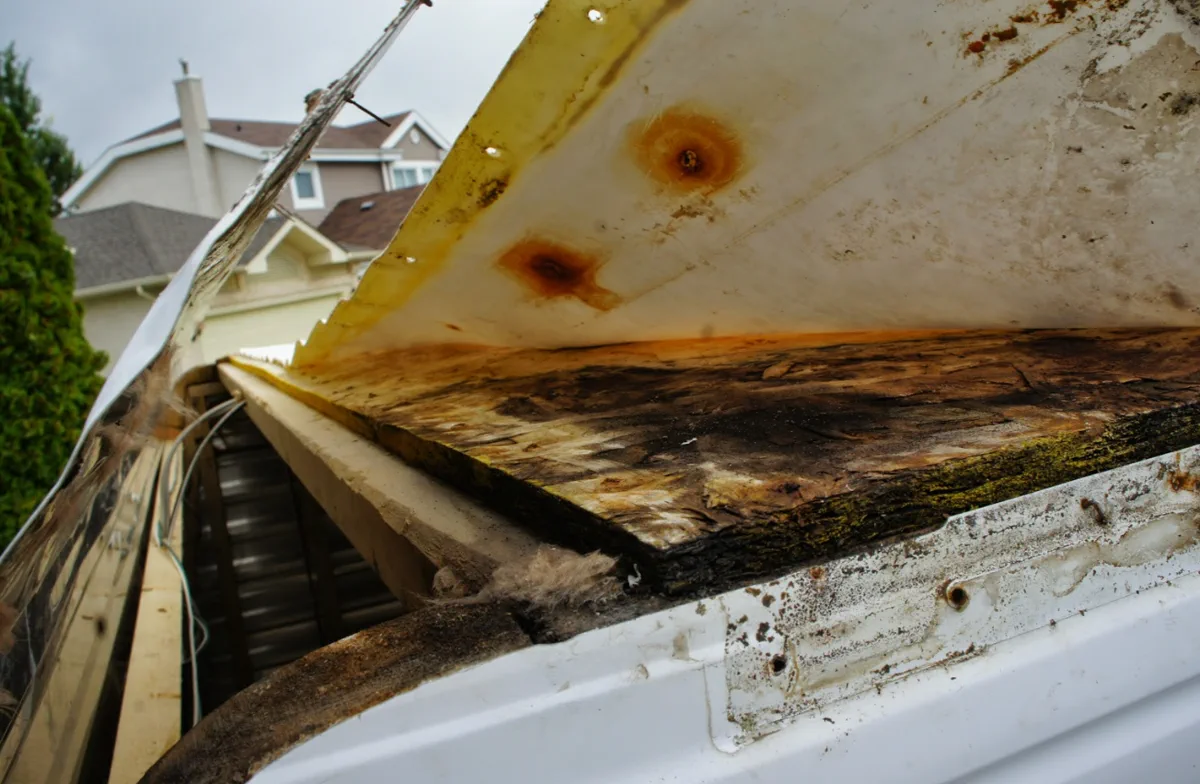
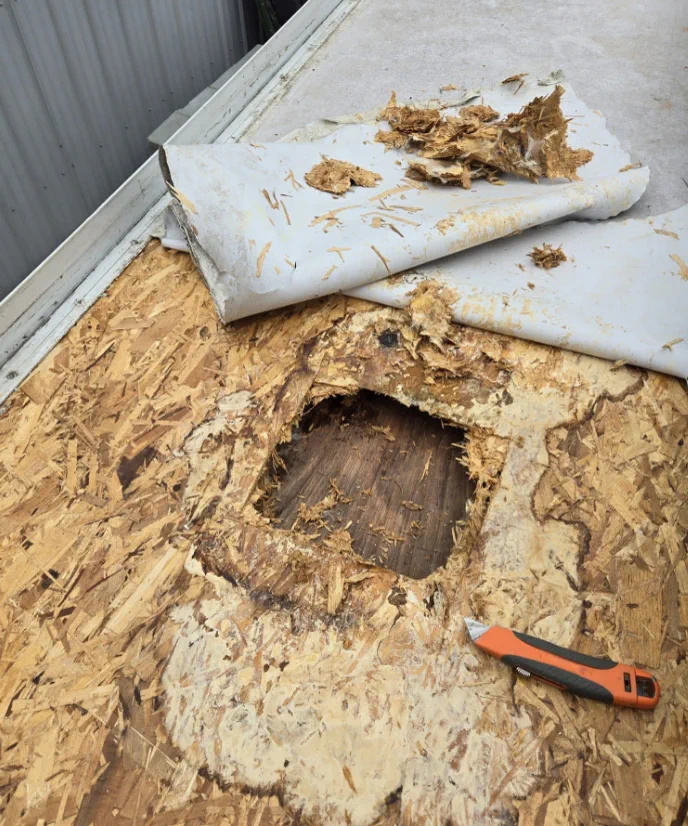
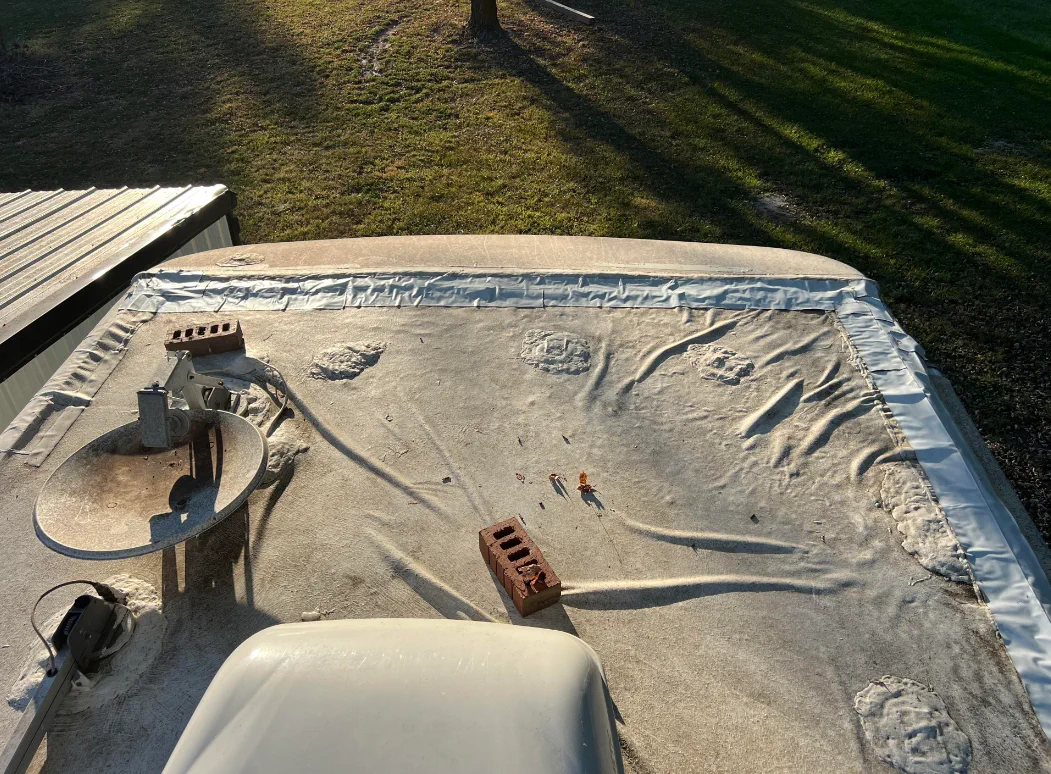
Where patching stops making sense is when the membrane itself has widespread crazing or has lost flexibility across large sections, or when we get up there and find the plywood underneath has softened from long-term water intrusion. At that point you're spending patch money repeatedly instead of solving it once. We'll tell you which situation you're in after we've walked the roof - if it's patchable, we say so.
How long before I can drive my RV after roof work?
Vent gasket and AC gasket replacements are drive-away same day - no cure time involved. Fresh Dicor 501LSW lap sealant needs about 4 hours to skin over before it can handle light rain, and 24-48 hours of full cure before you put it on the highway at speed.
That second number matters because wind load at 60-65 mph creates a lot of uplift and flex along the roofline, and partially cured sealant can lift or crack at the edges before it has bonded fully to the substrate. TPO patches with primer cure in 4-6 hours under normal conditions - humidity and temperature can push that out, so if we're working in cool or overcast weather we'll tell you. Before we pack up, we give you the specific wait window for whatever combination of materials we used on your rig that day.
How does Florida heat affect my RV roof differently than Idaho cold?
Florida UV breaks down lap sealant faster than almost any other climate variable we deal with. On rigs that sit in Stuart or Vero year-round, we regularly see Dicor failing at year 4-5 - sometimes earlier on south-facing roof surfaces - versus 7-10 years in milder climates.
Hurricane season adds a separate problem: wind-driven debris creates pinholes in EPDM and TPO membrane that look minor but channel water directly into the laminate over months. In Idaho, the damage pattern is almost the reverse - freeze-thaw cycles crack aged caulk around vent flanges and AC curbs, and snow load stresses seams in ways that only show up as interior staining the following spring. Because the failure modes are different, the inspection cadence is different too: Florida rigs benefit from a sealant check every 12 months, while Idaho rigs should get a close look at every seam before winter and again at snowmelt.
What warranty do I get on a roof reseal?
Every sealed joint and patch we apply carries a 90-day workmanship warranty. If a seam we resealed leaks within that window, we come back and fix it at no charge.
On the materials side, Dicor 501LSW carries a manufacturer warranty covering UV degradation for up to 7 years, and TPO membranes typically run 10-12 years depending on the product. We photograph every section before and after the job, which matters if you ever need to make a warranty claim - you have a timestamped record of what was resealed, what condition the surrounding membrane was in, and what product we used. The workmanship warranty covers what we did; it does not extend to sections we flagged during inspection but you declined to have resealed, which is another reason we walk the whole roof before quoting.
Do you handle insurance claim documentation for hail or tree damage?
Yes. When storm or tree damage brings you to us, we document the job the way adjusters expect: written damage descriptions that note cause, location, and extent; timestamped photos of every affected section; and an itemized estimate broken down by material and labor so the adjuster can match line items against their own schedule.
We submit those to you in a format most carriers accept without back-and-forth. One thing we'll tell you upfront: hail and tree-strike damage typically falls under comprehensive coverage, but sealant failure from age and UV exposure does not - and the two can look similar on a roof. We'll give you an honest read on which bucket your damage falls in before any paperwork goes out, so you're not filing a claim that's likely to get denied.
Can you replace a slide-out topper at the same visit as a roof repair?
Yes, and combining the two jobs in one visit is the practical way to do it. We're already on the roof working the edge seals and membrane, so dropping down to service the topper takes no additional mobilization time on your end.
Slide-out topper replacement - fabric, spring assembly, or both - runs $385-$685 per topper depending on size and whether the spring tension hardware needs replacement alongside the fabric. We stock Carefree Solera, Lippert Solera, and Dometic topper fabric on the truck for the most common slide widths.
If the topper rail itself is bent or the mounting brackets have pulled away from the sidewall, that's a separate repair we'll quote you before proceeding. Catching a worn topper during a roof visit also matters because a failing topper can funnel water directly onto the slide's top seal - exactly the kind of secondary leak that's easy to miss until the damage is already done.
Are you RVIA certified to work on rigs still under manufacturer warranty?
Many of our techs hold RVIA and RVDA certifications, and the rest bring years of hands-on RV repair experience - collectively the team has 15+ years in the field and 12,000+ documented repairs. When warranty coverage is a concern, we work to OEM-spec sealants (Dicor, ProFlex RV, Geocel) and document every repair with timestamped photos, serial numbers, and a written record of materials used.
That paper trail matters because manufacturer warranty departments want to see that any third-party work matched factory specs. One thing worth knowing: a roof repair we perform on an unrelated section of your rig does not affect warranty claims on separate components like appliances or slide systems. If your rig is still within the original warranty period, let us know before we start - we may adjust our documentation approach to make any future claim review as straightforward as possible.