How do I know if my RV roof membrane is failing and needs replacement?
A failing EPDM or TPO membrane shows visible cracks, seam separation, chalking, or active water stains on your interior walls and ceiling. After 15+ years and 12,000+ RVs serviced, we see the same pattern: rubber hardens in UV and heat, splits at stress points (like around Dometic AC units and vent boots), and seam tape peels away. Dicor lap sealant can patch small damage, but once the membrane itself is cracking across multiple spots or your water intrusion happens after rain, replacement beats patching. We diagnose this over the phone with a description - no guessing.
A Winnebago Navajo owner in Vero Beach called us last summer with water dripping into the bedroom every rain. Moisture was already in the walls.
The EPDM roof was 18 years old, chalky to the touch, and had three seam splits. Patching would buy maybe six months.
We quoted a full TPO replacement - cleaner, longer-lasting than EPDM - and he said yes. Four hours later the roof was sealed and dry. That's the difference between chasing leaks and fixing the root cause.
Signs your membrane needs replacement, not just patching:
- Visible cracks or splits longer than 6 inches
- Seams peeling at corners or around penetrations
- Water intrusion after rain without a visible hole
- Chalky or brittle rubber when you touch it
- Multiple small leaks in different roof zones
- Roof older than 15 years
- Previous temporary patches failing again
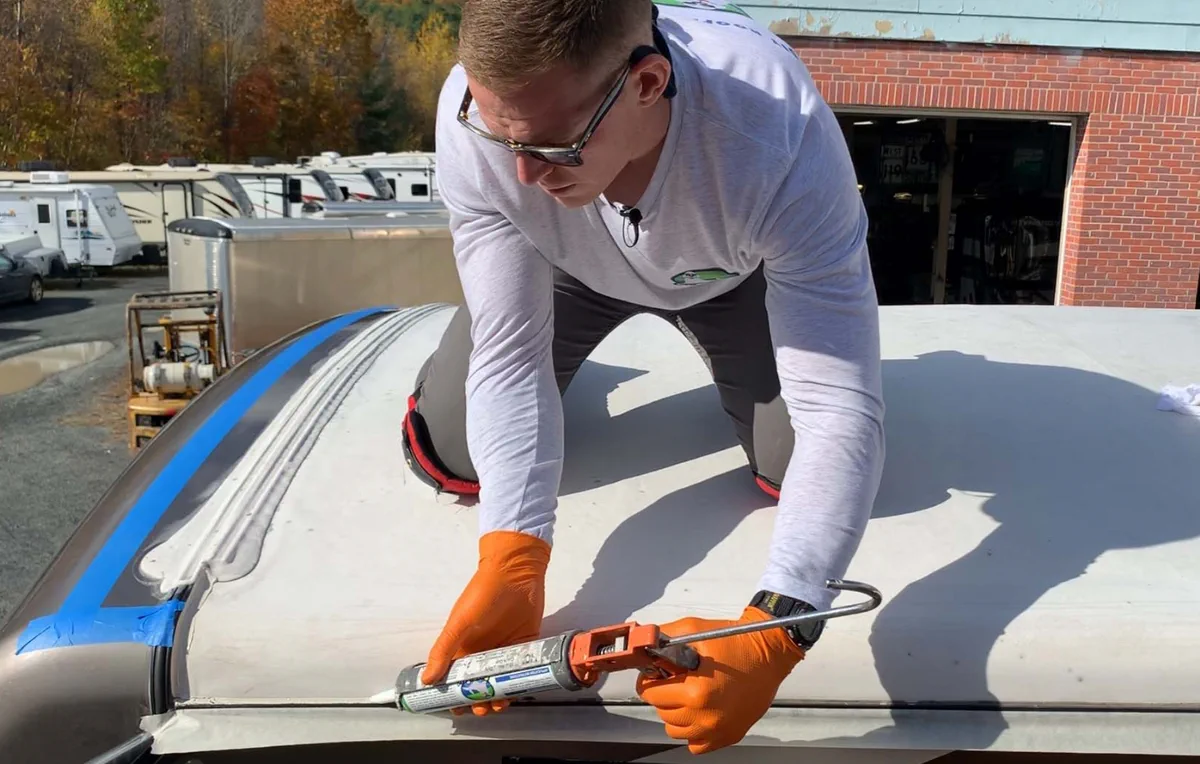
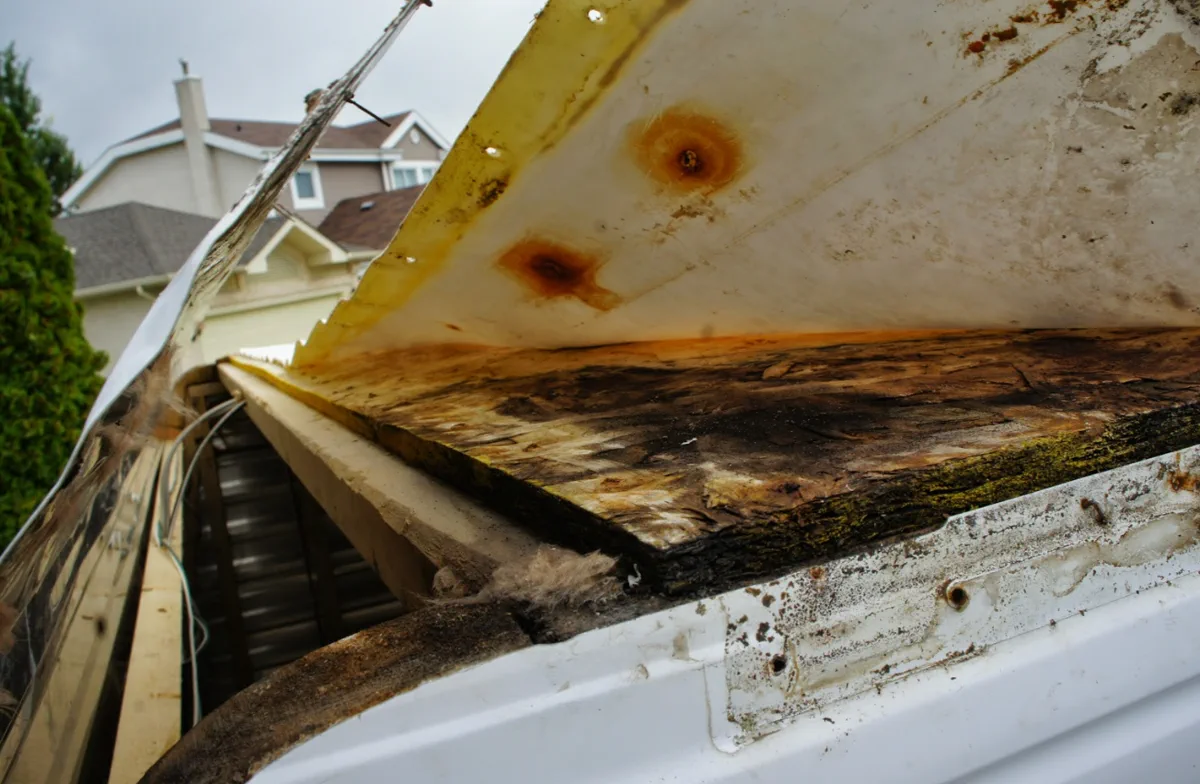
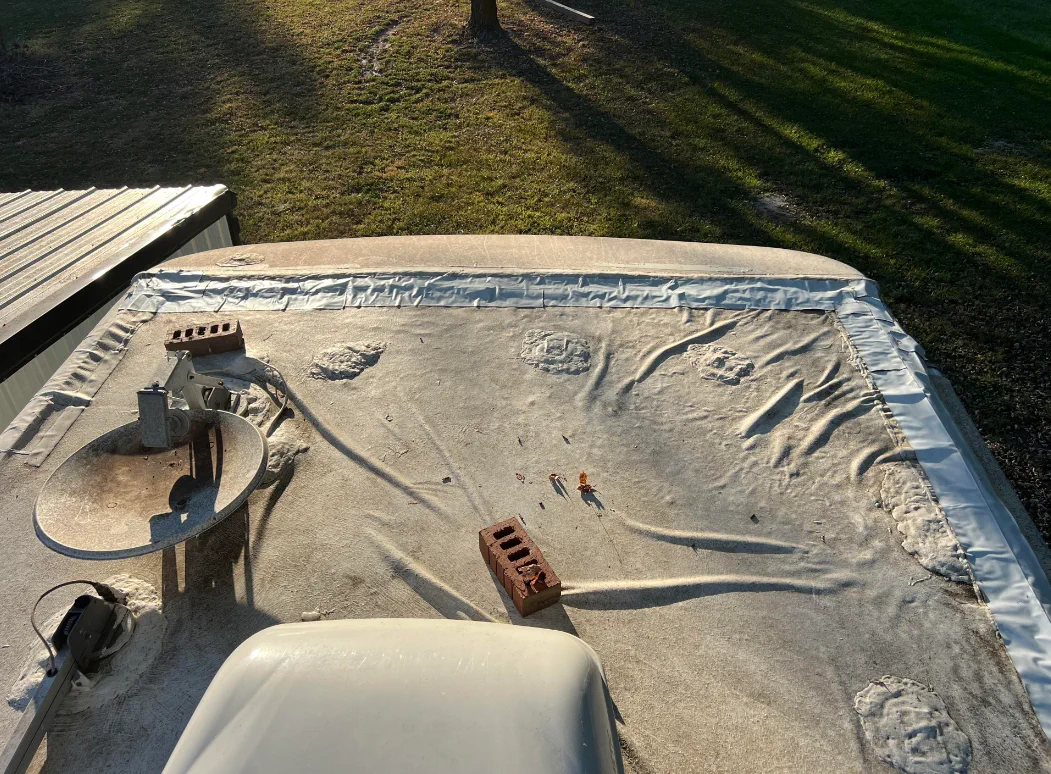
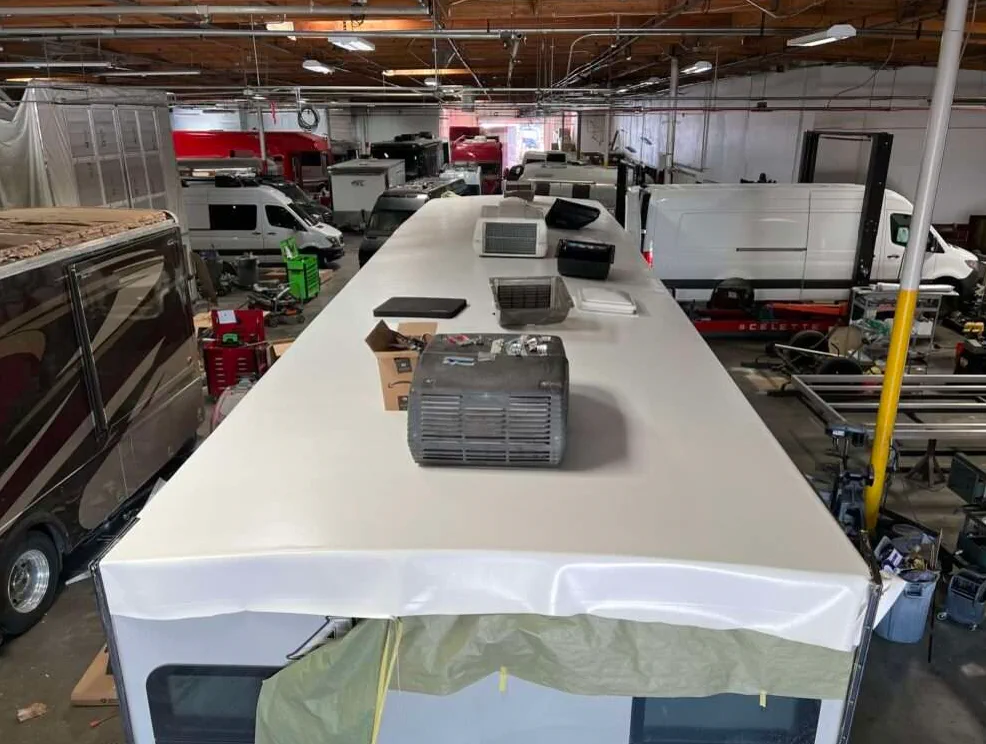
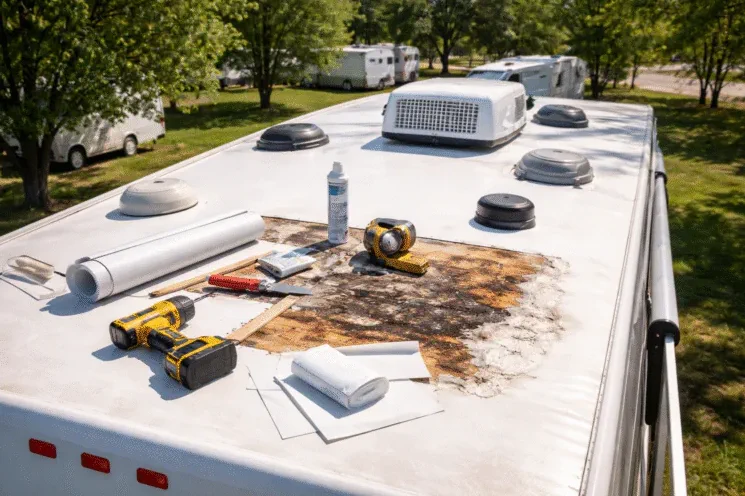
Signs your roof needs full membrane replacement
Four conditions point toward replacement instead of more patches. If your roof shows two or more, the math favors a single replacement over chasing leaks.
1. Multiple cracks or splits over 6 inches
Membrane has lost flexibility across multiple zones. Patches fail at the perimeter within a season because the surrounding material is also compromised.
2. Active interior water intrusion
Water shows up inside on every rain event without a single visible entry point. Membrane has failed across enough surface area that sealant can't keep up.
3. Chalky, brittle membrane to the touch
White powder transfers to your hand when you wipe the roof. UV has fully degraded the surface chemistry. Replace, don't recoat.
4. Roof age 12+ years
EPDM service life is 12-15 years; TPO is 15-20. Past those windows, membrane replacement is preventive maintenance even if visible damage is limited.
What exactly happens when A1 replaces your RV roof membrane?
We remove the old EPDM or TPO, inspect the substrate for water damage or rot, then install new Brite-Ply or Dur-A-Flex TPO or Alpha Systems EPDM membrane with proper overlap, sealed with matching primer and Dicor 501LSW lap sealant. Vents, AC units, antennas, and skylights all come off, get inspected, and get reset on fresh butyl tape with new gaskets where needed.
- Drain water systems and depressurize coach
- Remove or temporarily disconnect roof vents and AC units
- Strip old membrane and old butyl tape
- Inspect plywood decking for soft spots or rot
- Replace damaged decking with marine ply or Coosa Composites
- Apply primer (TPO) or contact cement (EPDM) per spec
- Lay new membrane with proper overlap and bond
- Heat-weld TPO seams or roll EPDM seams to bond
- Reset vents, AC, antenna, and skylight on fresh butyl tape
- Full perimeter Dicor 501LSW seal and water-test sign-off
Full membrane replacement pricing
| Service | Parts / Brand | On-Site Time | Flat-Rate Range |
|---|---|---|---|
| TPO replacement (25-28 ft) | Brite-Ply / Dur-A-Flex | 1-2 days | $5,950 - $7,950 |
| TPO replacement (32-40 ft) | Brite-Ply / Dur-A-Flex | 2-3 days | $7,950 - $11,500 |
| EPDM replacement (25-28 ft) | Alpha Systems EPDM | 1-2 days | $4,950 - $6,950 |
| EPDM replacement (32-40 ft) | Alpha Systems EPDM | 2-3 days | $6,950 - $9,950 |
| Decking section replacement (per 4x4) | Marine ply / Coosa | 2-4 hours | $485 - $885 |
| AC unit reset on fresh gasket | Dometic / Coleman-Mach OEM | 1-2 hours | $245 - $385 |
| Vent + skylight reset on butyl rebed | Camco butyl / OEM gaskets | 1-2 hours per | $185 - $345 each |
Repair vs replace decision guide
| Symptom | Repair Likely | Replace Likely |
|---|---|---|
| Single membrane tear under 2 sq ft | EPDM/TPO patch - $385-$685 | If decking is wet beneath |
| One bad seam joint | Strip-and-reseal - $245-$485 | If multiple seams are also lifting |
| Light surface chalking | Recoat - $1,950-$3,450 | If membrane has lost flexibility |
| Brittle, cracking membrane | Almost never holds | Full replacement |
| Multiple soft spots underfoot | Never patch over rot | Decking + new membrane |
| Roof age 12-15 yr (EPDM) | Maintenance only buys time | Plan replacement window |
| Roof age 15-20 yr (TPO) | Maintenance only buys time | Plan replacement window |
Warning signs we look for during replacement teardown:
- Brown rings on ceiling panels mean water has been migrating for weeks - catch it now or rip the laminate later.
- Sub-roof rot. The plywood under the membrane has soaked through. Inspect immediately - patching over wet decking is a callback waiting to happen.
- Sidewall delamination near the roof edge - water has tracked down the laminate. Separate repair, but flagged on the same visit.
How fast can A1 get a technician to my RV for a roof emergency?
We respond to emergency roof leaks in 2 to 4 hours in our local hubs in our covered metros. If you're active and in our service areas, you call (866) 623-1340 and describe the leak - location, severity, whether you're actively losing water. We dispatch mobile-only, so no shop wait.
We carry Dicor sealant, EPDM and TPO patch kits, and membrane stock in our vans. For a temporary seal (emergency tarp or sealant) we roll out same-day most times.
For a full replacement, we schedule within 48 hours depending on part availability and queue. Outside our core areas, our nationwide partner network can connect you to RVIA and RVDA certified shops.
A Coachmen motorhome owner in Jensen Beach called at 3 PM on a Friday - a seam popped open and water was pooling on the slide-out. We had a tech on-site at 4:45 PM with temporary Dicor sealant and a patch.
By Monday we scheduled the full replacement. That's mobile service working - we come to you, we don't wait for shop hours.
Response time expectations by situation:
- Emergency temporary seal: 2-4 hours in core area
- Full membrane replacement: 48 hours to 2 weeks depending on queue
- Roof inspection and quote: same-day phone quote, no site visit needed
- Warranty claim inspection: 3-5 business days
- Seasonal areas or national network: 1-3 weeks via partner
What brands of membrane and sealant does A1 use, and can I choose?
We use Brite-Ply or Dur-A-Flex TPO, Alpha Systems EPDM, and Dicor 501LSW lap sealant - the same brands OEM installers specify. We don't cheap out on roof material. TPO is our standard recommendation because it's more UV-resistant and reflects heat better, which extends life in Florida sun.
EPDM is the right call when matching original Class A or older fifth-wheel installations, or when budget is the deciding factor. Both come with manufacturer warranties (TPO 10-12 years, EPDM 7-10 years) plus our 90-day workmanship coverage.
Brands and materials we use on roof replacements
- Brite-Ply - TPO membrane in standard widths with primer kit
- Dur-A-Flex - TPO membrane alternative for Class A coaches
- Alpha Systems - EPDM membrane with EPDM-specific contact cement
- Dicor - 501LSW horizontal lap sealant, 551 vertical-edge non-sag
- Camco - butyl tape for under-flange rebed at every penetration
- Geocel - ProFlex RV polymer sealant for AC perimeter
- Marine plywood + Coosa Composites for decking replacement
- Dometic / Coleman-Mach - OEM AC gaskets on reset
What warranty covers your membrane replacement, and what if it leaks again?
A1 warrants all membrane work for 90 days against labor defects and sealant failure. If a seam we sealed or a penetration we gasket-resealed leaks within 90 days, we re-service it at no charge. That covers the workmanship and materials we applied.
It does not cover acts of God (hail, extreme impact) or damage you cause post-repair. We also document the condition of your roof substrate before we start - if rot was there, it stays noted. The warranty is solid because our techs have 15+ years experience and we don't rush jobs.
A Tiffin motorhome owner in Stuart had us replace his roof in March. In April, one corner seam started weeping.
He called us back. We re-sealed that corner under warranty - no labor charge, just the material.
He's now year two post-replacement with zero issues. That's what the 90-day warranty means: we stand behind the work, and you're not gambling.
What the 90-day warranty covers and does not cover:
- Labor to reseal or repair any seam we installed
- Material cost for re-application of sealant or gaskets
- Replacement of faulty penetration gaskets we installed
- Does NOT cover impact damage or hail
- Does NOT cover neglected maintenance or UV degradation after 90 days
- Does NOT cover substrate damage that existed before repair
- Warranty voids if work is modified by third party