How do you know your RV roof vent is leaking before it destroys the ceiling?
Water stains on the ceiling around the vent base are the first sign - but by then, moisture has usually penetrated the laminate. Most RV roof vents (Dometic, Coleman-Mach, or passive Heng's models) fail at the gasket seal or flange, not the vent itself. You'll see yellowing, soft spots when you press the headliner, or smell mustiness near the vent.
Some owners don't notice until they see mold or the headliner starts sagging. We've pulled apart over 12,000 RVs - about 30% had slow vent leaks that went undiagnosed for months.
The gasket dries out, shrinks, or gets damaged by UV and temperature swings. A roof vent that dripped 2 gallons over winter into a 35-foot trailer can cost $2,500+ in laminate repair.
We pulled a 2019 Jayco Jay Flight with a leaking Coleman-Mach vent last month - owner thought it was AC condensation. Turned out the gasket had separated and water was running down the interior of the vent stack every time it rained.
The laminate around the flange was soft but not yet rotted. We resealed it with Dicor self-leveling sealant and replaced the gasket - $280 total, 90 minutes on-site.
Owner saved $1,800 in laminate repair by calling us when he noticed the stain. That's the call we want to get.
Signs your roof vent needs attention now:
- Water stain on ceiling around vent base
- Soft or spongy laminate when pressed
- Musty or moldy smell near the vent
- Visible cracks in flange or vent body
- Deteriorating sealant around the base
- Headliner sagging or discoloration spreading

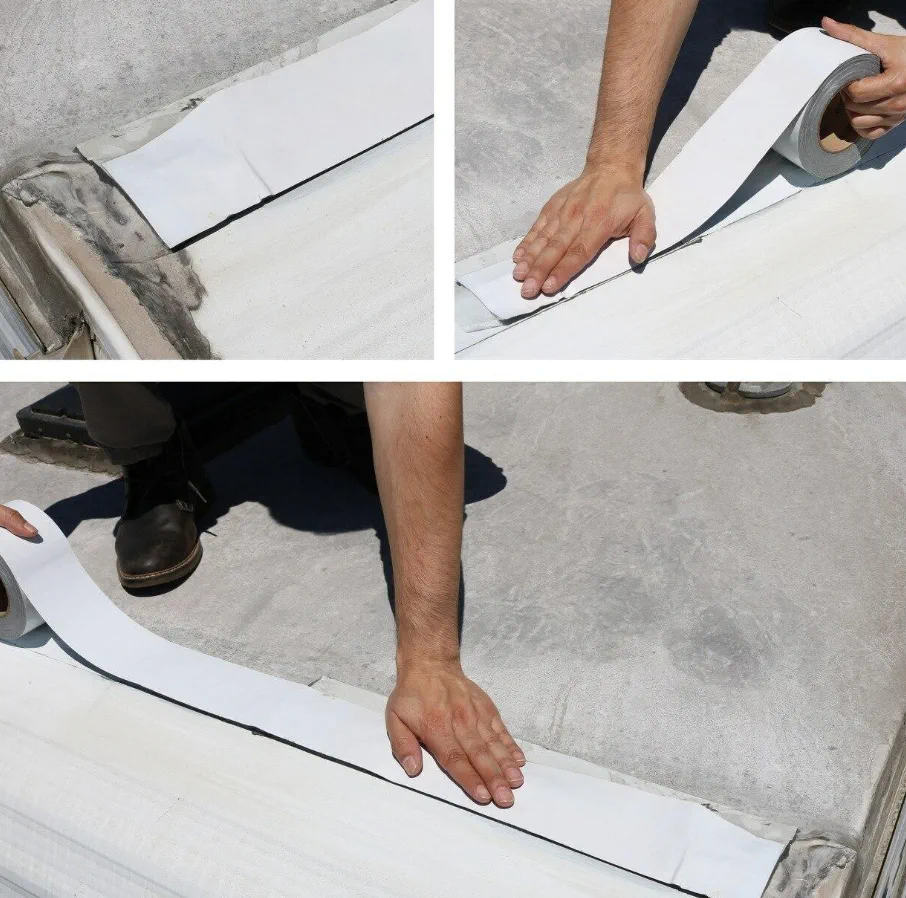
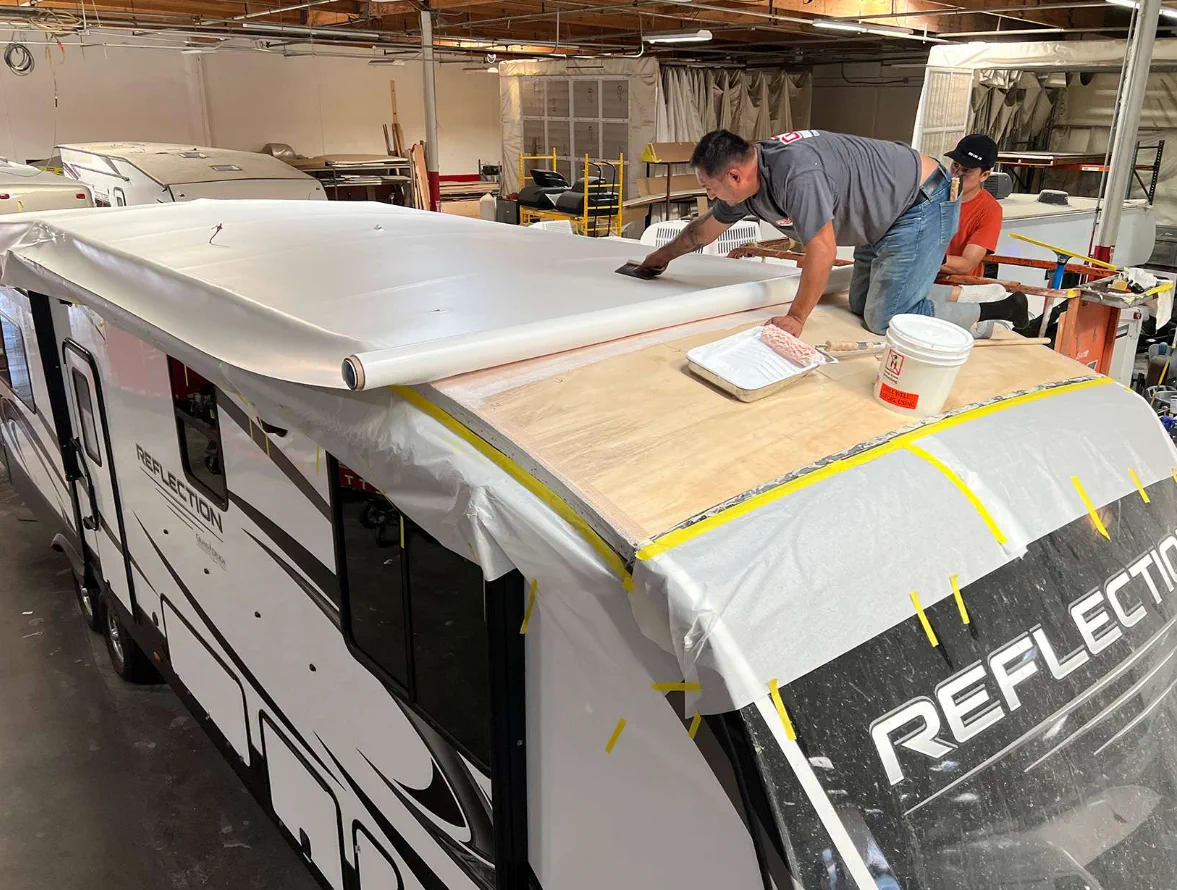
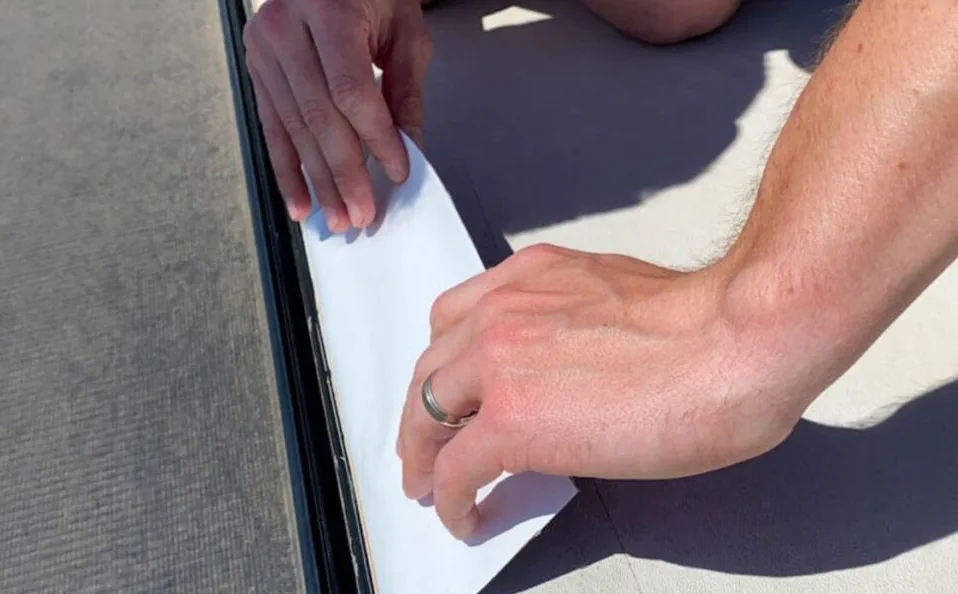
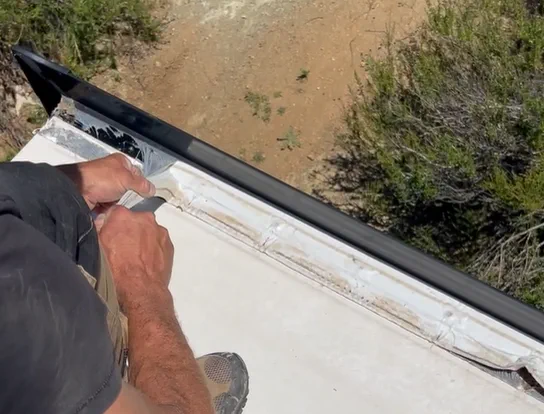
Signs your roof vent needs service
Four common patterns drive almost every vent call we run. Catch any of them now and you avoid laminate damage that costs ten times the repair.
1. Stained ceiling around the vent
Brown or yellow rings on the ceiling Lauan around the vent opening. Gasket has compressed flat or Dicor lap sealant has cracked. Reseal or gasket swap, $145-$245.
2. Cracked or chalky dome cover
The plastic dome on top has yellowed, cracked, or shattered from a tree branch or hail. Dome-only swap is $145-$185 if the base flange is sound.
3. Powered vent motor won't run
MaxxAir or Fan-Tastic motor hums but blade won't turn, or it does nothing at all. Motor swap with new gasket runs $245-$385 including a fresh perimeter reseal.
4. Lifted or missing Dicor at the flange
Visible gap between the vent flange and the membrane, with cracked or missing lap sealant. Strip-and-reseal with fresh Dicor 501LSW, $145-$245 per vent.
What exactly happens during an A1 roof vent repair visit?
We inspect the vent from roof and interior, test for leaks, and reseal or replace depending on damage. Step one is getting on the roof - we check the gasket condition, caulk integrity around the flange, and the dome cover for cracks. Step two is interior inspection: we look at the ceiling Lauan for staining, soft spots, or mold near the vent opening.
If the gasket is the only failure, we lift the dome, swap the gasket, and reset. If the lap sealant has cracked, we strip back to bare substrate and lay fresh Dicor 501LSW. If the vent body itself is cracked or the motor is dead on a powered unit, we replace the whole assembly with a fresh butyl tape bed under the flange and Dicor on top.
- Roof inspection for gasket and sealant condition
- Interior inspection for laminate damage and mold
- Dome cover crack check (UV chalking + impact damage)
- Motor function test on powered units
- Butyl tape rebed if pulling vent body
- Dicor 501LSW lap sealant on flange perimeter
What does a roof vent repair actually cost?
Gasket and sealant reseal runs $145-$245. Full vent replacement (gasket plus vent body) runs $245-$485 depending on vent brand and roof type. Labor is included in those prices - we quote flat-rate by phone before we roll out, and there's no diagnostic fee tacked onto the invoice.
Powered MaxxAir or Fan-Tastic units cost more than passive Heng's vents because the powered assemblies run $185-$285 just for the part. Dome-only replacements (when only the cracked plastic cover needs to swap) are $145-$185.
Roof vent repair pricing
| Repair | Parts / Brand | On-Site Time | Flat-Rate Range |
|---|---|---|---|
| Gasket reseal (per vent) | OEM gasket / Dicor | 30-45 min | $145 - $245 |
| Cracked dome cover swap | Camco / Heng's universal | 30-45 min | $145 - $185 |
| Full passive vent replacement | Heng's / Ventline | 1-2 hours | $245 - $345 |
| Powered vent replacement | MaxxAir / Fan-Tastic | 1-2 hours | $345 - $485 |
| Motor swap on powered vent | OEM motor | 1-2 hours | $245 - $385 |
| Butyl tape rebed + Dicor reseal | Camco butyl / Dicor 501LSW | 1-2 hours | $185 - $285 |
| Plumbing vent stack reseal | Dicor / vent collar | 30-45 min | $145 - $245 |
Warning signs we look for during the vent inspection:
- Brown rings on ceiling panels mean water has been migrating for weeks - catch it now or rip the laminate later.
- Sub-roof rot. The plywood under the membrane has soaked through. Inspect immediately - patching over wet decking is a callback waiting to happen.
Which roof vent brands do we repair and what parts do we carry?
We stock gaskets, sealants, and replacement assemblies for Dometic, Coleman-Mach, Heng's, and Maxx Air vents - the four brands covering 95% of RVs on the road. We carry Dicor lap sealant (the industry standard for EPDM roofs) and Sikaflex for TPO roofs. We stock generic gaskets and brand-specific gaskets.
For less common vents (Fantastic Fan, older Airxcel), we source parts within 24 hours and schedule a follow-up. Dometic and Coleman-Mach vents are the most common - both are reliable if the gasket and sealant are maintained.
Heng's passive vents have no motor, so fewer failure points but also no damper control. Maxx Air and similar powered vents are durable but more expensive to replace ($400+). We don't carry every color option, but we can order matched trim rings if cosmetics matter to you.
A Grand Design Reflection owner in Boise had a Dometic vent with a cracked gasket. We had a replacement gasket kit and Dicor sealant on the truck.
Swapped it in 90 minutes for $220. Same week, a Keystone Cougar owner needed a full Heng's passive vent replacement - we had the assembly in stock ($340 total).
Because we run a mobile operation and serve 12,000+ RVs over 15 years, we've learned which parts fail most and we stock them. You don't wait for parts; we fix it the day you call.
Brands we stock and repair:
- Dometic roof vents and gaskets
- Coleman-Mach powered vents
- Heng's passive roof vents
- Maxx Air powered ventilation
- Dicor self-leveling sealant (EPDM)
- Sikaflex polyurethane sealant (TPO)
- Universal gasket kits
- Vent flange hardware and trim rings
How long does a roof vent repair take and when can we schedule you?
Most roof vent repairs take 1-2 hours on-site - gasket reseals closer to 45 minutes, full replacements closer to 2 hours. In our core covered metros, we respond within 2-4 hours on active leak emergencies and book most routine vent calls within 1-3 business days. Florida summer storm season and Idaho first-snow week are our two highest-volume windows for vent-related calls. Outside our service footprint, our nationwide partner network connects you with a certified mobile tech who carries the same MaxxAir, Fan-Tastic, Heng's, and Ventline parts.
What warranty and guarantee backs our roof vent repair work?
All labor is backed by a 90-day workmanship warranty - if the seal fails due to our installation, we come back and fix it free. That covers resealing, gasket installation, and sealant application. It does not cover damage from extreme weather (hail, hurricane-force winds) or damage caused by something else hitting the vent.
Manufacturer warranties on the vent itself or replacement gasket vary by brand - Dometic and Coleman-Mach are typically 1-2 years. We use genuine parts or OEM-equivalent gaskets, not knockoffs.
If a gasket we installed fails within 90 days due to defective material or our workmanship, we replace it and reseal. We're certified by RVIA and RVDA, so the work meets industry standards. You get a written receipt with what was done, what parts were used, and our warranty terms in black and white.
A Coachmen Apex owner in Port St. Lucie had us reseal a vent in March. Come June, she noticed a tiny weep during a hard rainstorm - water was just barely seeping at one edge.
Called us up, we came back, found a spot we'd missed during prep, redid that section at no charge. That's the 90-day warranty in action.
We're not here to squeeze you for a second service call; we're here to get it right the first time. If we miss something, we own it.
Warranty details:
- 90-day workmanship warranty on all labor
- Covers resealing and gasket installation failures
- Does not cover weather damage or external impact
- Manufacturer warranty on parts varies by brand
- Dometic gaskets typically 1-2 year coverage
- Coleman-Mach vents typically 1-2 year coverage
- Written receipt and warranty terms provided
- RVIA and RVDA certified workmanship