How do I know my RV roof is failing before it leaks inside?
Catch roof failure early by looking for chalking, cracking, or separation at seams. EPDM (rubber) and TPO (thermoplastic) roofs don't age quietly - they show warning signs 6-12 months before water gets into your walls. Walk the roof in dry weather.
Look for white powder coating (chalking), gaps between Dicor lap sealant and seams, loose vent or AC gaskets, and any soft or spongy spots in the membrane. A Jayco or Forest River RV with 7+ years of UV exposure almost always has at least two problem areas. We inspect 40-50 roofs per month across our nationwide network - the ones we catch early save owners $3,000-$8,000 in laminate and wall repair.
Most owners wait until they see water stains on interior ceilings or smell mold - by then damage is behind the walls. A 2015 Winnebago Navajo we serviced last month had hidden water in the starboard bedroom wall because the AC unit gasket failed silently.
Homeowner missed it until the laminate was soft. We pulled the AC, resealed the opening with Dicor, and coated the whole roof. Had he called at the first sign of gasket shrinkage, the job would have been $200 cheaper and way less stress.
Early-warning roof signs:
- Chalking or white powder on membrane surface
- Gaps between sealant and seams wider than 1/8 inch
- Vent or AC gaskets pulling away or cracked
- Soft or spongy spots when you walk the roof
- Visible seam separation or peeling Dicor tape
- Discoloration or dark stains on membrane
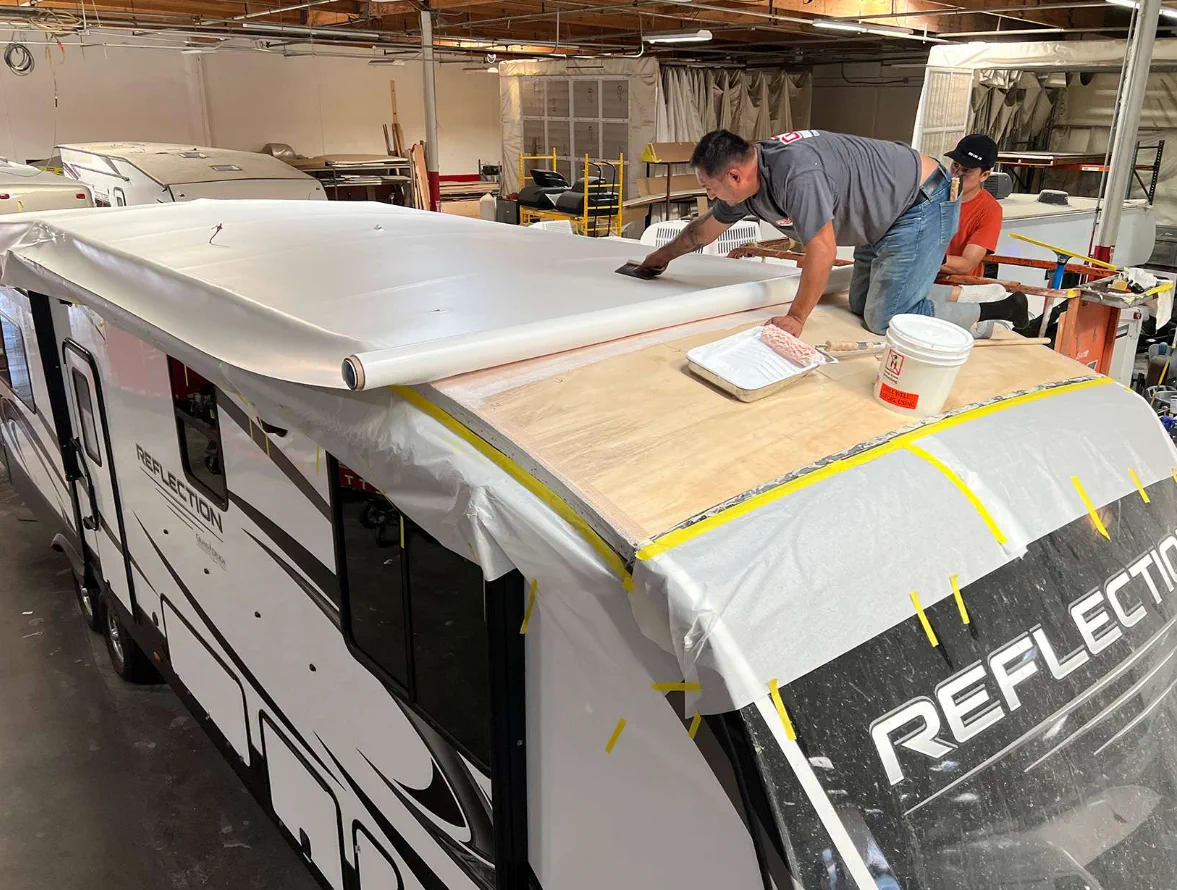
Signs your roof needs a recoat instead of patches
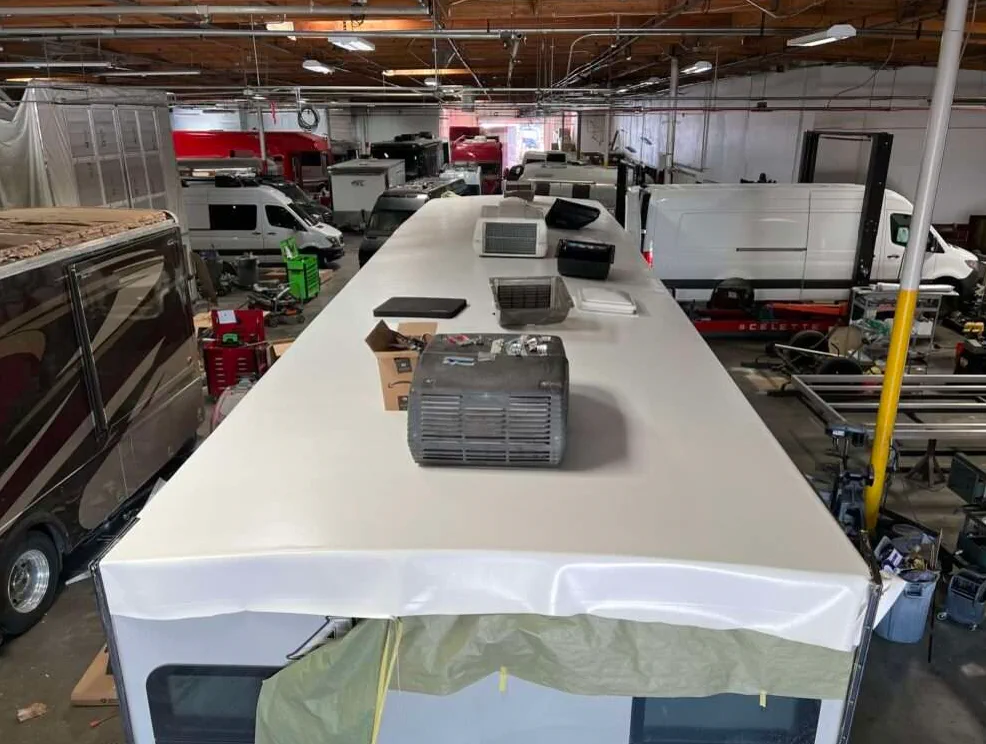
Four conditions point toward a recoat rather than chasing individual leaks. If your roof shows two or more of these, the recoat math beats the patch math every time.
1. Heavy chalking across the membrane
White powdery residue that comes off on your hand when you wipe the roof. UV has degraded the membrane surface across most of the roof, not just one spot. Recoat restores UV protection.
2. Multiple cracked Dicor seams
Three or more lap joints showing cracks, lifts, or chalk. Spot reseals on each one cost more and last less than stripping all seams and laying fresh Dicor under a recoat layer.
3. Slow membrane crazing without punctures
Surface looks like cracked windshield from a distance but no holes through to decking. This is exactly what Liquid Rubber and Henry recoats are designed to bridge.
4. Roof age 6-10 years with no major damage
The classic preventive case. EPDM at year 6-8, TPO at year 8-10. A recoat now buys you another 7-10 years; waiting until you have leaks turns this into a $4,000-plus interior repair job.
What exactly does your rubber roof recoat process cover?
We strip, inspect, reseal, and coat your entire roof membrane in one service. Step one is getting up there and documenting what we see - photos go to you before we start. We clean the membrane top to bottom with TSP and a soft scrub brush, rinse, and let dry.
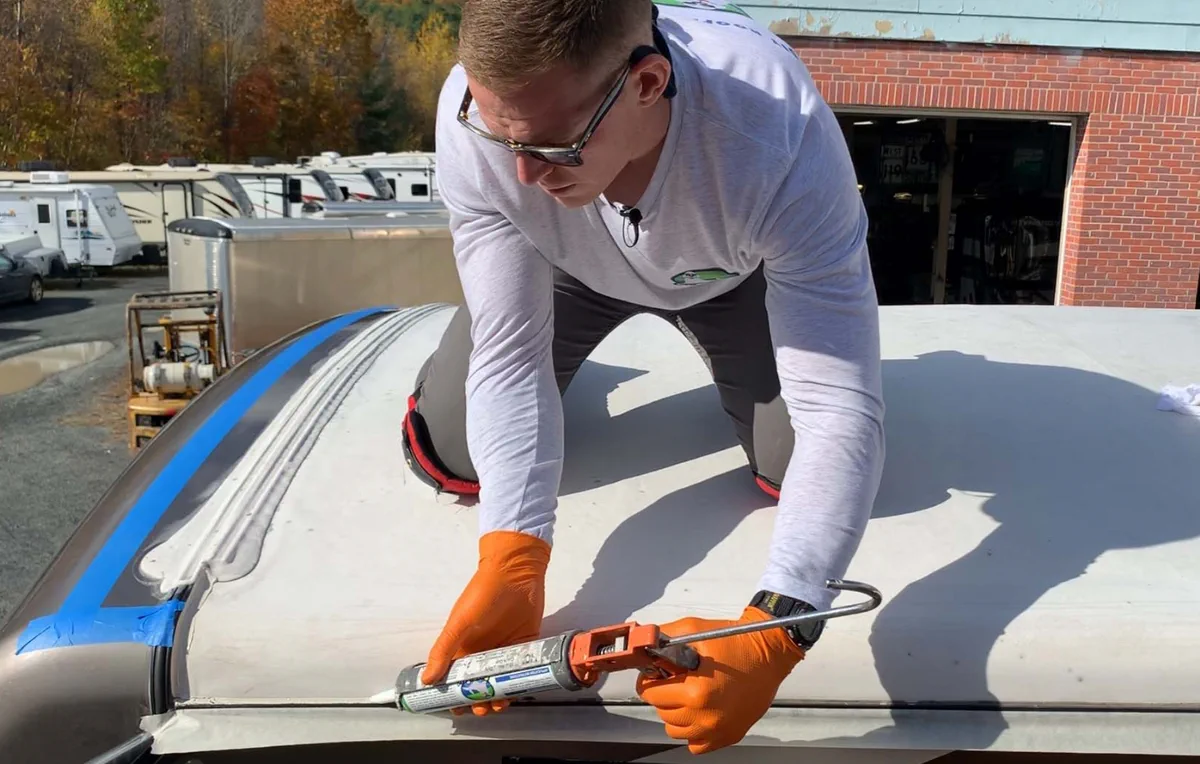
We strip cracked Dicor lap sealant from every seam and lay fresh Dicor 501LSW. We pull or reseal vent flanges, AC gaskets, antenna mounts, and skylight perimeters.
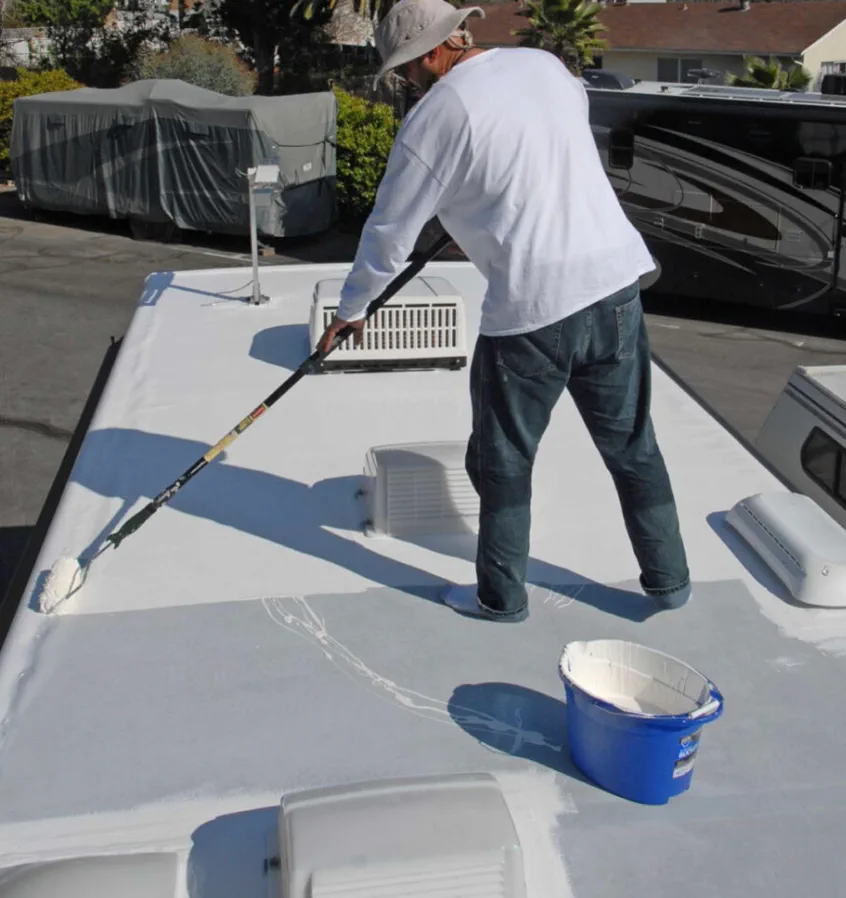
Then we apply Liquid Rubber or Henry RV Roof Coating in two coats with proper dry time between, watching for low spots that need a third pass. Final inspection includes a water spray test on every penetration before we leave.
- Roof cleaning and debris removal
- Seam inspection and lap-sealant reapplication
- Vent and AC gasket reseal
- Two-coat Liquid Rubber or Henry application
- Edge and corner detailing with brush
- Water-spray test before sign-off
How much does a rubber roof coating really cost?
Full recoats run $1,950 - $3,450 depending on roof size, damage scope, and membrane type. A 28-foot rig with clean seams and no patches starts around $1,950. A 40-foot with seam separation, vent failures, and AC gasket shrinkage runs to the upper end.
Tankless coatings on TPO need a TPO-specific primer and run slightly higher than the equivalent EPDM job. Pricing includes Dicor seam reseal, vent and AC gasket replacement, two coats of Liquid Rubber or Henry, and the water-test sign-off.
Roof recoat pricing
| Service | Parts / Brand | On-Site Time | Flat-Rate Range |
|---|---|---|---|
| Full recoat (28-30 ft EPDM) | Liquid Rubber / Henry RV | 6-8 hours | $1,950 - $2,650 |
| Full recoat (32-40 ft EPDM) | Liquid Rubber / Henry RV | 8-10 hours | $2,450 - $3,450 |
| Full recoat (TPO + primer) | Brite-Ply primer / Liquid Rubber | 8-10 hours | $2,650 - $3,650 |
| Spot recoat (under 100 sq ft) | Liquid Rubber | 2-3 hours | $685 - $985 |
| Dicor seam reseal (full strip) | Dicor 501LSW / 551 | 4-6 hours | $785 - $1,250 |
| EPDM patch + recoat over | Alpha Systems EPDM | 3-5 hours | $485 - $885 |
| AC gasket + perimeter reseal | Dometic / Coleman-Mach OEM | 1-2 hours | $245 - $385 |
Warning signs we look for during prep:
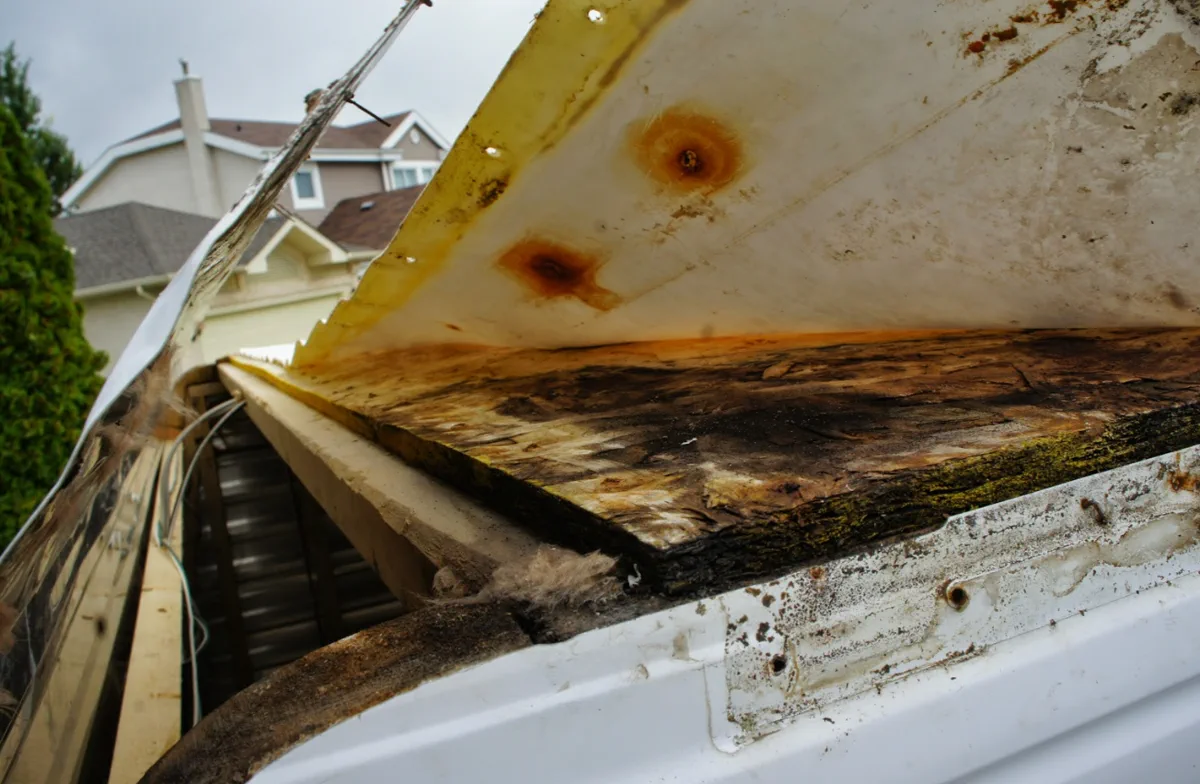
- Brown rings on ceiling panels mean water has been migrating for weeks - catch it now or rip the laminate later.
- Sub-roof rot. The plywood under the membrane has soaked through. Inspect immediately - patching over wet decking is a callback waiting to happen.
What brands of sealant and coating do you actually use?
We use Dicor 401UVR lap sealant and Dicor roof coating because they work and match what OEMs specify. Dicor is the industry standard - Forest River, Jayco, Winnebago, and Tiffin all recommend it. We don't cheap out on generic caulk or off-brand membrane coatings.
For EPDM patching, we use EPDM-specific patch material (not TPO patches on EPDM roofs - they fail). For TPO roofs, we use TPO-compatible sealant and patches because different membranes need different chemistry.
We carry inventory in both local hubs in our covered metros, so you don't wait for parts. We also stock Lippert and HWH gaskets for vent openings, and Shurflo vent housings if a vent flange is damaged beyond sealing. Every job gets documented with photos and product names on the invoice.
A Keystone Cougar owner had a mobile RV tech apply generic silicone caulk to his EPDM seams - within 4 months it cracked and peeled. Silicone doesn't bond to rubber.
We stripped it, resealed with proper Dicor, and coated. That job cost more because we had to undo the bad work first. Using the right product from day one matters.
Materials we use and why:
- Dicor 401UVR - lap sealant (OEM standard)
- Dicor roof coating - UV-protective membrane coating
- EPDM or TPO patch material - membrane-specific
- Dicor or Lippert vent gaskets - OEM compatibility
- Shurflo vent housings if flange damage occurs
- All products carry manufacturer specs on invoice
How long does a roof coating job actually take?
Full recoat takes 6 - 10 hours on-site depending on roof size and damage. A 28-foot rig with clean seams and no patches typically wraps in 6-8 hours; a 40-foot with seam separation, multiple vent reseals, and an AC gasket swap stretches to 8-10 hours plus dry time between coats. We're mobile, so the work happens at your driveway, campground, or storage lot.
Florida summer heat actually helps cure time on Liquid Rubber; Idaho cooler weather extends each coat's set time by an hour or two. We schedule recoats on dry-forecast days only.
What warranty backs your roof coating work?
All roof coating work carries a 90-day workmanship warranty. If our sealant or coating fails due to application error within 90 days, we redo it free. Dicor products themselves carry manufacturer warranties of 10+ years, but that covers product defect, not weather or UV damage over time.
We warrant that we applied sealant at the right width, used the right products for your membrane type, and sealed all penetrations correctly. What we don't cover: additional UV damage if you park under trees, impact damage from branches or hail, or seams that fail again at 8 years because membranes age.
A recoat lasts 5-7 years on average before the next coat becomes necessary. If you're moving every month in desert heat, expect the shorter end. If you're stationary or covered, you'll stretch it.
A Winnebago owner in Vero Beach called 6 weeks after our service with a seam opening again - but it was a section we specifically noted as having delamination underneath. We'd warned him the membrane itself was failing, not just the sealant.
He chose to coat anyway. That's a membrane issue, not our workmanship. We're straight about what coating fixes and what it doesn't.
Warranty details:
- 90-day workmanship warranty on sealant application
- Manufacturer warranties on Dicor products (separate)
- Covers sealant or coating failure from our work
- Does not cover UV damage, weathering, or age
- Does not cover impact damage or additional punctures
- Expected lifespan is 5-7 years before next coat
- Warranty void if you use non-approved additives