An RV slide-out failure rarely lands in the clean "repair or replace" categories owners expect. Most slides walk into a tech call with two or three smaller issues compounding, and the right answer depends on which combination is in play. Replacing a Schwintek motor on a slide whose substrate is wet behind the rail is throwing parts at the wrong problem.
The decision is also coach-age dependent. A 4-year-old slide with one bad component is almost always a repair. A 14-year-old slide with three borderline components is usually a replace, even if any one of those components could be patched in isolation. A1 RV Repair's intake tracks both numbers on every call.
What are the three on-site tests that decide repair vs replace?
Three tests run before any parts go on order. Test one is a full powered cycle from fully retracted to fully extended, with the tech watching motor current, sync timing, and corner-to-corner alignment. Test two is a manual override attempt, which isolates whether the issue is electrical or mechanical. Test three is a seal-and-substrate inspection along the slide room's exterior perimeter and interior wall return.
Each test produces a binary signal. The cycle test either completes cleanly or hangs at a known position. The override test either turns freely by hand or binds.
The seal-and-substrate test either passes a moisture meter check or registers above 18 percent moisture content. Two failed tests almost always mean replacement; one failed test means repair.
The diagnostic protocol comes from Lippert Components service documentation and is consistent with RVIA technical standards for slide-out service. Slide-out service with A1 RV Repair includes all three tests as part of the standard diagnostic.
How much does an RV slide-out repair cost in 2026?
A common slide repair runs $295 to $1,800 in 2026 depending on which component failed. A Schwintek in-wall motor replacement is the most frequent single-component job at $485 to $895; a Lippert gear pack rebuild lands at $585 to $1,100; hydraulic seal work runs $385 to $725; slide topper replacement is $625 to $1,150. Full mechanism replacement on a Class A slide runs $3,500 to $5,500.
The table below shows what A1 RV Repair quotes on mobile dispatch for the slide failures we see most often. Pricing assumes a 30-foot Class A or large Class C coach with mobile service to your storage location, no shop drop-off. Add 25 percent for emergency dispatch outside business hours.
| Service | Typical Price Range | Time on Site | Repair or Replace |
|---|---|---|---|
| Sync controller swap | $295 - $445 | 1-1.5 hr | Repair |
| Slide alignment / re-timing | $325 - $495 | 1.5-2 hr | Repair |
| Hydraulic seal kit | $385 - $725 | 2-3 hr | Repair |
| Schwintek motor replacement | $485 - $895 | 2-4 hr | Repair |
| Lippert gear pack rebuild | $585 - $1,100 | 3-5 hr | Repair |
| Slide topper replacement | $625 - $1,150 | 2-3 hr | Repair |
| Full slide rail + motor + controller | $1,650 - $2,400 | 5-8 hr | Borderline |
| Slide room substrate spot repair | $1,200 - $2,800 | 1-2 days | Borderline |
| Full slide mechanism replacement | $3,500 - $5,500 | 2-4 days | Replace |
| Full slide room rebuild + mechanism | $6,800 - $12,500 | 5-10 days | Replace |
How long does an RV slide-out last before replacement?
A well-maintained slide-out mechanism lasts 12 to 18 years before the major components reach end of life. Annual lubrication, seal conditioning, and proper level operation extend life toward the upper bound. Slides with skipped maintenance, frequent over-extension, or chronic out-of-level operation reach failure at 8 to 12 years.
Service-life expectation varies by mechanism type. Hydraulic slides typically log the longest service life because the pump and cylinders handle continuous duty cycles without the gear wear inherent to mechanical slides. Schwintek in-wall slides see the shortest lifespan because the motors live in a sealed cavity and any moisture intrusion accelerates corrosion. Lippert through-frame gear pack slides land in the middle.
Coach storage climate matters more than most owners realize. Salt-air coaches in Fort Pierce or Bellingham see 25 to 35 percent shorter slide lifespan because corrosion on motor housings and gear teeth accelerates with marine humidity. Dry-climate coaches in Austin or Boise push toward the upper service-life bound.
Which slide-out failure mode is most common?
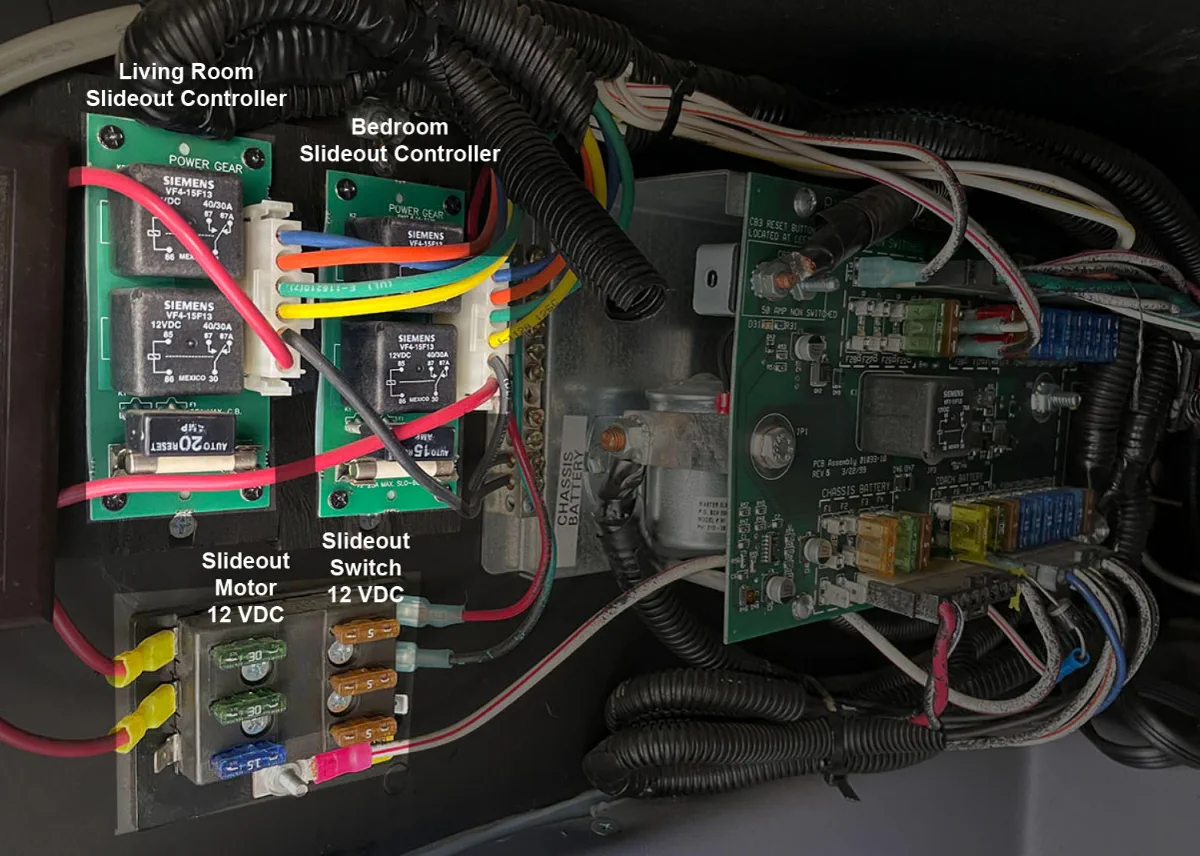
Schwintek in-wall slide motor failure is the most common single-component issue A1 RV Repair sees, typically at 8 to 10 years on a moderately used coach. The motor's brushes corrode in the sealed cavity, current draw climbs, and the motor stops cleanly between cycles. The replacement is a 2 to 4 hour mobile job and lands at $485 to $895 installed.
Lippert hydraulic slides fail most often at the cylinder seal. The seal weeps fluid slowly, the slide loses pressure overnight, and the owner notices a sag at the corner.
The repair is a seal kit and bleed at $385 to $725. Lippert through-frame slides fail most often at the gear pack or sync controller, which run $585 to $1,100 for a rebuild.
The failure mode is brand-specific and tells the tech where to look first. Lippert service documentation publishes the failure-mode breakdown for each system. A1 RV Repair sees roughly 45 percent Schwintek motor calls, 25 percent Lippert gear pack calls, 18 percent hydraulic seal calls, and 12 percent slide topper or alignment calls.
Should I run the slide if it is making noise?
No. A grinding, popping, or clicking slide should be stopped immediately and diagnosed before any further extension or retraction. Continuing to run a noisy slide turns a $485 motor swap into a $2,000-plus gear pack and rail replacement, and the worst-case outcome strips the substrate where the rails mount inside the coach wall.
The noise pattern points to the failure. A clicking motor that does not move the slide is a controller or motor brush issue. A grinding sound at one corner is a binding rail or out-of-sync motor.
A popping sound during extension is usually a worn gear pack tooth or a debris-loaded rail. Each one means stop the cycle and call a tech, not push through to see if the slide makes it out.
The "I will just close it one more time to get home" decision is the single most expensive mistake A1 RV Repair sees on slide calls. Emergency slide-out repair stabilizes a stuck slide for travel without making the mechanical damage worse.
Can I retract the slide manually if the motor dies?
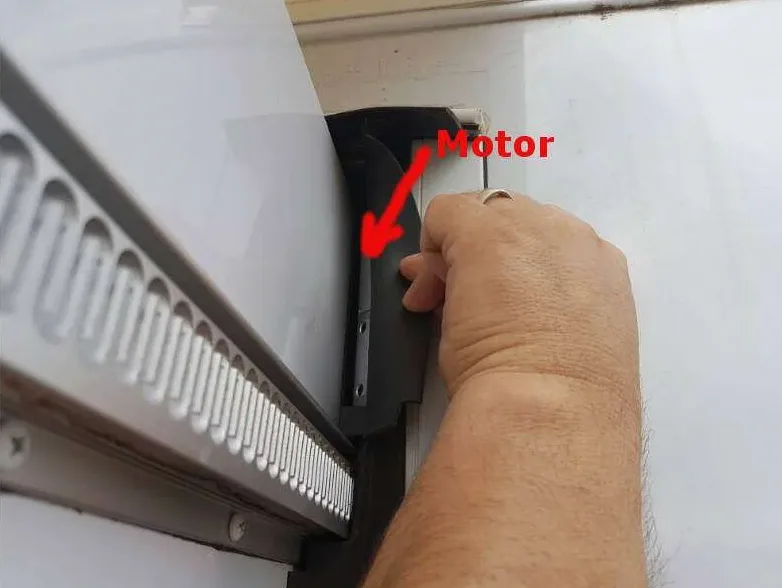
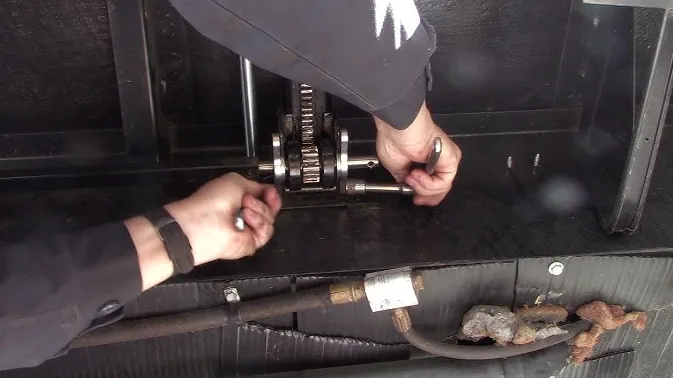
Yes on most slide types, but the override procedure varies by manufacturer. Lippert through-frame slides have an override shaft that accepts a 3/4-inch socket on a cordless drill or a hand crank. Schwintek in-wall slides usually require removing a cover plate inside a closet or cabinet and turning a motor stub by hand. Hydraulic slides have a pump bypass valve that lets the cylinders drift back to the retracted position under their own weight.
The manual override is for emergency retraction only, not regular operation. Running a slide back and forth with a drill stresses the gear pack and accelerates wear on the bearing surfaces. A1 RV Repair walks owners through the manual retraction sequence over the phone for stranded coaches, then schedules same-day or next-day mobile dispatch to repair the underlying failure.
Knowing where the override is on your coach before the slide stops is the difference between a stranded weekend and a 20-minute manual close. Schwintek motor replacement and other slide service walks owners through the override procedure on the repair invoice.
What does slide-out replacement actually involve?
Full slide mechanism replacement on a Class A coach involves pulling the slide room out of the wall, separating the rails and motor from the slide floor, mounting a new mechanism on the room, and refitting the assembly into the coach wall. The job runs 2 to 4 days of working time and lands at $3,500 to $5,500 on a single slide.
The decision to replace versus rebuild depends on what comes off with the old mechanism. If the slide room itself is intact, the substrate is dry, and the wall return is sound, a new mechanism drops in cleanly. If the substrate has rot from a leaking seal, the wall return is delaminating, or the floor has soft spots, the job grows into a full slide room rebuild at $6,800 to $12,500.
This is where the $1,800 fix-vs-replace threshold sits. A repair total below $1,800 on a sound slide room is almost always the right call. A repair total above $1,800 should trigger a full replacement quote for comparison, because at that price point the parts and labor for a new mechanism are within reach.
Will insurance or extended warranty cover slide-out repair?
Coach insurance typically covers slide-out repair when the cause of loss is a covered event such as collision damage, hail impact, fallen tree, or vandalism. Wear-and-tear failures (motor end of life, seal aging, gear pack normal wear) are excluded from standard policies because those are foreseeable maintenance items, not sudden events.
Some RV extended warranties cover wear failures, but the policy language varies widely. The line that matters is whether the policy covers "mechanical breakdown" or only "sudden and accidental" damage. A1 RV Repair provides RVIA-compliant photo documentation and a written cause-of-loss statement on every invoice so either type of claim goes through cleanly.
Storm damage claims are the cleanest case. A slide topper torn off by hurricane wind, a slide pinned open by a downed tree, or hail damage to a slide cap are all standard insurance covered losses. Water damage assessment documentation matters most on slide claims because the secondary damage (interior flooring, cabinetry, substrate) often costs more than the slide mechanism itself.
How does A1 RV Repair structure a slide repair quote?
Every A1 RV Repair slide quote breaks down into four lines: diagnostic time, parts cost, labor on the repair itself, and the recommended preventive service that comes with the work. The preventive service line covers the lubrication, alignment, and seal conditioning that prevents the same failure from recurring inside 18 months.
The fix-vs-replace recommendation is always presented in writing alongside the rebuild quote. If we recommend replacement, the quote includes both numbers so the owner can decide based on coach age, planned ownership horizon, and resale considerations. Steering owners into a $5,500 replacement when an $895 motor swap would do the job for 5 more years is bad work and bad business.
The same logic applies to coach age. On a 14-year-old coach with original hardware and a borderline repair total, we will quote replacement first and explain why. Roof repair timing, water pump diagnostics, and mobile labor cost all follow the same disclosure pattern.