How do I know my RV skylight is leaking?
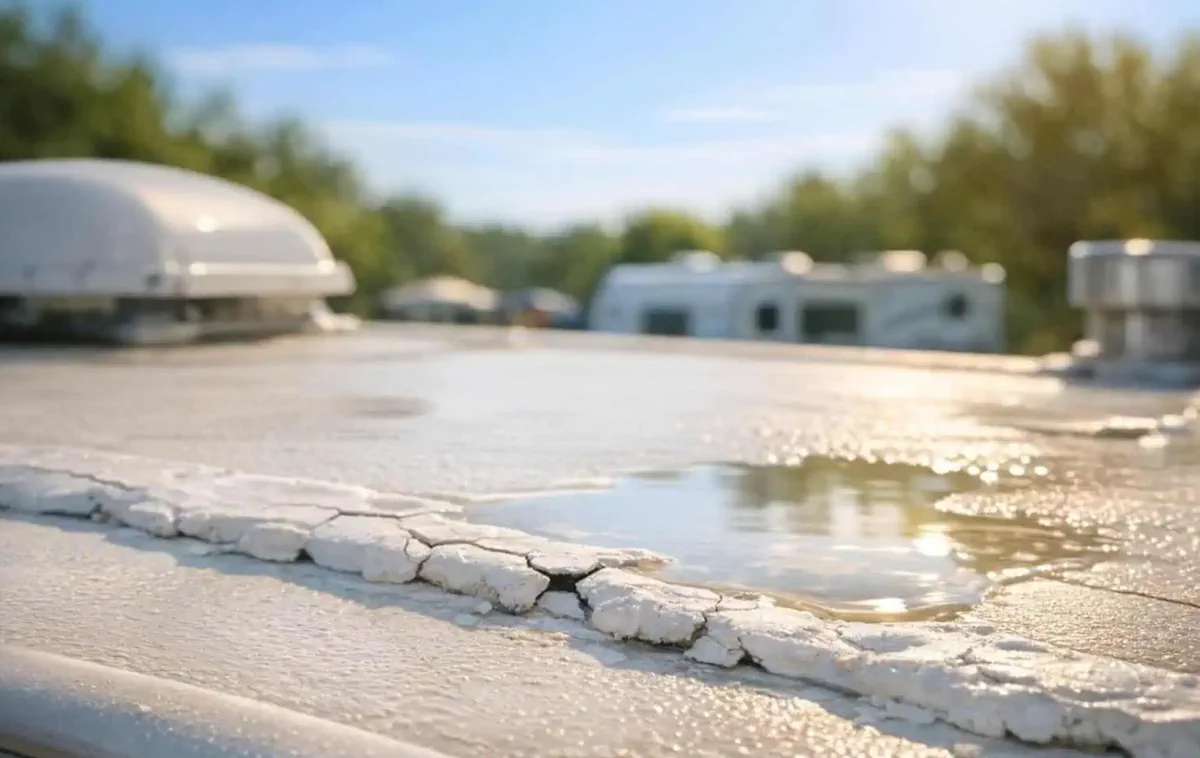
Skylight leaks show up as water stains on the ceiling around the frame, soft spots in the roof above the skylight, or musty smells in the bedroom or main cabin area. On the outside, you might see dried Dicor sealant that's cracked, pulled away, or missing entirely. The rubber gasket that seals the skylight to the roof gets UV-brittle after 7-10 years and fails silently.
By the time you see a stain inside, water has usually been wicking into the roof laminate for weeks. We've pulled apart Jayco, Forest River, and Winnebago roofs where the plywood under the fiberglass turned spongy from a slow skylight leak. Catching it early saves you $2,000+ in laminate replacement.
A Tiffin owner called us last August with a brown ring around her bedroom skylight. She thought it was old staining.
We came out, removed the skylight frame, found the Dicor had failed on two sides and the underlying TPO membrane had a pinhole. The plywood was damp but not rotted yet - we were maybe six weeks away from structural damage.
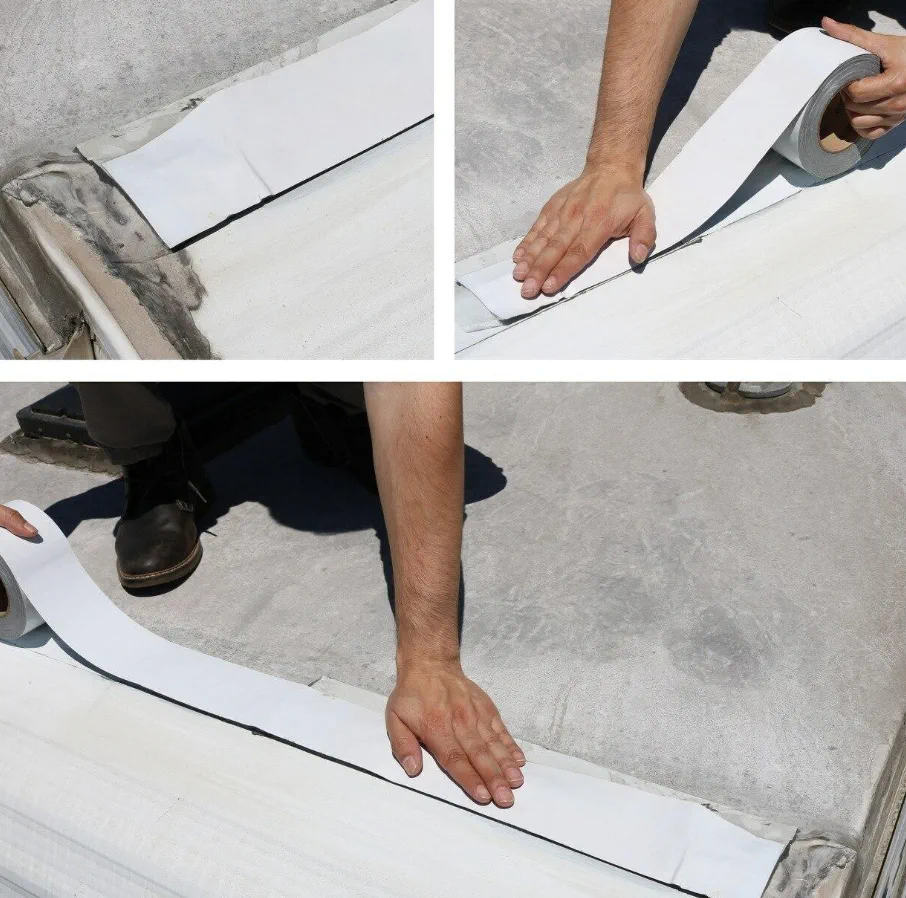
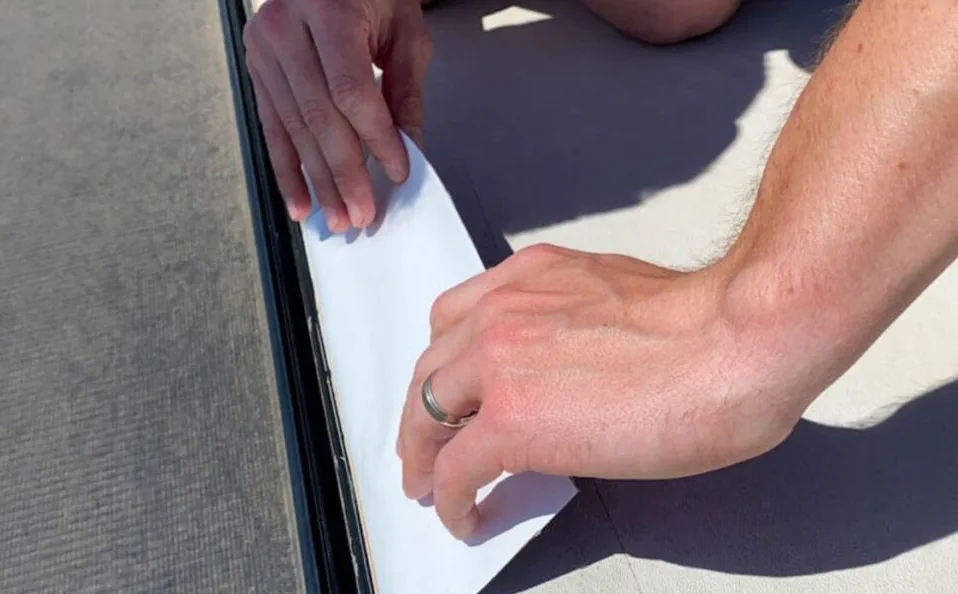
We re-gasket the frame, patched the TPO with a Dicor membrane kit, resealed everything, and reinstalled. Two-year-old Dicor that hadn't failed would have cost her nothing. Once laminate gets wet, replacement is measured in thousands, not hundreds.
Skylight leak warning signs:
- Water stains or rings around skylight frame
- Soft or spongy roof above skylight
- Musty or moldy smell in cabin
- Daylight visible around edges when closed
- Cracks in Dicor lap sealant
- Discolored or brittle-looking gasket
- Condensation pooling inside the skylight
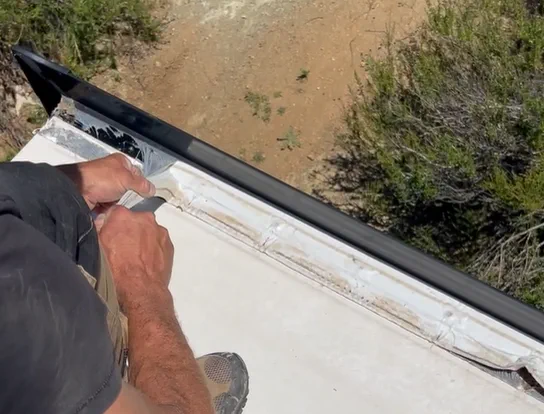
Signs your skylight needs sealant repair now
Four conditions point to immediate action. Catching any of these in the first month saves the laminate underneath.
1. Cracked Dicor at the frame
Old lap sealant is fissured, lifted, or chalky. Strip back and reseal with fresh Dicor 501LSW, $185-$345 per skylight.
2. Brittle or compressed gasket
The compression seal between the dome and frame has gone hard or sits flat. Gasket replacement plus reseal, $245-$445.
3. Daylight visible at the seal
You can see thin daylight at the frame edge from inside. Either butyl tape has compressed past usable or the frame has lifted from the deck. Pull, rebed, and reseal, $385-$685.
4. Soft or stained ceiling around opening
Ceiling Lauan around the trim ring is soft or shows brown rings. Water has reached the substrate. Full pull, dry the cavity, patch the membrane, and rebed the assembly, $585-$985.
What's involved in diagnosing and repairing an RV skylight?
Diagnosis starts with a visual inspection of the frame, sealant, and gasket, plus a close look at the roof substrate and laminate around the skylight. We use a moisture meter on the perimeter to confirm whether water has reached the decking, then a pin meter to confirm depth at any hot spots. From there the repair scope is clear: reseal only, gasket plus reseal, or full pull-and-rebed with substrate repair.
- Visual inspection and moisture testing - 30 minutes
- Gasket replacement only - 1 hour, $245-$445
- Dicor 501LSW perimeter reseal - 1-2 hours, $185-$345
- Pull, butyl rebed, and Dicor reseal - 2-3 hours, $385-$685
- Full assembly replacement with substrate repair - 4-6 hours, $585-$985
What does skylight repair actually cost?
Skylight repair pricing is flat-rate and quoted over the phone based on damage scope: Dicor reseal only is $185-$345, gasket plus reseal is $245-$445, and full substrate repair with patching is $585-$985. We don't nickel-and-dime add-ons - the quoted range is the invoice you see at sign-off. Florida hurricane season and Idaho first-snow week are our highest-volume windows for skylight calls; we route trucks accordingly.
Skylight sealant repair pricing
| Repair | Parts / Brand | On-Site Time | Flat-Rate Range |
|---|---|---|---|
| Perimeter Dicor reseal | Dicor 501LSW | 1-2 hours | $185 - $345 |
| Gasket replacement + reseal | OEM gasket / Dicor | 1-2 hours | $245 - $445 |
| Pull, butyl rebed, reseal | Camco butyl / Dicor 501LSW | 2-3 hours | $385 - $685 |
| EPDM patch + reseal | Alpha Systems EPDM / Dicor | 3-4 hours | $485 - $785 |
| TPO patch + reseal | Brite-Ply / Dicor | 3-4 hours | $485 - $785 |
| Full assembly + substrate repair | OEM frame / marine ply / Dicor | 5-7 hours | $585 - $985 |
Warning signs we look for during the inspection:
- Brown rings on ceiling panels mean water has been migrating for weeks - catch it now or rip the laminate later.
- Sub-roof rot. The plywood under the membrane has soaked through. Inspect immediately - patching over wet decking is a callback waiting to happen.
Which parts go into a skylight repair?
Skylight repairs use three main component types: Dicor lap sealant (the flexible border sealant around the frame), replacement gaskets (rubber seals that compress between skylight and roof), and membrane patches (TPO or EPDM material to cover roof damage). Dicor is the marine-grade, UV-resistant standard for RV roof sealing - it stays flexible and lasts 10+ years when applied right. Gaskets come in standard sizes and are usually Neoprene or EPDM; we stock the most common profiles used by Coleman, Dometic, and OEM skylight manufacturers.
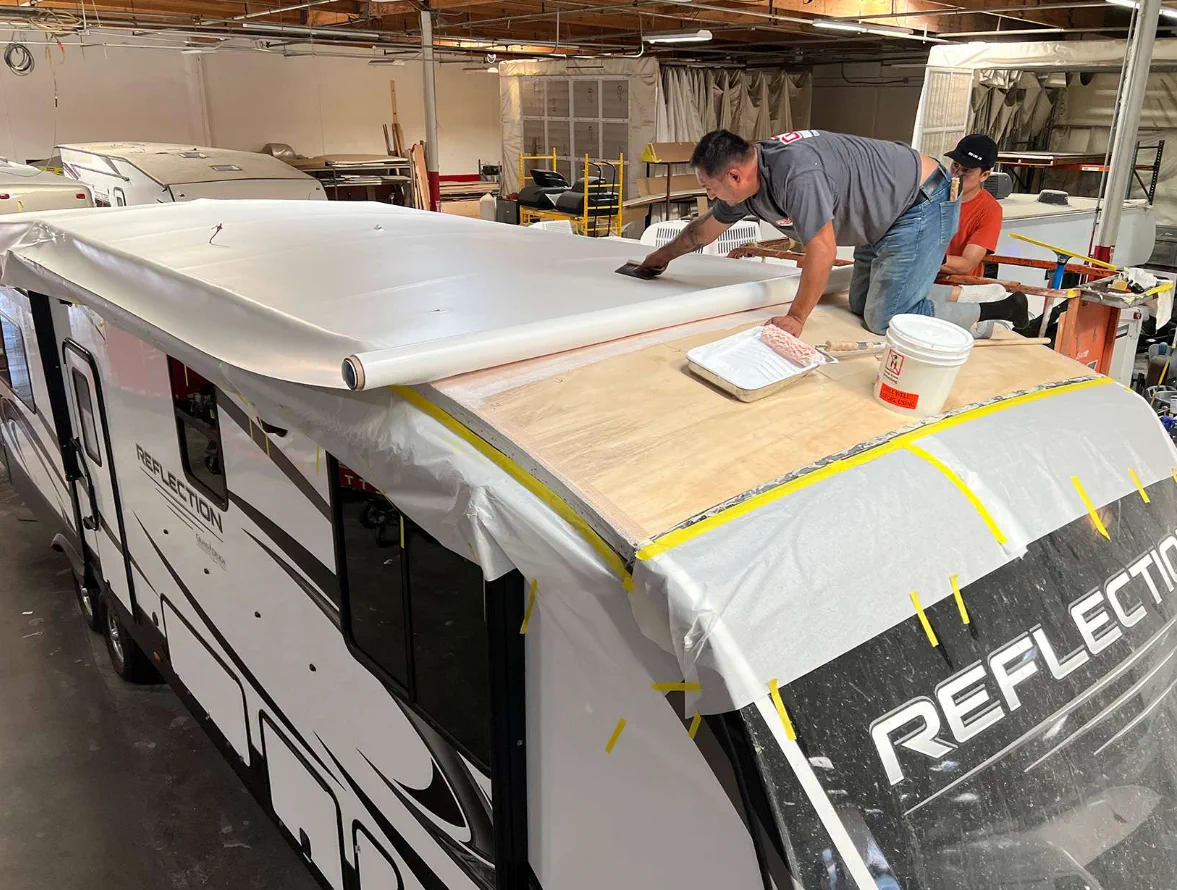
If the roof substrate is damaged, we use TPO membrane patch kits or fiberglass cloth with epoxy filler, depending on what's underneath. All parts carry the same 90-day workmanship warranty as labor.
A Winnebago owner asked if he could buy skylight gaskets online and have us install them. We do that, but the problem is fitment - skylight frames vary by year, make, and model.
A wrong gasket won't seal. We stock the correct profiles for most Dometic and Coleman skylights.
When we order a replacement gasket, it's pre-verified to fit. Same with Dicor - there are seven formulations, and we use the specific type for your roof material (TPO vs. EPDM makes a difference). That's why our flat-rate quotes are reliable - we spec the right parts before we give you a number.
Standard repair parts:
- Dicor lap sealant (marine-grade, UV-rated)
- Replacement gasket set (Neoprene or EPDM)
- TPO or EPDM membrane patch kit
- Fiberglass reinforcement cloth
- Marine epoxy filler
- Weatherstrip backing rod
- Stainless steel trim ring (if corroded)
How long does skylight repair take?
Skylight repair takes 1-5 hours depending on damage: simple Dicor reseal is 1-2 hours, gasket replacement adds another hour, and substrate patching can take 2-3 hours on top. We show up with the matching gasket profile, fresh Dicor 501LSW, butyl tape, and patch material so most jobs finish in one visit. Cure time matters - fresh Dicor needs 4 hours of skin cure before light rain and 24-48 hours before highway speed, so we schedule on dry days when possible.
What warranty do you offer on skylight repairs?
All skylight repairs carry a 90-day workmanship warranty on seals, gaskets, patches, and labor - if it leaks within 90 days from our work, we come back and fix it at no charge. The warranty covers defective gaskets, Dicor failure due to our installation, and patch integrity. It does not cover future water damage from other roof issues, new leaks elsewhere, or abuse.
We use name-brand parts that carry their own manufacturer warranties too - Dicor is good for 10+ years, and Coleman or Dometic gaskets are covered by the component maker. We back our work because we do it right the first time. In 15 years, skylight warranty claims are rare because we don't cut corners on prep or sealing.
A Jayco owner had us reseal his skylight in June. In July, during a heavy rainstorm, he noticed a new drip on the opposite side of the frame - a different leak spot.
He called us back. We inspected and found the original Dicor we applied was perfect; the new leak was from a separate area of failed sealant that was outside our repair scope.
We explained the difference, quoted $350 to fix the second area, and he approved. He didn't pay that $350 because our warranty only covers the work we did. Skylight repairs are specific - we seal what we touch, not the whole roof.
Warranty details:
- 90-day workmanship guarantee on all labor
- Gasket replacement covered for defects
- Dicor reseal covered if our installation fails
- Patch integrity covered for 90 days
- Component manufacturer warranties separate
- Covers the repair scope quoted, not entire roof
- Mobile service - we return to your location