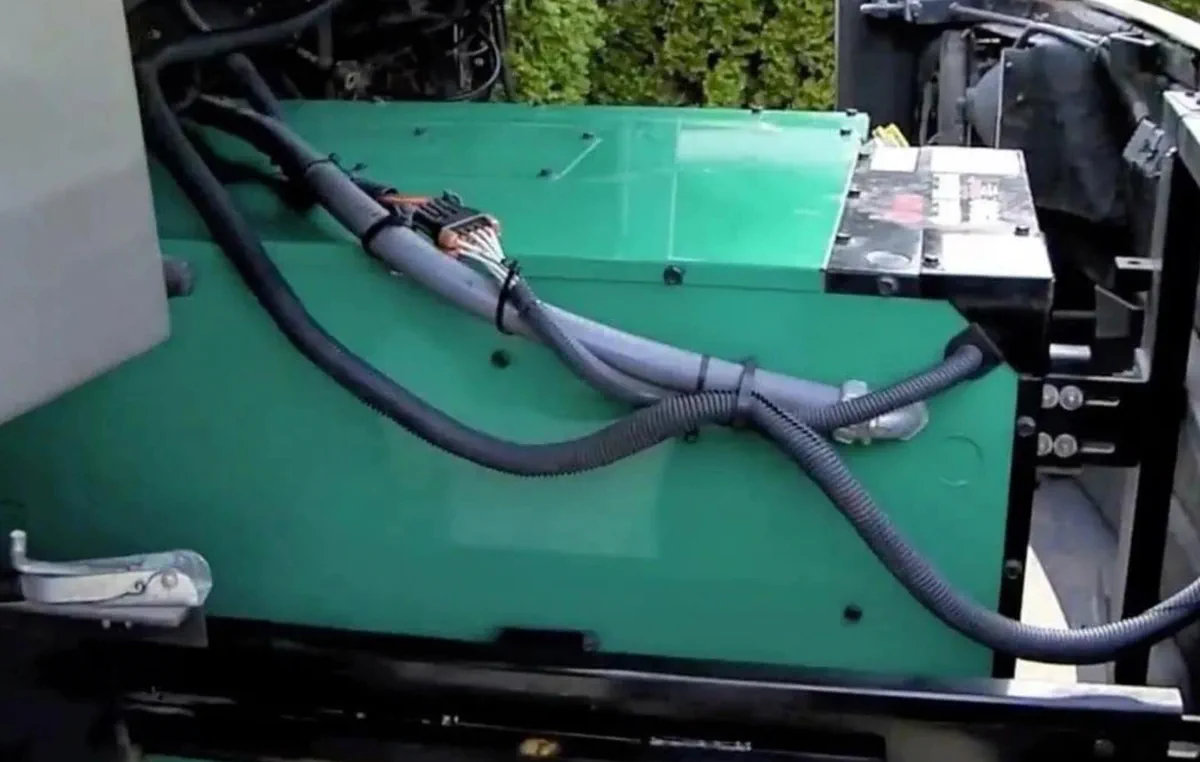
Fuel Filter Swap - A1 RV Repair: mobile RV repair service, flat-rate quoted by phone, RVIA certified techs.
That's almost always a clogged fuel filter. Generators pull fuel through a primary filter that traps sediment, water, and varnish buildup. On Onan and Cummins units, that filter clogs faster than most people expect - especially if your RV fuel tank collects condensation or you run off-brand diesel.
A plugged filter starves the carburetor of fuel, causing hesitation on startup, rough idle, or complete shutdown under load. We see this constantly on Forest River and Jayco models sitting in storage.
Cost to replace: $180-$320 depending on unit type and accessibility. It's the single most cost-effective preventive fix we do.
We fixed a 2018 Winnebago Brave owner's Onan generator last month - he'd stored it for winter without stabilizer and the fuel turned to shellac inside the tank. The primary filter was black with sludge.
Swapping it solved his startup issue immediately. He also upgraded to a Goldenrod inline fuel filter as a secondary insurance policy. That's the real-world play: replace the filter now, avoid being stranded at your lake cabin in July waiting for a mobile tech.
Signs your fuel filter needs swapping:


We drain residual fuel from the line, unbolt the old filter, clean the mounting bracket, install a new OEM or equivalent cartridge, and run a load test. The process takes 60-90 minute
Shut fuel supply valve at the generator intake
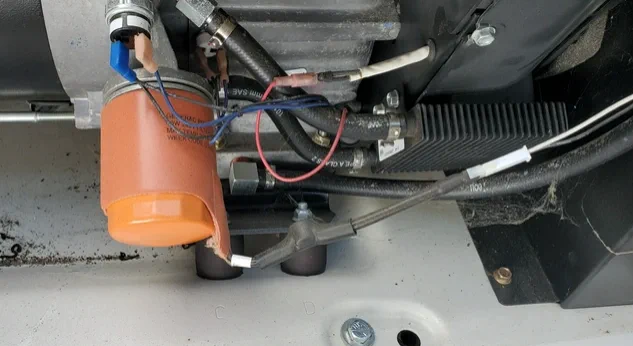
Remove mounting hardware and extract old filter cartridge
Onan and Cummins use proprietary spin-on or cartridge filters - there is no universal part. We stock Fram P3600, Donaldson fuel filters, and OEM Cummins cartridges on our service trucks. Onan generators typically use Fram P
Stale fuel, dirty filter, or carb gum. Maintenance fixes most rough-run problems.
Bad start battery, glow plug, or starter solenoid. Diagnose before you crank it dry.
Every 500-800 running hours or once per year, whichever comes first. Most RV owners run their generators 2-6 hours per week in summer, which means 100-300 hours annually. That puts you at a swap interval of 18-36 months if you're a regular user.
If you use your generator heavily during winter or dry camping - say 20+ hours per week - do it annually no matter what. Cummins recommends 600-hour service intervals in their spec sheets; Onan is more conservative at 500 hours.
Fuel contamination from condensation, ethanol additives, and tank sediment accelerates this timeline. We track your mileage and recommend a swap before you're stranded.
A Grand Design RV owner in Boise called us last December saying his generator had never been serviced in five years. He'd run it maybe 40 hours total - just occasional shore power backup.
We pulled the filter anyway, and it was already clogged with varnish from old fuel sitting stagnant. One swap later, his generator was responsive and reliable. Preventive beats reactive every time.
When to prioritize a fuel filter swap:
Fuel filter swap: $180-$320 all-in, depending on your generator model and fuel line accessibility. Onan units run $180-$240; Cummins units run $240-$320. Labor is the bulk - parts are
We come to you - no shop visit needed. A1 is mobile-only. We have service trucks based in our covered metros, and we respond to calls within 2-4 hours in our core areas (greater Tampa, greater Boise).
For remote campsites or secondary locations, we partner with certified RV service centers nationwide who use the same procedures and parts we do. You call (866) 623-1340, we quote flat-rate over the phone, we text an ETA, and a tech shows up with the correct filter already on the truck.
Fuel filter swaps are straightforward enough that we do them at your site without needing a lift or climate control. We've done them in 95-degree Arizona heat, during rain in Oregon, and in parking lots across the country.
A customer with a 2019 Jayco Redhawk called us from a state park in northern Florida - his generator had died mid-trip. We arrived in 2.5 hours, swapped the fuel filter, ran a load test, and he was cooking dinner on the inverter by evening.
That's the difference between mobile service and waiting for the next dealer appointment (usually weeks out). We're the friend who fixes it now.
Mobile service advantages:
Nationwide mobile coverage from a network of certified A1 RV Repair technicians, with same-day response in our core metros. Click any city for local response times and to book online.
You can swap the fuel filter yourself if you're comfortable working around fuel systems and have the right filter for your generator's make and model. The risks that trip up DIYers are cross-threading the housing, under-torquing the fittings so you get a slow seep, and failing to properly purge air from the line before the first start - an air pocket can cause the generator to crank but not fire, or run rough enough that people assume something else failed.
When we do it, we drain the old filter, swap in the correct replacement, torque fittings to spec, and bleed the line before cranking. The step that matters most is the load test at the end - we put the generator under actual electrical load to confirm fuel delivery is stable and output voltage is clean. That's the part you can't replicate with a basic DIY setup, and it's also the part that catches a secondary issue like a clogged fuel pickup or a carb problem that was hiding behind the dirty filter.
In our our covered metros core service areas, we target a 2-4 hour emergency response for a generator that's died mid-trip. Outside those areas, we coordinate through our nationwide certified-tech partner network and work to get someone to you same-day or next-day depending on your location.
When you reach out, have your rig's make, model, and generator brand ready - that lets us pull the right filters and fuel system parts before we leave the shop, so we're not diagnosing empty-handed. A clogged fuel filter is one of the more common reasons a generator shuts down under load, and catching it quickly matters because running a starved generator can stress the carburetor and fuel pump beyond what a simple filter swap fixes.
Most RV dealers do offer fuel filter swaps, but the pricing and turnaround tell the real story. Dealer service bays carry high overhead, and that rolls into your invoice - most Winnebago and Jayco service centers come in at $350-$500 all-in, and appointment lead times of 3-6 weeks are common, especially heading into camping season.
We quote $180-$320 flat-rate, come to your driveway or campsite, and can typically arrive the same day. There's no shop markup layered on top of parts because we're buying direct and billing you straight. The other practical difference is that a mobile tech can run the generator through a load test and fuel-draw check on the spot, so if the filter wasn't the whole problem, you find out before you're stranded again rather than after a return trip to the dealer.
A clogged fuel filter starves the carburetor or injectors of clean fuel, so the generator either surges under load, shuts down mid-cycle, or refuses to start at all. On Onan and Cummins units, the engine control module reads that fuel pressure drop as a fault and locks the unit out - sometimes requiring a manual reset before it will crank again.
The longer you run a partially clogged filter, the harder the fuel pump works to compensate, and pump replacement costs significantly more than a filter swap. Practically, this means losing dry-camp flexibility entirely: shore power only, or burning propane for climate control when the generator is your primary heat source.
Catching a dirty filter during routine service is a straightforward swap. Replacing a fuel pump or diagnosing a fault-locked control board because the filter was ignored is a different job entirely.
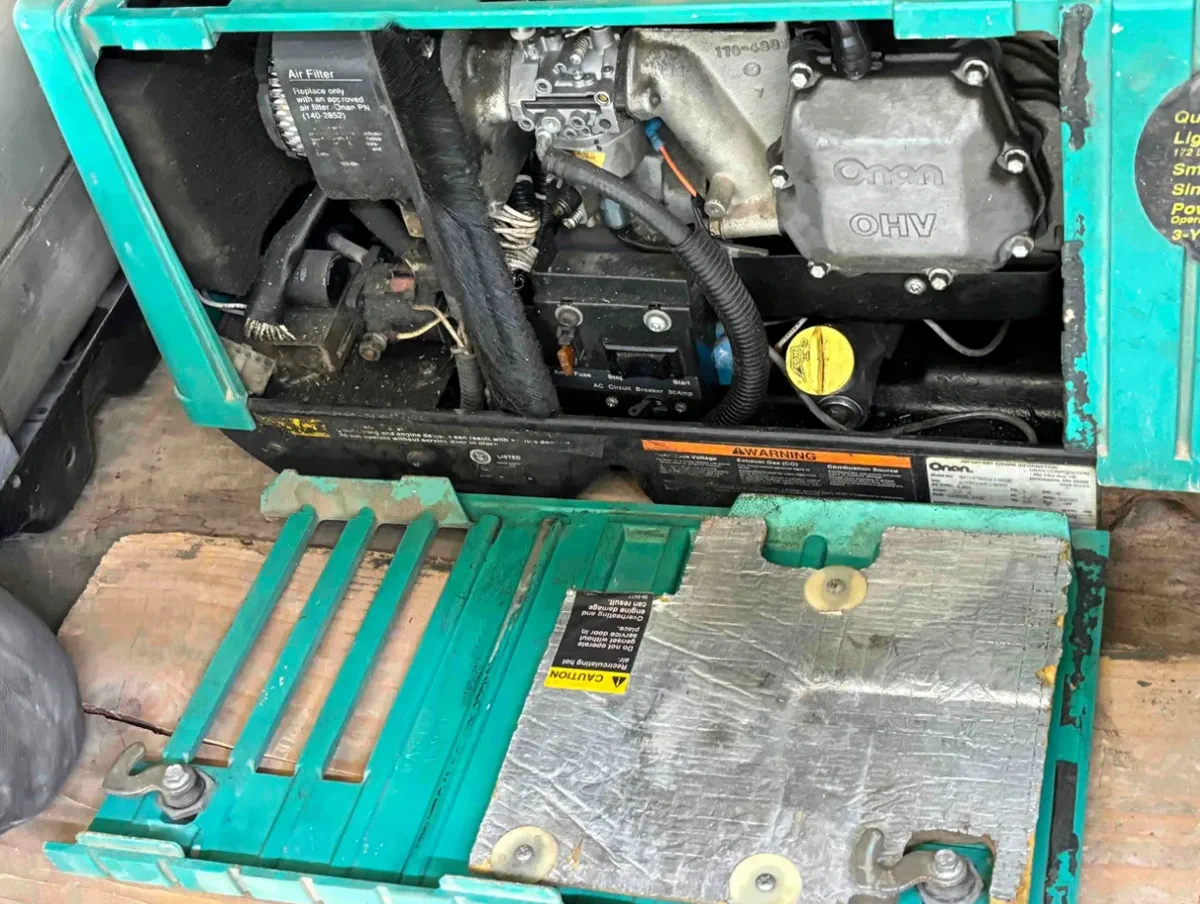
They differ enough that using the wrong filter can restrict fuel flow, cause hard starts, or void the service warranty on newer units. Older Onan carburetor generators typically use Fram P2951A or P3600 spin-on filters, which we can swap in about 20 minutes on-site.
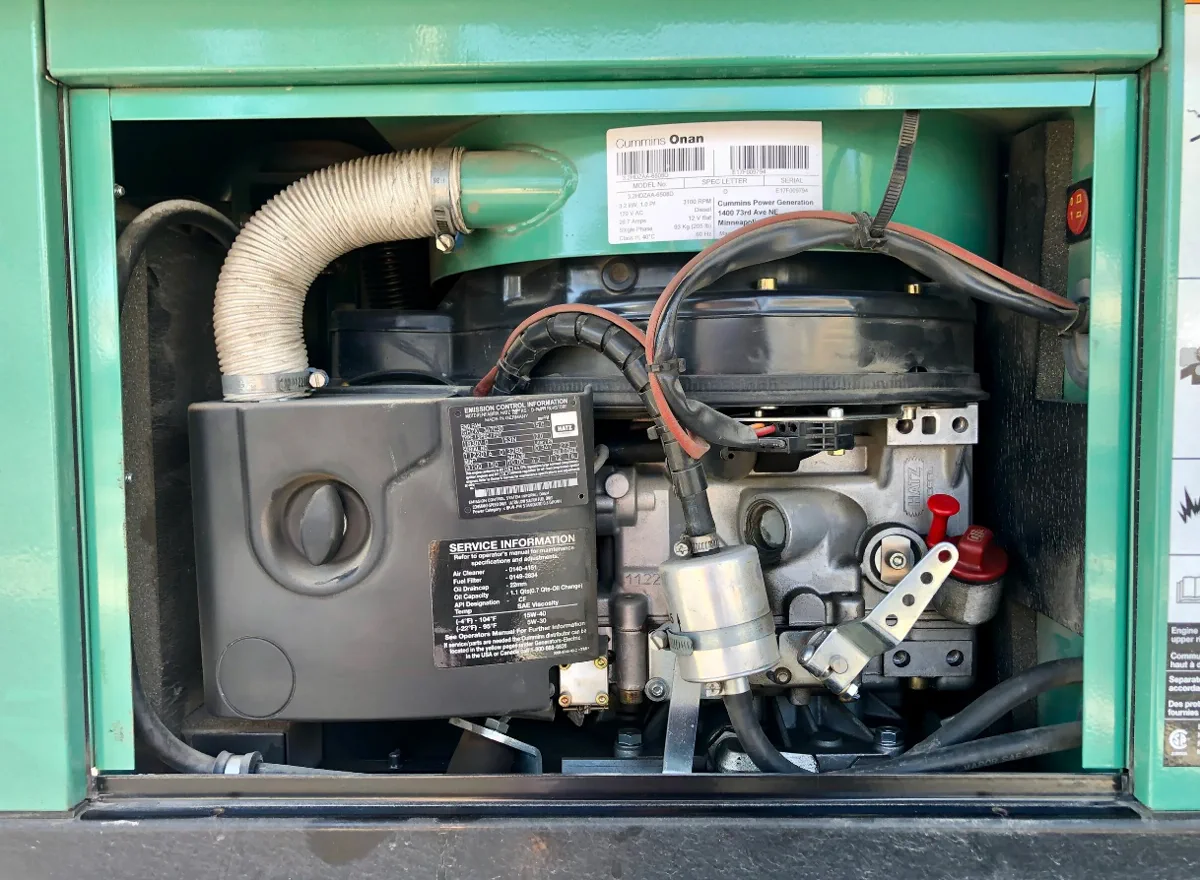
Cummins PowerGen diesels use OEM sealed cartridges that are model-specific - the part number varies by output rating and build year, and aftermarket substitutes are not recommended. Before we roll, we ask for your generator model and serial number so we pull the right part from the truck stock rather than making a second trip. If we find the fuel lines are cracked or the sediment bowl is fouling the filter prematurely, we flag that before buttoning it back up, since a new filter won't fix a contaminated fuel system.
Our 90-day workmanship warranty covers exactly one thing: the work we performed. If a fuel filter we installed leaks because of how we seated it, or if a fitting we touched fails because of our technique, we come back and correct it at no charge.
That's separate from any warranty on the filter part itself, and completely separate from your RV manufacturer's extended warranty, which covers defects in the generator unit - things like a factory-bad carburetor, a failed fuel pump diaphragm, or an OEM component that was defective before we ever touched it. Extended warranties also typically require you to follow the manufacturer's maintenance schedule and document it, which is one reason a professional service record from a certified tech matters when you file a claim. Think of the two as covering different failure modes: our warranty covers how the job was done, theirs covers what the part or unit does on its own.
Onan and Cummins make up the vast majority of coach-mounted RV generators we see in the field, so our trucks are stocked with fuel filters for their most common models as a matter of course. Aftermarket units - Generac, Westinghouse, and similar brands adapted for RV use - do show up occasionally, mostly in older rigs or owner-converted trailers.
We can still do the filter swap on those, but we source the part before the appointment rather than carrying it on the truck, which may add a day to scheduling. The process is the same regardless of brand: shut down the fuel supply, relieve line pressure, swap the filter, check for leaks at both fittings, and run the generator under load to confirm fuel flow is clean. Give us your generator's serial number and model when you call and we'll confirm parts availability and quote you flat-rate before we book the visit.
We run mobile operations in both our covered metros, so a fuel filter swap is available in either state. In our core service areas, we carry common generator fuel filters on the truck - inline filters, sediment bowl filters, and the carb-mounted screens you find on most Onan and Generac units - so the job usually wraps up in a single visit.
Outside those two regions, we dispatch through our nationwide certified-tech partner network, and those techs follow the same filter-swap procedure: shut down fuel flow, remove and inspect the old filter for debris or water contamination, install the new filter, bleed the line, and run the generator under load to confirm steady fuel delivery. Waiting on a clogged filter isn't a small risk - a starved generator will hunt, surge, and eventually shut down under load, and repeated lean-run cycles can damage the carburetor needle and seat over time.
Same flat-rate pricing in every city. Same RVIA-certified mobile crew. Same parts-on-truck approach so most calls finish in one visit.
Often booked together with this repair. Same crew, same flat-rate, same on-site visit.