Why does my RV generator oil filter need changing every 50 hours?
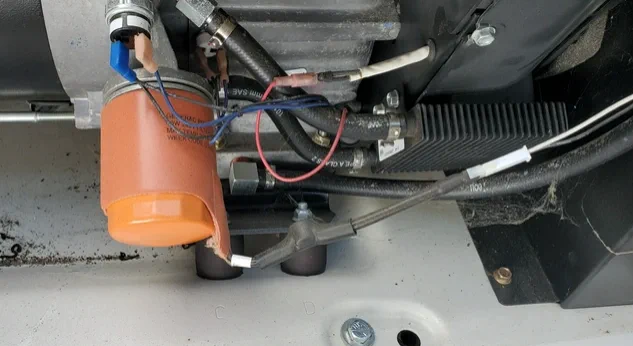
Your RV generator's oil filter is its first line of defense against wear. Onan and Cummins units burn through filters fast because generators run at high RPM in dusty environments - campgrounds, deserts, construction sites. A saturated filter stops trapping contaminants and forces dirty oil back into the engine (bypass valve opens).
That's when bearing wear accelerates and carbon builds up. We change filters every 50 operating hours on standard duty, sooner if you run in extreme heat or dusty terrain.
Most owners hit this interval every 8-12 weeks. A fresh Onan or Cummins OEM filter costs $12-$22 and prevents $1,200+ engine work down the road.
We serviced a Jayco Jay Flight owner in Tampa last month whose generator had been running on a clogged Fram aftermarket filter for 120+ hours. The oil was brown paste.
After a full oil and filter swap with a genuine Cummins filter, the unit ran quieter and cooler. That's what clean oil does.
Your generator doesn't care if you're parked at a beachfront resort or dry camping in the Boise foothills - neglect the filter and it'll remind you at the worst time. We keep common filters in our mobile units.
Signs your filter is overdue:
- Dark, gritty oil on the dipstick
- Generator runs hotter than normal (5-10 degrees above baseline)
- Oil pressure warning light flickers under load
- Loud valve chatter or ticking at startup
- Generator struggles to reach full load without surging
- Oil smell stronger than usual around the unit
What's the step-by-step process for changing oil and filter on a generator?
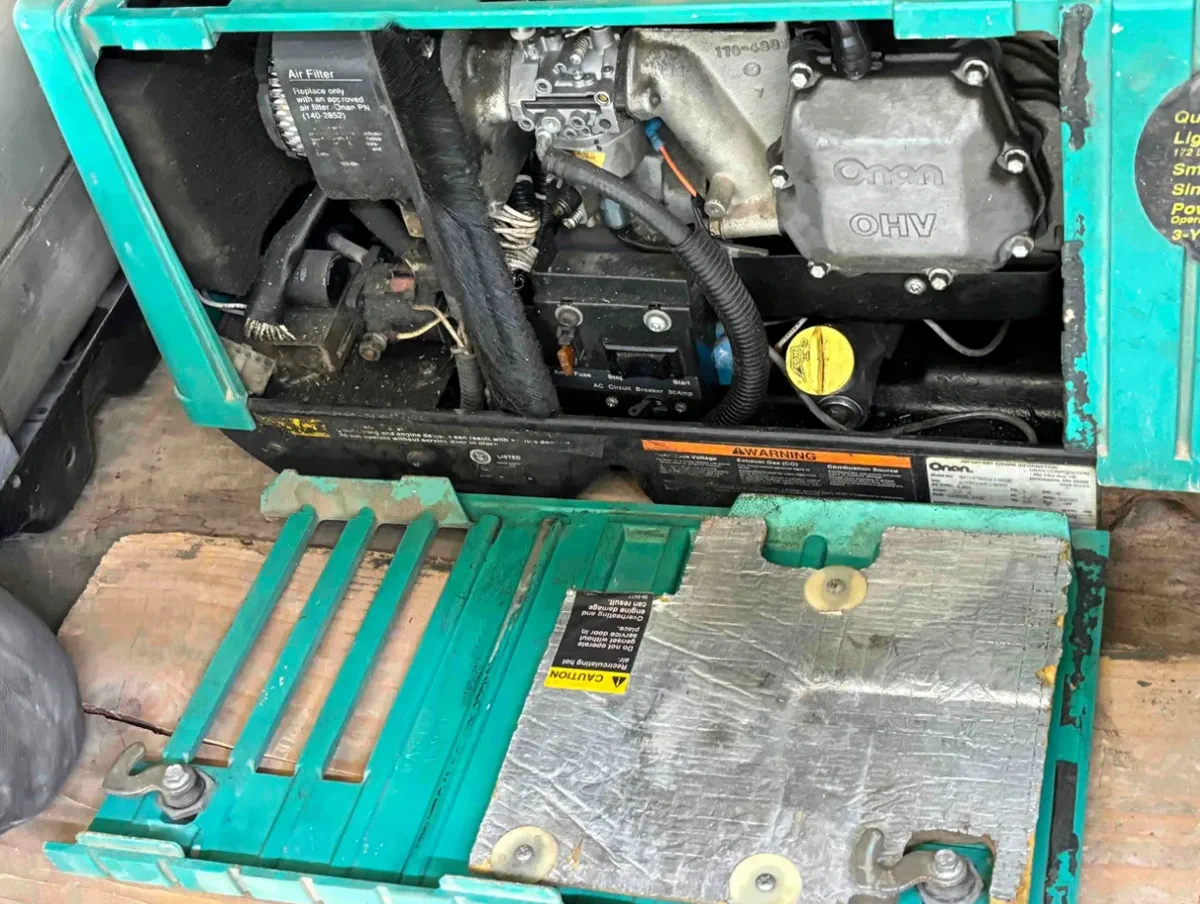
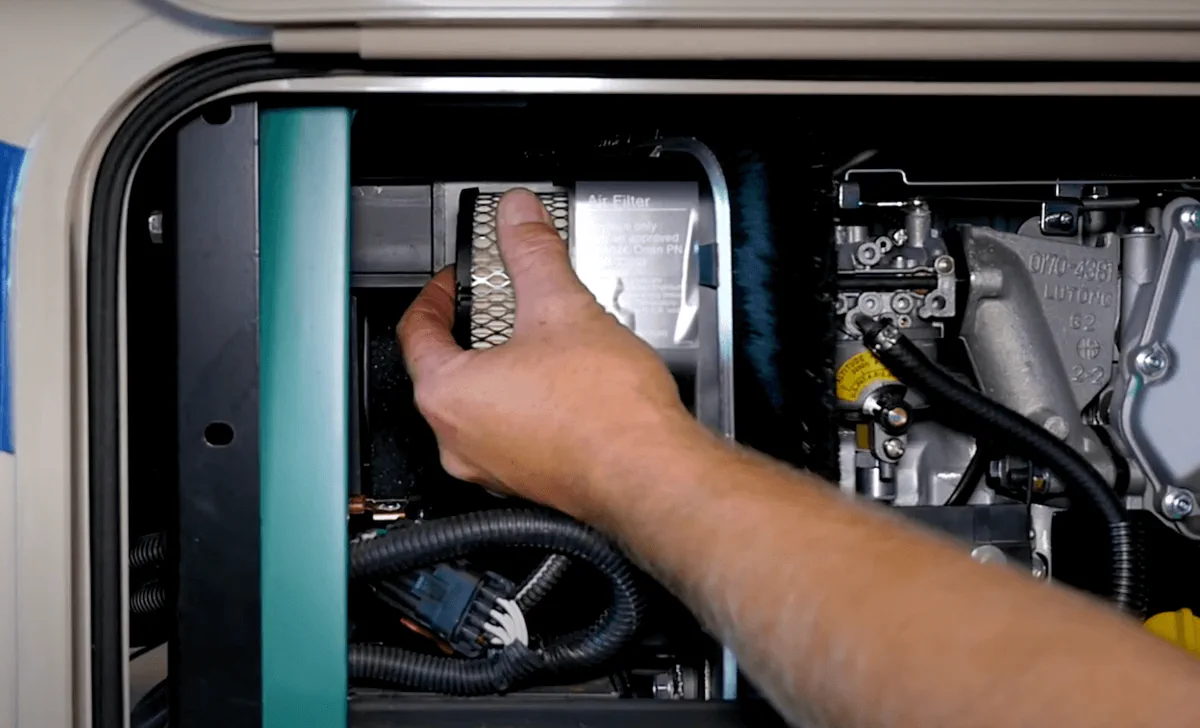
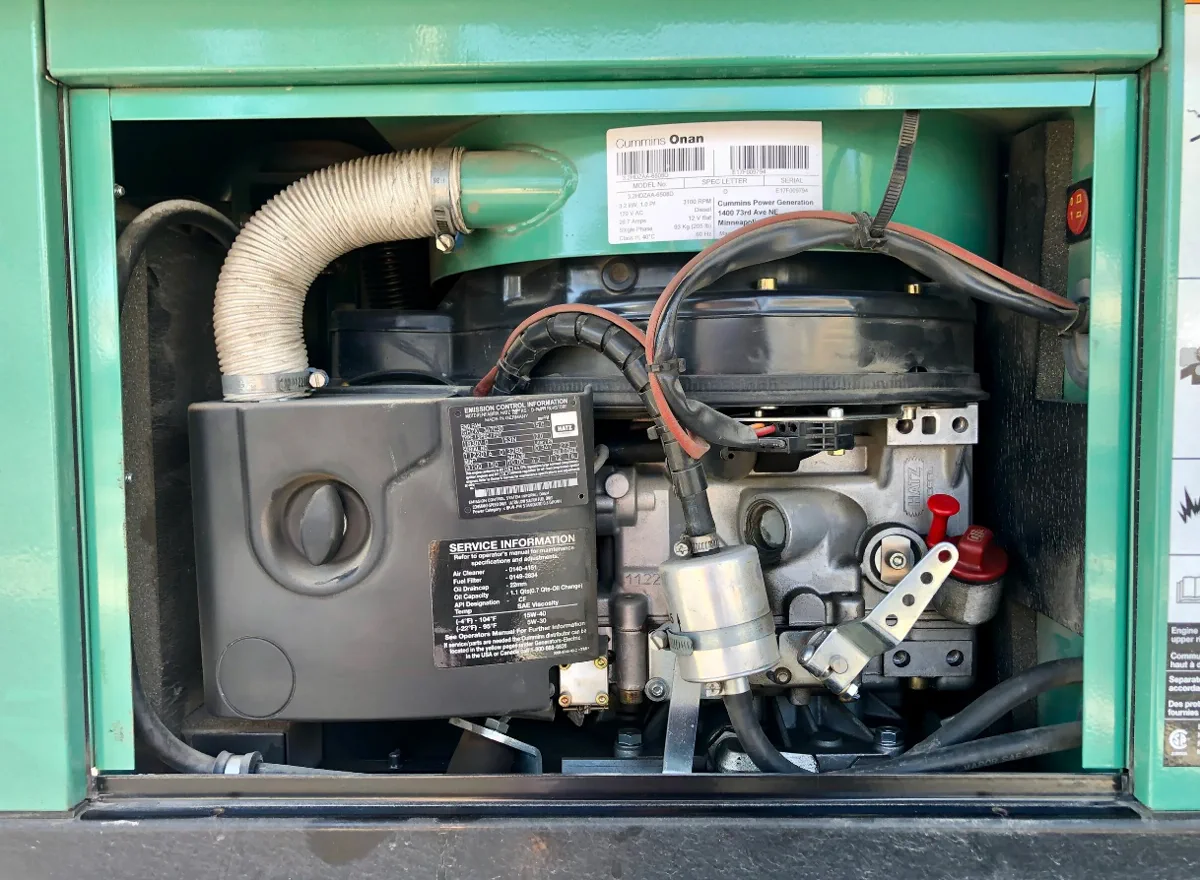
We drain old oil into a sealed waste container, replace the spin-on filter, refill with the correct SAE weight (almost always 15W-40 for Onan/Cummins), and verify pressure on startup.
Oil viscosity and color (we note baseline)
Drain plug torque and washer condition
How much does an RV generator oil and filter change really cost?
Labor is $65-$85; filters and oil run $20-$65 depending on your generator model. Total out-the-door bill: $85-$150.** Onan filters (genuine or Fram equivalent) are cheapest at $12-$18. Cummins OEM filters run $18-$25. Synth
Stale fuel, dirty filter, or carb gum. Maintenance fixes most rough-run problems.
Bad start battery, glow plug, or starter solenoid. Diagnose before you crank it dry.
When should I actually schedule my generator oil change - hours or calendar?
Go by running hours, not months or years. Onan and Cummins both recommend 50-hour intervals for normal duty; 25 hours if you run in extreme heat or dusty conditions. Most RV owners run 8-12 hours per week on average, which means every 4-6 weeks.
If you're full-time and running the generator 40+ hours per week, you're due every 1-2 weeks. If you're seasonal (3 months/year), you might go 12+ weeks between changes.
Your generator's hour meter is the truth. We always check it first.
If you don't have one or it's broken, we recommend having one installed (Hobbs counters are $80-$120 plus install). One Keystone Cougar owner we worked with in Florida thought he was due for service every 3 months.
His meter showed 380 hours since the last change - he was nearly 8 services overdue. The oil was black and thin. We caught it before bearing damage happened.
A Forest River R-Pod owner dry camping in the Sawtooth National Forest (Idaho) was running his Onan generator 10 hours daily for a month-long stay. That's 300 hours in 30 days - he was due for 6 filter changes.
He didn't realize it because he was focused on calendar dates, not the hour meter. We came out when he reported rough idle and low power.
Oil was sludge. After a full change and a 2-hour load test, the unit recovered. Now he checks his hour meter every week and books service accordingly.
Oil change interval guide (normal duty):
- Every 50 operating hours (Onan/Cummins standard)
- Every 25 hours if running in 95+ degree heat regularly
- Every 25 hours if running in sandy/dusty environments
- Immediately after first 20 hours on new or rebuilt unit
- Sooner if oil appears brown or has visible debris
- Check hour meter before every multi-week trip
What type of oil and filter should I use - OEM or aftermarket?
Use SAE 15W-40 diesel oil (not automotive gasoline oil) and OEM or Fram-equivalent filters to match your generator's spec. Onan and Cummins engines are small high-RPM diesels that nee
What warranty covers your generator maintenance work - and what if something goes wrong?
All A1 RV Repair generator maintenance work is covered by a 90-day workmanship warranty. If we install a filter wrong, the seal fails, or oil pressure drops after we leave, we fix it free - no labor charge, parts only if we caused the failure. You have to call within 90 days and describe the issue.
We'll diagnose by phone and either roll back out or walk you through a fix over the phone. We don't rebuild generators - that's outside our scope - but we stand behind basic maintenance: filter installation, oil level, pressure checks, and leak prevention.
If you run out of oil between services or ignore warning lights, that's on you. If we miss a gasket or over-tighten a drain plug, that's on us. We carry general liability and workmanship insurance through RVIA and RVDA certification. Your RV insurance company has our details if you ever need to file a claim (rare - we've been doing this 15+ years).
A Coachmen Apex owner in Tampa brought his Onan to us for routine service. Three days later, he reported a slow seep from the filter.
We came back same day, discovered we'd cross-threaded the filter slightly (our tech's error), removed it carefully, cleaned the head, and installed a fresh filter with the correct hand-tightness. No charge - warranty covered it.
That's the deal. We make mistakes sometimes; you don't pay twice.
What the 90-day warranty covers:
- Filter gasket failure or leaks caused by installation
- Oil pressure drop or loss due to our work
- Drain plug failure or cross-threading
- Incorrect oil type (if we installed it)
- Labor cost to re-do faulty work (parts cost on us)