What symptoms mean your RV electrical system is failing right now?
Your RV is screaming if it won't hold a charge, won't run 120V appliances, or breakers keep tripping. Dead or dying batteries are the #1 reason we roll out. You might see lights dimming under load, refrigerator shutting off at night, or the converter - usually a Progressive Dynamics or WFCO unit - not charging the 12V bank even when you're plugged in.
Shore power inlets corrode or get damaged, stopping all 120V delivery. The 12V system controls slides, water pump, lights, and furnace - when it dies, the rig becomes a brick.
We've pulled up to Forest River Sunseeker rigs that won't even unlock the door. Sometimes it's a $400 inlet replacement.
Sometimes it's a $6,000 battery bank failure. Either way, you call us first.
A Winnebago Travato owner called us last month - ran the AC overnight, woke to zero volts. Converter had failed silently, and the auxiliary battery was toast.
We diagnosed it in 45 minutes, quoted a new WFCO 60-amp converter and AGM battery bank for $2,100, and had him running again by evening. The alternative was a dealer service appointment three weeks out. That's the difference between a working diagnosis and sitting dead at a rest area.
Red flags you need us now:
- Lights dim or flicker when AC or slide runs
- Refrigerator shuts off at night despite shore power
- Breaker panel breakers trip repeatedly
- No 120V power even when plugged into pedestal
- 12V systems unresponsive - no lights, no water pump, no slides
- Converter fan running constantly or converter won't power on
- Charred smell near breaker panel or battery compartment
- Corrosion visible on shore power inlet prongs
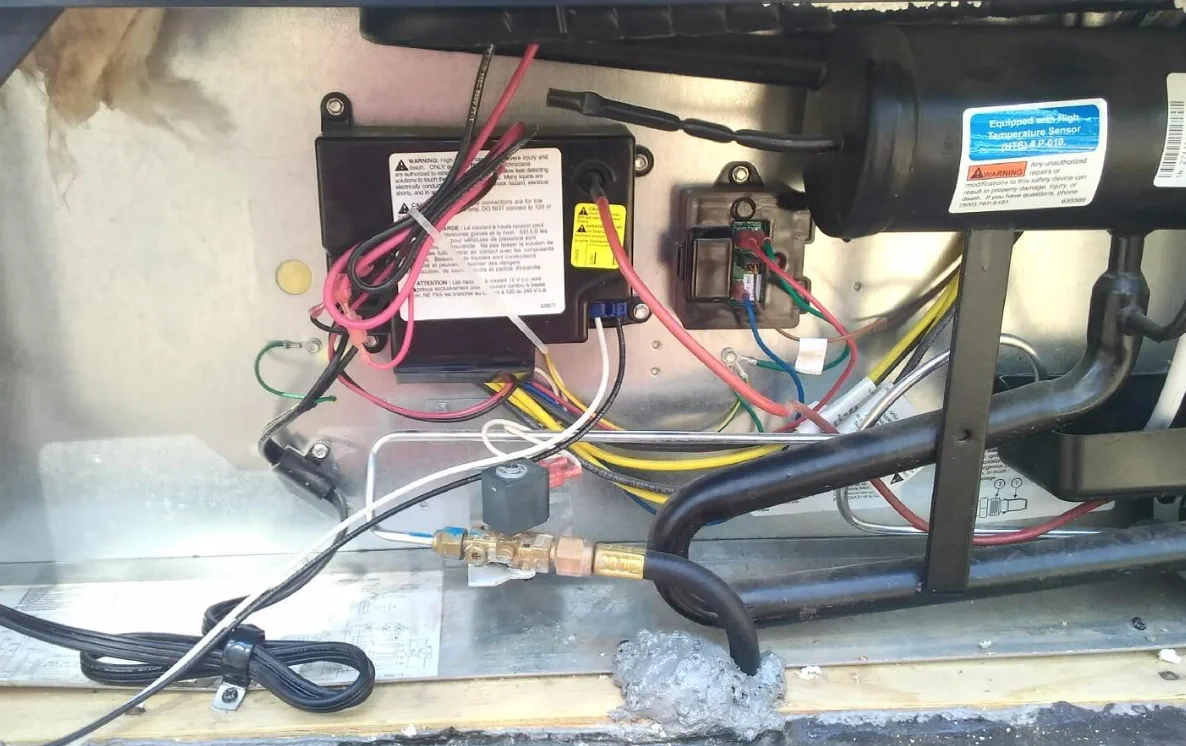
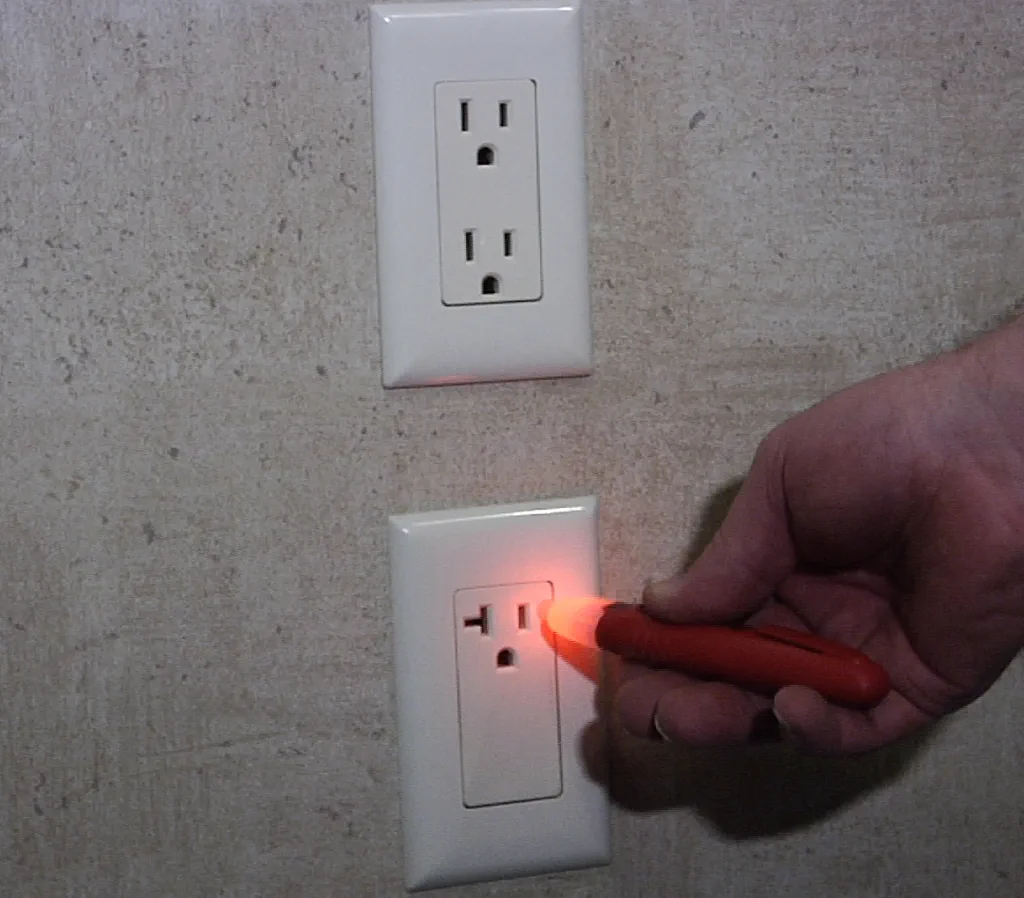
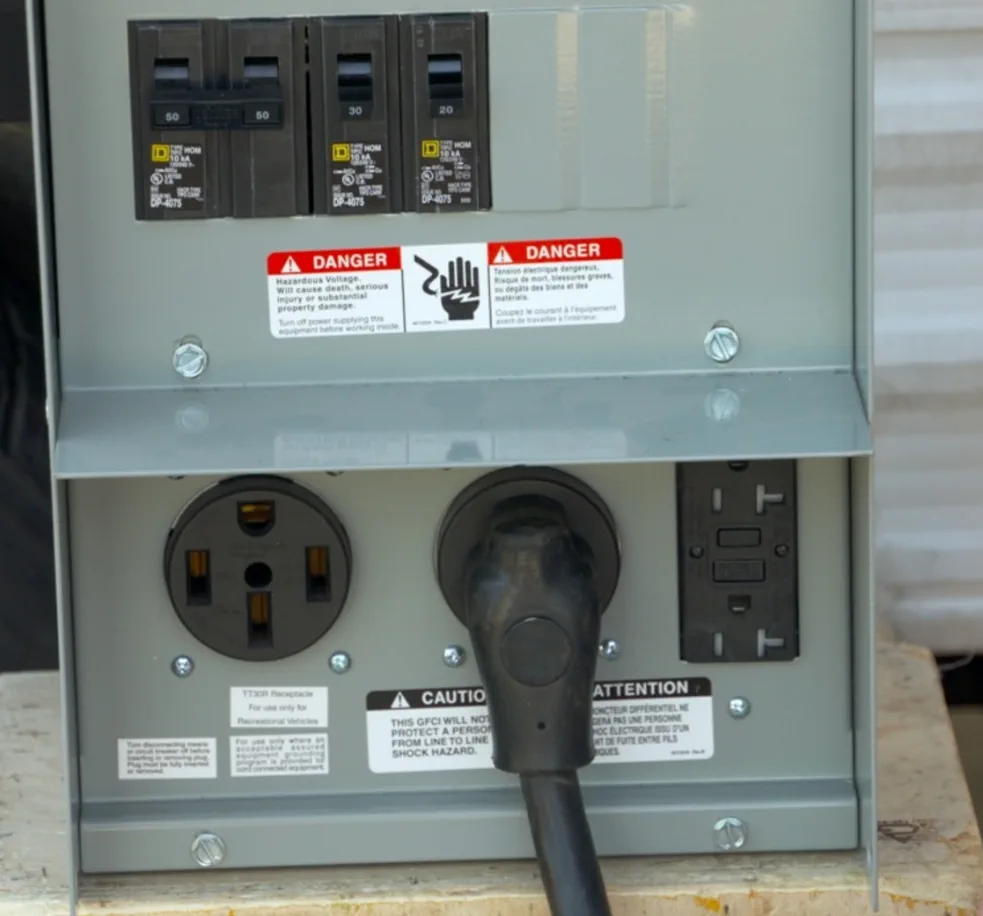
What's included in an emergency electrical call
Every call starts with the closest-available-tech triage. We ask three questions on the phone: are you smelling smoke or seeing burned plastic anywhere; is shore power dead or only some 120V circuits dead; is 12V dead or only some 12V circuits dead.
Smoke or burning plastic = stop using the rig and we treat it as a structure-protection emergency. From there we trace voltage end-to-end with a Fluke meter starting at the shore inlet pins and working inward, isolating whether the fault is AC-side (inlet, panel, transfer switch) or DC-side (converter, batteries, distribution).
The standard sequence on a no-power emergency is: confirm pedestal voltage at the source, test inlet pins on both sides of the cord, check breaker panel input voltage and individual breaker output, confirm transfer switch is in the correct position and contacts are closed, then test converter DC output and battery state-of-charge under draw. Most emergency calls land on a single faulty component within 45 minutes of arrival.
Which battery and converter brands actually hold up in RVs?
Progressive Dynamics and WFCO converters are the workhorses - we trust them. Progressive Dynamics 60-amp is the gold standard in Tiffin and upscale builds; WFCO 60-amp is solid and cheaper. Both charge reliably and run cool.
We avoid knock-offs - they fail at 18 months. For batteries, AGM (absorbed glass mat) from Trojan or Interstate are proven, heavy, and affordable - right choice for weekend camping.
For serious boondocking or full-time living, Battle Born LiFePO4 lithium is the upgrade. It's lighter, holds more usable capacity, charges faster, and lasts 10+ years.
Yes, it costs 3x more upfront, but you get what you pay for. We install Victron or Meanwell inverter-chargers with lithium setups - they talk to the BMS and prevent fires.
Cheap inverters with lithium are a lawsuit waiting to happen. We don't cut corners on electrical.
We replaced a dead AGM bank in a Grand Design Reflection for $2,400 (Trojan 200Ah dual setup). Same customer called 14 months later wanting to upgrade to boondocking.
We installed Battle Born 200Ah lithium with a Victron 3,000W charger-inverter for $7,200 total. Now he camps off-grid for two weeks without the generator. That's the performance difference - and why we recommend lithium to anyone who can swing the cost.
Brands we actually install and warranty:
- Converters: Progressive Dynamics, WFCO
- AGM batteries: Trojan, Interstate, Relion
- Lithium: Battle Born LiFePO4
- Inverters: Victron, Meanwell, Renogy (budget option)
- Breaker panels: Lippert, Dometic
- Shore power inlets: Hubbell, Marinco (stainless)
- Diagnostic tools: Fluke, Blue Sea Systems meters
How fast can we get to you
In our covered metros core areas, we target 2-4 hour emergency response. Call (866) 623-1340, describe the symptom (no shore, no 12V, breaker tripping, smoke), and we quote you a phone range before we dispatch. If you're at a campground in our Florida or Idaho service zone, we roll directly. Outside those areas, our nationwide certified-tech partner network connects you with the closest verified mobile electrical tech.
What warranty backs up your electrical work, and what isn't covered?
All parts and labor come with a 90-day workmanship warranty. If a converter we install fails, we replace it. If a battery connection corrodes or a breaker trips repeatedly after our fix, we come back.
This is on us. The warranty covers parts defects and installation errors - not user abuse, undersizing (running a 1,500W inverter on a 100Ah battery all day), or natural aging. Manufacturer warranties on batteries and converters are separate - Trojan batteries get 12 months from them, Battle Born gets 10 years, Progressive Dynamics gets 3 years.
We honor those and help you claim them if something goes wrong. What we don't cover: you overcharge the lithium battery and blow the BMS, or you nail the shore power inlet with the stabilizer jack.
That's on you. We recommend a Victron integrated BMS with lithium specifically to prevent overcharge, and we always mount inlets where they won't get whacked. Accidents happen - we're honest about what's warranty and what isn't.
A customer's converter failed nine weeks into ownership. We replaced it for free under warranty.
Eight months later, he had an inverter question and called. We walked him through proper load management at no charge.
That's the relationship we build - 15 years in this business, 12,000+ RVs serviced, and we're RVIA and RVDA certified. Electrical isn't black magic. It's measured, tested, and guaranteed.
What our 90-day warranty covers:
- Converter installation and function
- Battery bank wiring and connections
- Shore power inlet installation and function
- Breaker panel repair and replacement
- Inverter installation and output quality
- All solder joints and crimped connections
- Diagnostic accuracy and recommendations
- Does NOT cover user overload or abuse