Why does my RV's lights flicker when the AC starts?
That flicker is a voltage sag caused by inrush current - the AC compressor pulls massive amperage the moment it fires up. A Dometic or Coleman-Mach roof AC unit can draw 50+ amps in the first second, even though it settles to 15-20 amps once running. Your Progressive Dynamics or WFCO converter, shore power pedestal, and battery bank weren't designed for that spike.
A soft-start device (also called an inrush limiter or hard-start kit) gradually ramps the compressor up instead of slamming it on. That eliminates the flicker, protects your battery voltage, and reduces strain on your 30-amp or 50-amp service.
Most single-AC setups see results immediately. Dual AC rigs sometimes need a soft-start on each unit.
We worked on a 2019 Jayco Jay Flight that was tripping its Progressive Dynamics converter and dimming headlights every time the owner switched on the roof AC. The shore power connection was also getting hot - a sign the pedestal was overloaded on startup. We installed a soft-start on the Dometic AC unit, and the owner never saw another flicker or converter fault.
The fix cost $520 with labor, took 3 hours, and bought him peace of mind for the rest of his ownership. Without it, he was risking premature battery failure and potential converter damage.
Common signs you need a soft-start:
- Lights dim when AC compressor engages
- Converter goes into fault mode during AC startup
- Shore power breaker trips when you turn on AC
- Battery voltage drops below 11 volts during AC startup
- TV or fridge powers off briefly when AC turns on
- Campground pedestal gets warm to touch
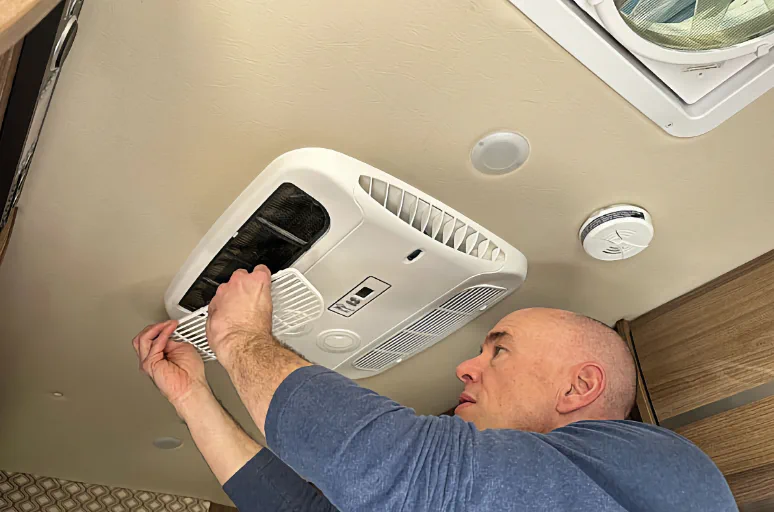
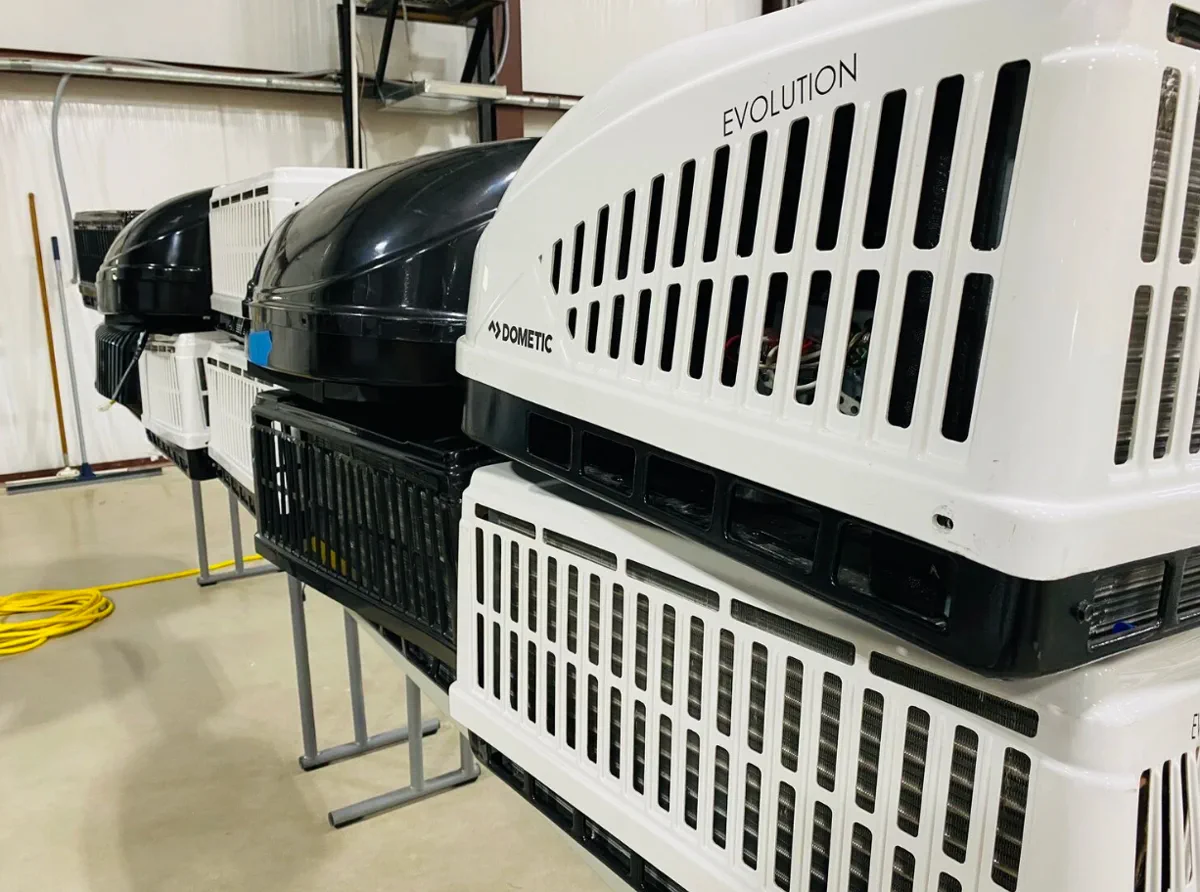
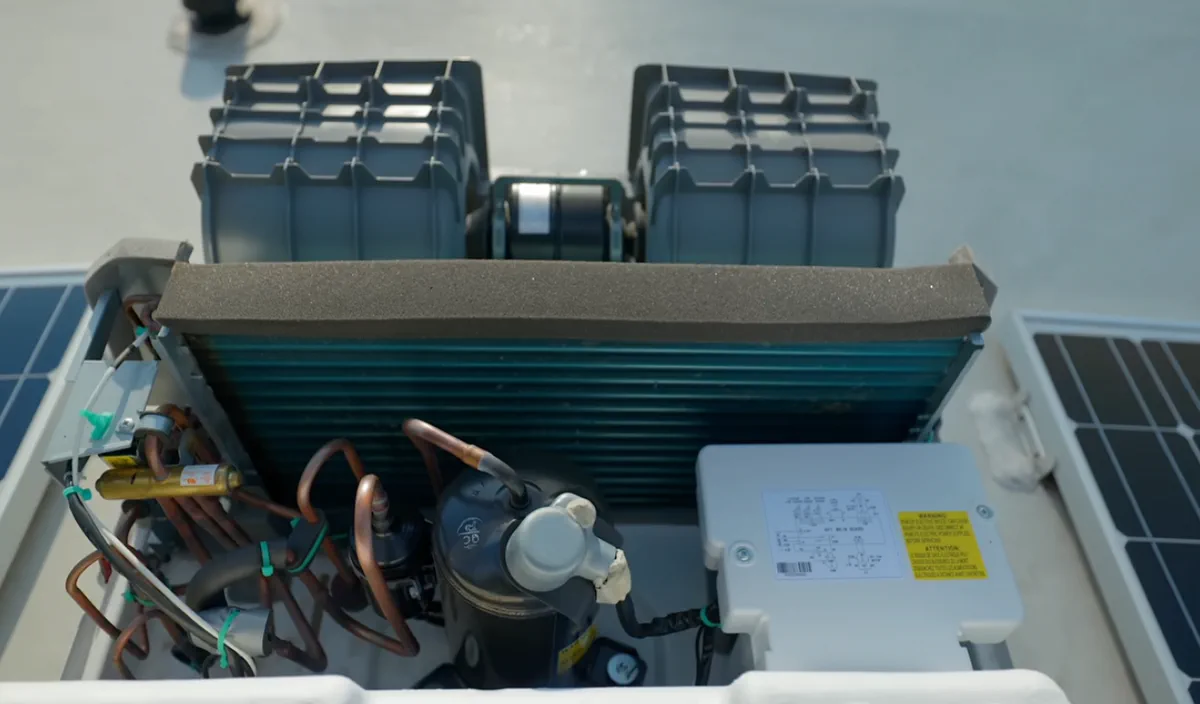
What's included in a mobile soft-start install
Every install starts with a baseline inrush measurement. We pull the rooftop shroud, kill 120V at the breaker, clamp-meter the existing compressor leads on a cold start, and record peak amperage. From there we wire the soft-start module in line with the compressor leads, program it for your specific compressor tonnage, and run three back-to-back startup cycles to confirm peak inrush has dropped to spec (typically under 20A on a 13.5K BTU unit).
The standard sequence is: shore power off, photograph existing compressor wiring (HERM, FAN, C terminals), mount the soft-start module to the AC frame with thermal clearance, splice in line with the HERM lead, restore power, run startup cycles with a clamp meter on the line, then verify the unit reaches normal cooling output before reseating the shroud.
How much does a soft-start install cost, and what affects the price?
Soft-start install runs $450-$650 all-in: device, labor, and testing. The device itself costs us $200-$280 depending on model and amperage rating. Labor is 2-4 hours at our standard mobile rate.
We quote flat-rate by phone once we know your RV model, chassis, AC brand, and whether your AC cabinet is easily accessible. A Winnebago with a standard roof-mount Dometic AC is usually $480.
A heavily modified or older rig where we need to reroute wiring or access the compressor contactor from underneath adds time and cost. If you need a soft-start plus a capacitor replacement, you're looking at $600-$750. We don't charge extra for testing and diagnostics - that comes first and informs the final quote.
A Coachmen owner in Idaho called with a quote from his local dealer for $895 for a soft-start install. He sent us photos of his AC setup and model year.
We quoted $520 - same quality Micro-Air device, same warranty, no surprises. We showed up at his Idaho Falls campground, completed the install in 2.5 hours, and tested it under load before leaving.
He was shocked at the difference in price and service speed. Dealers have shop overhead; we don't. That savings goes to you.
Factors that change your price:
- AC brand and model (Dometic vs. Coleman-Mach)
- Whether AC cabinet is easily accessible
- Shore power service (30-amp vs. 50-amp)
- RV age and wiring condition
- Whether you need additional repairs (capacitor, contactor)
- Travel distance from your nearest covered metro
Soft-start install pricing
Flat-rate, written quote at your site before any work starts.
| Service | Parts / Brand | On-Site Time | Flat-Rate Range |
|---|---|---|---|
| Single-AC soft-start | SoftStartRV / Micro-Air EasyStart | 60-90 min | $245 - $385 |
| Dual-AC soft-start | 2 x Micro-Air EasyStart | 2-2.5 hours | $445 - $685 |
| Soft-start + capacitor combo | Micro-Air + OEM dual-run cap | 1.5 hours | $345 - $485 |
| Soft-start + new contactor | Micro-Air + 24V contactor | 1.5-2 hours | $385 - $545 |
| Generator surge load test | Honda EU3000 / Champion test | 30 min | $95 flat |
| Hughes Autoformer add-on | 30A or 50A Autoformer | 1 hour | $585 - $885 |
Flat rate before we roll
A1 RV Repair quotes a phone range before scheduling, then writes you an exact quote at your site before turning a wrench. No hourly creep, no after-the-fact "while we were up there," no diagnostic surcharge.
Soft-start brands we install
- SoftStartRV - SSRV-3 module, the original RV-specific brand
- Micro-Air EasyStart 364 - widely-spec'd OEM-grade kit, lifetime warranty
- Hughes Autoformer - paired with soft-start when shore voltage sags below 108V
Warranty - what's covered after we install your soft-start
A1 backs every soft-start install with a 90-day workmanship warranty. Micro-Air EasyStart units carry a lifetime manufacturer warranty against defects; SoftStartRV runs 5 years. We register the part serial number in your name. If the module fails inside 90 days, we replace it free including labor.
Service availability and scheduling
In our covered metros we respond in 2-4 hours for emergency calls and schedule routine installs within 5-7 days. We're mobile only - no shop, no waiting in a waiting room. We come to your campground, driveway, or storage lot, work on your schedule, and leave you with a working AC system.
We bring all common parts and tools. If you're outside our covered metros, we've partnered with a nationwide network of RVIA and RVDA certified mobile repair teams.
We vet every partner for quality and fair pricing before we send you their way. We also coordinate the install - you still talk to A1, we handle the scheduling and quality oversight with the local team. You get our voice and our standards even if you're in Colorado or New Mexico.
We sent a customer to one of our Idaho partners last month after his soft-start failed while he was camping in Boise - he was on his way from Florida. Our partner had him back online in 3 hours, charged exactly what we quoted, and sent us the documentation.
The customer never called anyone else. That's the network advantage: wherever you are, A1 finds you local help, but you're not dealing with a stranger.
We've been doing this 15+ years and have serviced over 12,000 RVs. We know who to trust.
How to get a soft-start install scheduled:
- Call us at (866) 623-1340 with your RV make, model, and AC brand
- We quote flat-rate by phone based on your setup
- In FL/ID, we schedule mobile visit within 5-7 days (2-4 hours emergency)
- Outside FL/ID, we coordinate with our certified partner network
- We show up with the device and all tools needed
- We test and leave you with a warranty document