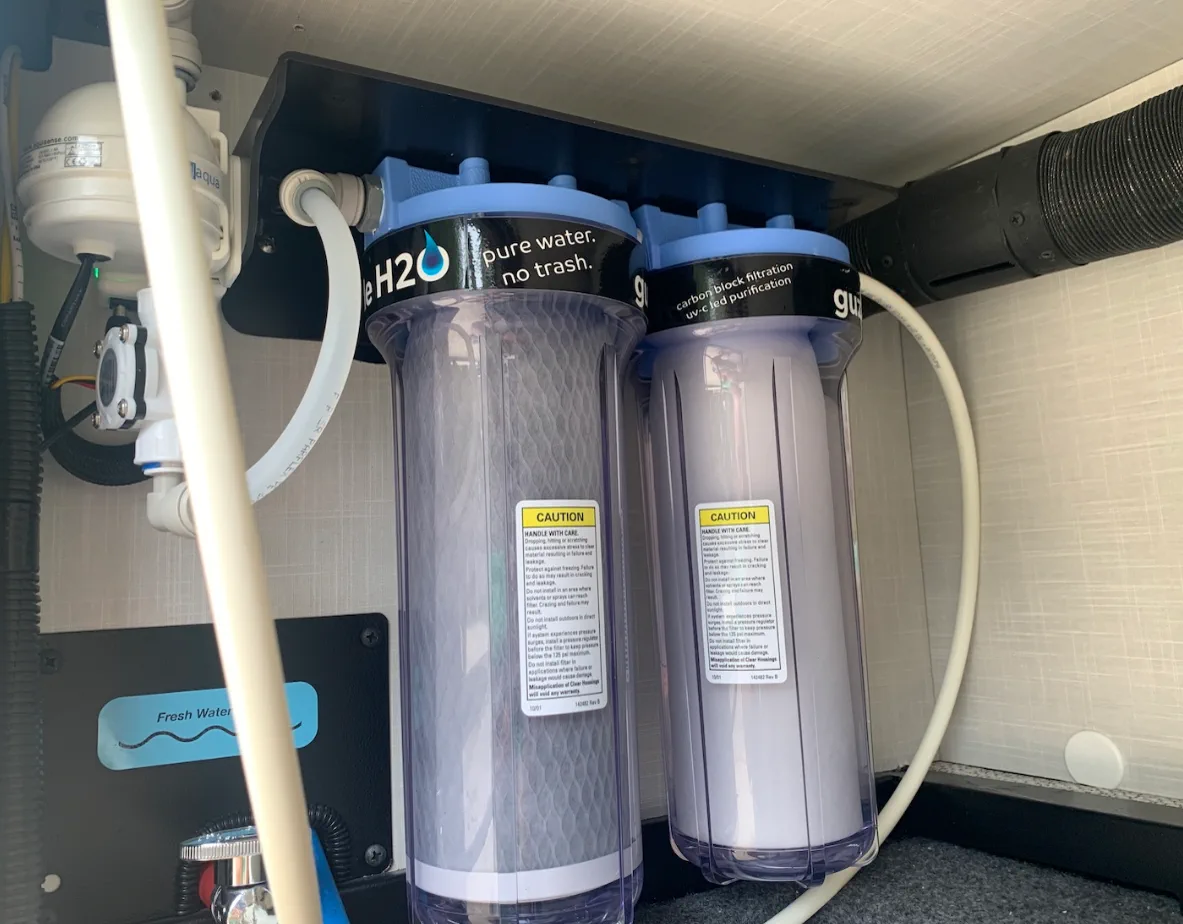
What exactly happens during a water system blowout and why can't I skip it?
A water system blowout uses regulated compressed air (typically 40-60 PSI) to force standing water out of every line, valve, and fitting in your RV's plumbing. You're targeting the fresh water lines, gray tank drain, black tank drain, and toilet supply - every path water takes. We connect an air compressor to your city water inlet, seal off the tank vents, and methodically push air through until nothing but a dry hiss comes out the other end.
This matters because water left behind expands when frozen, and frozen water cracks Shurflo pumps, Atwood water heaters, and plastic fittings faster than you'd think. We've pulled apart Jayco and Forest River rigs where a missed line cost the owner $1,200 in component replacement.
Blowout insurance costs $200. A new water pump costs $400 plus labor.
A Winnebago owner in Tampa left his rig unheated for January without a blowout. The freshwater line to his Atwood 6-gallon tank split at the tee fitting - not dramatic, but slow enough that he didn't notice until spring.
Gray tank drain valve froze solid and shattered the plastic cartridge. Total damage: new pump, new valve cartridge, new tee fittings, and two days of diagnosis and reinstall.
Cost him $680 out of pocket because his dealer didn't catch it in their winterization. We now blowout every system we touch before November, and we document it with photos so you have proof for warranty claims if something else fails.
What we actually blow out:
- Fresh water supply lines from city inlet to kitchen and bathroom
- Cold water line to shower and sinks
- Hot water line from Atwood heater to all fixtures
- Gray tank drain valve and entire drain line
- Black tank drain and flush line
- Toilet bowl water supply
- Exterior shower hookups if equipped
- Icemaker or fridge water lines in luxury rigs
How do we know when your RV needs a blowout - what are the real warning signs?
If you're storing your RV for winter in temperatures below 32°F, you need a blowout - period. Symptoms that you needed one last year: no water pressure when you fire up in spring, water spurts out then stops, or you notice cracks in plastic fittings around the water heater. We've seen Shurflo pumps freeze and lose their prime completely, requiring a full reprime and sometimes replacement.
A frozen black tank valve is unmistakable - you pull the handle and nothing moves, or you hear ice cracking inside the tank. One Keystone owner in Boise tried to force his frozen black tank valve and snapped the internal stem.
The bigger signal: if your RV sat unheated anywhere below 32°F for more than a week without antifreeze or blowout, assume water is still hiding in low spots. We perform winterization diagnostics on rigs stored 6+ months to find trapped pockets before they crack.
A Grand Design owner brought his fifth wheel to us in March after a rough Colorado winter. His fresh water tank was full, but lines had zero flow.
We pressure-tested and found ice still blocking the line from his Dometic water heater outlet valve - he'd used antifreeze in the tank but skipped the blowout on the heater loop itself. His Atwood had actually frozen internally because the bypass wasn't installed correctly.
This is why we always confirm bypass setup and blow out the heater lines separately. One diagnostic call saved him $650 in Atwood heater replacement.
Signs you're past due for a blowout:
- Storing RV for winter in freezing climate without heat
- Water pressure that returns slowly or inconsistently in spring
- Visible cracks or weeping at plastic fittings near water heater
- Black or gray tank valves stuck or making ice noise
- RV sat 6+ months without winterization documentation
- Purchased used RV without winterization history
- Previous year's antifreeze treatment is your only defense
- Rig experienced even one unheated night below 30°F
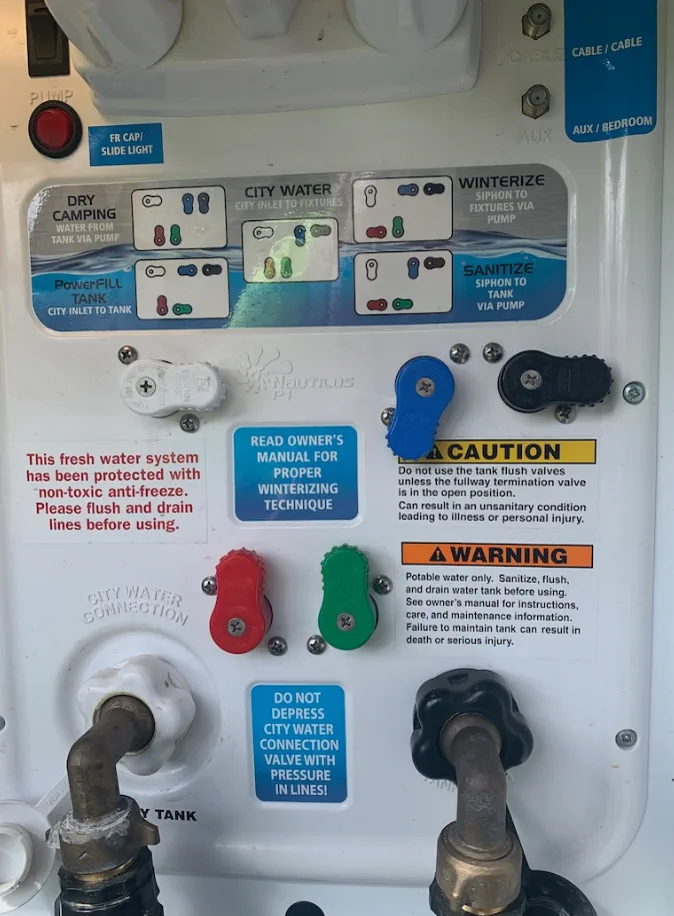
Walk me through your exact blowout process - step by step, no shortcuts
We start by locating your city water inlet and connecting our regulated air compressor, set to 40-50 PSI - never higher, because over-pressurizing can rupture old plastic lines. Step one: we close the freshwater tank vent and open the lowest drain valve (usually under the kitchen sink) to release back-pressure. We slowly introduce air and listen for water flow.
Once dry air comes out, we move to the next lowest point - gray tank drain, then black tank flush line. We don't just blow and go; we cycle air in pulses to dislodge trapped water in elbows and low spots.
Atwood water heaters get special attention: we blow out the inlet line, then disconnect the heater outlet and blow directly through the tank to clear the internal passages. This takes 30-45 minutes alone.
After blowout, we inject RV antifreeze (typically propylene glycol, non-toxic) into the freshwater tank and run the pumps so antifreeze reaches every line as backup insurance. Total time: 1.5-2 hours for a standard Class A or B.
A Thor Motorcoach owner in Jacksonville brought his rig for pre-winter service. We found his water heater bypass wasn't installed - the installer cut corners.
We performed the blowout, but then retrofitted an Atwood bypass kit before the antifreeze push. Without that bypass, antifreeze would've filled his heating tank, wasting 6 gallons and reducing protection.
We charge $220 for the blowout alone, plus $140 for bypass retrofit and installation. Most shops would've just blown and left you with a problem. That's why we walk through your system before we start.
Our step-by-step process:
- Visual inspection of all visible plumbing for prior damage
- Connect regulated compressor to city water inlet at 40-50 PSI
- Seal freshwater tank vent cap
- Open lowest drain valve and introduce air in pulses
- Cycle through each drain point (sink, shower, gray, black)
- Disconnect and blow through Atwood water heater separately
- Confirm toilet bowl, exterior shower, and fridge lines dry
- Inject RV antifreeze into tank and run pumps for distribution
- Document completion with photos and service ticket
What does a water system blowout actually cost - and what's included for that price?
Standard blowout runs $180-$240 for most Class A and B motorhomes, $220-$280 for fifth wheels and travel trailers with larger systems. Price depends on how many tanks you have, whether your water heater bypass is already installed, and whether we're doing it standalone or as part of full winterization. If you add Shurflo pump replacement during blowout (because we found one damaged), that's another $320-$400 plus labor.
Antifreeze injection is included. Water heater bypass retrofit, if missing, runs $140 installed.
We quote flat-rate over the phone - no surprises when we show up. We've worked on everything from a 22-foot Jayco to a 40-foot Winnebago.
Most owners bundle blowout with antifreeze fill and holding tank treatment for $380-$450 total winterization. We beat dealer pricing on this by 30-40% because we're mobile and don't carry dealership overhead.
A Coachmen owner in Boise called for a blowout estimate and mentioned his RV was 2008 vintage. We quoted him $200 blowout + $120 for tank treatment (necessary on older tanks).
He went to the local dealership first, came back to us at $580 total for the same work. We showed him our RVIA certification and 12,000+ rigs serviced in 15 years.
He chose us, saved $180, and got the same Dometic tank treatment and Shurflo pump inspection. No markup, no dealer upsell - just the work that needed doing.
What's included in blowout pricing:
- Compressed air purging of all fresh, gray, and black lines
- Water heater inlet and outlet line blowout
- Toilet supply line and bowl inspection
- RV-grade propylene glycol antifreeze injection
- Pump priming and distribution of antifreeze
- Visual inspection for pre-existing damage
- Service documentation with photos
- 90-day workmanship warranty on labor
Which RV brands and water heater types do you actually service - any compatibility issues we should know about?
We service every major RV brand - Winnebago, Forest River, Jayco, Tiffin, Grand Design, Keystone, Thor, Coachmen, and more. Our techs are trained on all common water heater types: Atwood, Dometic, and Suburban. Each has a slightly different bypass configuration, and that matters.
Atwood tanks (the most common) have a three-way bypass valve that goes inline between the heater inlet and outlet; if it's not installed or installed backward, antifreeze backs up into your heater tank. Dometic heaters on newer rigs sometimes use a bypass cartridge inside the water heater itself - you can't see it, which is why diagnosis is critical.
Suburban heaters (less common, usually older rigs) have a different fitting configuration. We carry common Shurflo pump models and test them under pressure before sealing the system. If we find incompatibility - say, a retrofit water heater that wasn't installed with a bypass - we flag it and give you options: retrofit the bypass now or accept higher antifreeze volume costs.
A Tiffin Allegro owner brought his 2012 motorhome in December. Original Dometic water heater, but previous owner had installed an aftermarket Atwood bypass meant for a different rig.
The threaded sizes didn't match; the previous bypass was leaking antifreeze all over the engine bay. We removed the wrong bypass, installed the correct Dometic cartridge inside the heater (manufacturer recommended), and re-routed the inlet line.
Cost: $180 blowout + $210 bypass retrofit. Without that catch, he'd have wasted gallons of antifreeze and risked water heater damage. Always verify bypass compatibility before winterization.
Water heater and pump types we service:
- Atwood 6-gallon and 10-gallon tanks with three-way bypass
- Dometic tankless and cartridge-bypass models
- Suburban water heaters with inline bypass fittings
- Shurflo 12-volt fresh water pumps (most common)
- Dometic 12-volt and 110-volt pump alternatives
- Truma combi boilers with integrated winterization
- Propane and electric hybrid water heaters
- Exterior shower and hot-tap configurations
When's the right time to schedule a blowout - and what happens in spring when you de-winterize?
Schedule blowout 2-4 weeks before your first hard freeze - typically late September in Idaho, late October in Florida. Don't wait until November when every RV tech is booked solid. We offer mobile service and can usually fit you in within 7 days of your call.
If you're storing in an unheated climate year-round, blowout is a fall ritual every year. De-winterization in spring is the reverse: we drain all antifreeze from the system, flush the freshwater tank to remove any remaining glycol (antifreeze tastes and smells awful in your coffee), test the Shurflo pump for pressure and volume, confirm all drain valves seal tight, and run fresh water through every line to verify flow.
De-winterization typically costs $150-$200 and takes 1-1.5 hours. You can't just refill and drink - antifreeze residue will linger in tank corners and fittings for weeks. We do a full flush and pressure test, then hand you back a rig with clean water and zero freeze risk.
A Forest River owner called us in April after trying to de-winterize himself. He'd drained antifreeze and refilled, but didn't flush the tank - when his family took their first trip, they got stomach upset from residual glycol.
He brought the rig back, we did a three-cycle tank flush with fresh water, primed the Shurflo pump, and pressure-tested all lines. Cost: $180 flush and test.
He admitted he should've called us in March. Now he books both blowout and de-winterization with us at the start and end of winter storage. That's the right approach - let the experts handle it, document it, sleep well.
Winterization and de-winterization timeline:
- Late September (Idaho) or late October (Florida): call for blowout
- Book 2-4 weeks ahead to avoid seasonal rush
- We respond 2-4 hours emergency or schedule at your convenience
- Blowout complete with antifreeze injection and documentation
- Store RV unheated through winter with zero freeze risk
- March-April: call for de-winterization flush and pump test
- We drain antifreeze, flush tank 3+ cycles, pressure-test system
- System ready for travel with clean water and full flow