Why does my RV need antifreeze if I'm draining the water tanks anyway?
Draining tanks stops one problem - it doesn't protect the plumbing lines themselves. Water trapped inside copper, PEX, or flexible hose will freeze, expand, and crack pipes from the inside. Antifreeze circulates through every inch of your fresh water system - the supply lines running under the floor, inside cabinet walls, behind the shower valve, through the Atwood or Dometic water heater, and the lines feeding your kitchen sink and bathroom fixtures.
Propylene antifreeze (RV-safe, not automotive ethylene) won't damage seals or tank coatings. If you skip this step and temps hit 20°F for three nights, you're looking at $800-$2,000 in burst-pipe repairs come spring. We've seen this happen to a Jayco owner in Boise who thought draining was enough.
A Grand Design owner in central Florida called us in November - she wanted to park her RV for the season at her daughter's place near Tallahassee where temps can dip to 28°F. She'd drained the tanks herself but didn't know about line protection.
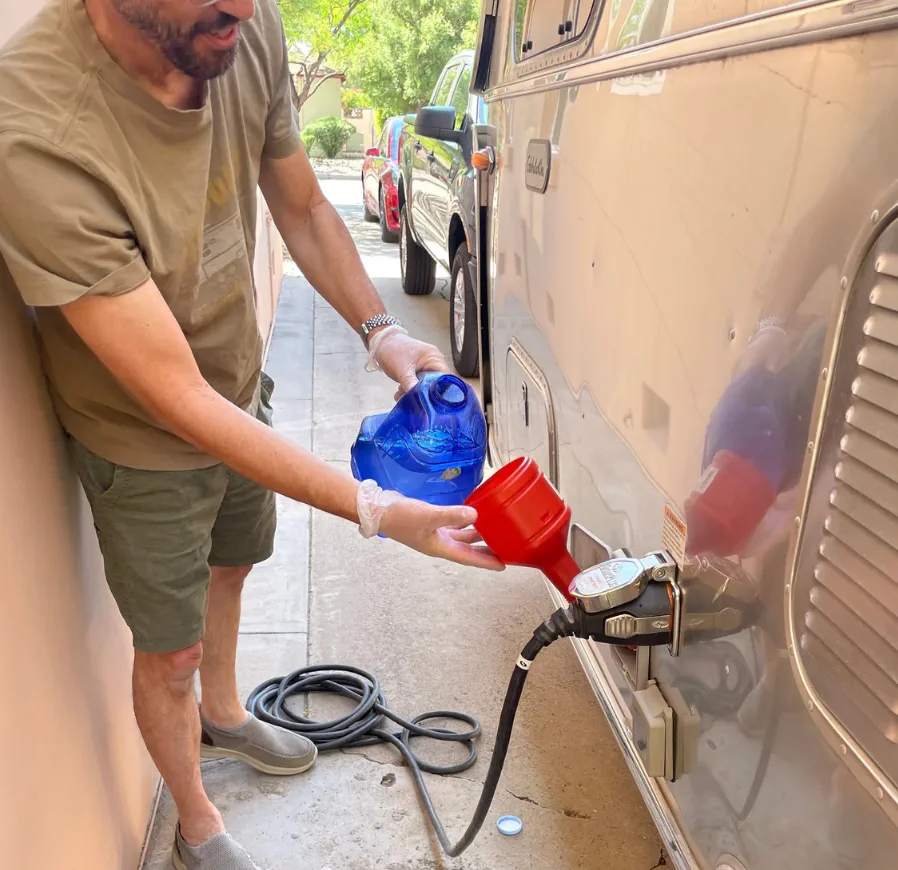
We walked her through the antifreeze fill: pump it from a five-gallon jug through the city water inlet, run every faucet and shower until the lines turned pink with antifreeze, then drain the hot water heater bypass valve and pump antifreeze through that too. Total time: two hours.
Cost: $210. Next spring, no cracks.
No emergency calls. That's the point.
What freezes without antifreeze:
- Fresh water supply lines in floor cavities
- Hot water lines from Atwood heater to fixtures
- Shower valve trim rings and cartridges
- Toilet fill valve internals
- Refrigerator water line (if equipped)
- Outdoor shower lines if installed
- P-traps under sinks (standing water)
What's the step-by-step antifreeze fill process A1 performs?
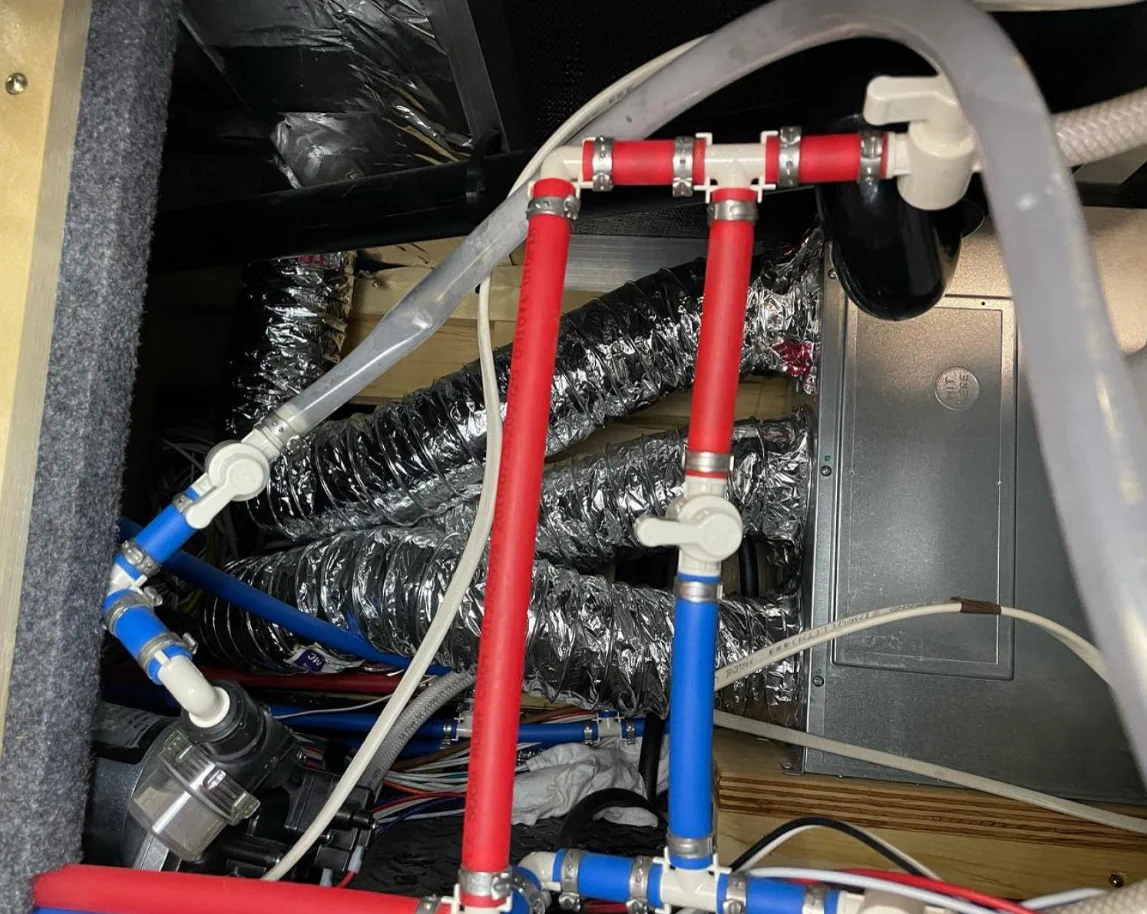
Our antifreeze fill follows a strict sequence to ensure every inch of your plumbing gets protected, not just the obvious parts. Step one: we locate your fresh water inlet (usually a blue city-water connection on the side) and connect our pressurized antifreeze pump system. Step two: we open all interior faucets - hot and cold, kitchen, bathroom, shower, and toilet - one at a time, running antifreeze through until the pink color appears.
This confirms the line is filled, not trapped with water. Step three: we bypass your water heater (because heating antifreeze creates hazardous fumes) and pump antifreeze directly through the bypass loop.
Step four: we drain low points - exterior shower valves, hose bibs, and the water heater drain plug. Most RVs take 1.5-2 hours depending on system size.
A Winnebago owner in Tampa had an Atwood 6-gallon water heater and two outdoor shower valves - that made the system more complex than a basic travel trailer. We took extra care running antifreeze through the bypass kit's hot line, checking that both exterior valves flowed pink, and ensuring the drain valve at the heater was fully open to bleed remaining water.
We also treated the black and gray holding tanks with tank treatments (RV-approved enzymes) at the same time, since winterization is one job. Total: 2.25 hours, $285. No surprises the next spring.
The A1 antifreeze fill checklist:
- Locate and connect fresh water inlet
- Run antifreeze through all hot faucets until pink
- Run antifreeze through all cold faucets until pink
- Bypass water heater and pump antifreeze through bypass line
- Open water heater drain valve to bleed air
- Run antifreeze through toilet valve
- Check and drain exterior shower valve (if equipped)
- Verify all hose bibs are open and flowing
- Drain low-point drains on undercarriage
- Document pressure and antifreeze volume used
How much does antifreeze fill cost, and what affects the price?
A1 charges $180-$320 for antifreeze fill depending on your RV's tank size, system complexity, and location (your nearest covered metro). Base service for a standard travel trailer with a single fresh water tank, Shurflo pump, and three fixtures runs $185. Add $30-$40 if you have dual tanks, $25 if you have an outdoor shower, $15 if you have a separate hot water tank bypass (most modern Dometic and Atwood units do).
If your system has been neglected - old lines, multiple additions, non-standard configurations - add $40-$50 for extra time and diagnostic work. We quote flat-rate by phone after you describe your RV make, model, and any custom plumbing mods.
No surprises on the invoice. Antifreeze itself costs us roughly $20-$30 in bulk (we buy commercial propylene); the rest covers pump time, labor, and our certified tech's expertise.
A Keystone owner in Coeur d'Alene called with a 2019 30-foot fifth wheel, standard Atwood water heater, and one gray tank. She asked if winterization was covered by warranty - it's not, but we quoted her $210 all-in: antifreeze fill, tank treatment, and a water heater bypass check.
She booked for early November, paid on completion, and got a 90-day workmanship warranty in case any line leaked during spring de-winterization. Compare that to dealer pricing in the same market - they quoted her $380 for the same service, plus a two-week wait. We showed up in three days.
What's included in the quoted price:
- Propylene antifreeze (RV-safe grade, non-toxic)
- Pump and pressurization labor
- All faucet and fixture cycling
- Water heater bypass operation and verification
- Documentation of completion and notes
- 90-day workmanship warranty on our labor
What type of antifreeze do you use, and why does it matter?
A1 uses propylene glycol antifreeze (RV-grade, typically Sierra or similar NSF-certified brands), never automotive ethylene antifreeze. Propylene is non-toxic, safe around fresh water systems, and won't damage rubber seals, hoses, or Lippert holding tank coating. Automotive ethylene is poisonous and can corrode copper fittings and hose interiors over months.
RV-grade propylene has corrosion inhibitors, dye (usually pink) for visibility, and a freezing point of -50°F, which handles any North American winter. One five-gallon jug costs us about $28-$35 wholesale; most RVs need 3-5 gallons depending on system size.
If you've already used the wrong type (ethylene), tell us - we'll do a full system flush to remove it before refilling with the correct stuff. That adds about $100 to the service.
A Tiffin owner in central Florida called panicked - he'd winterized his coach himself using cheap auto-store ethylene antifreeze he had left over from his truck. By early spring, he noticed pink staining inside his fresh water lines and a faint chemical smell.
We drained the system completely, ran clean water through every line twice, then filled with proper propylene antifreeze and ran it through for flushing. Cost: $340 instead of the standard $210, but his system was safe for the next season.
He admitted he'd saved $15 on antifreeze and paid $130 extra to fix it. Learn from that.
Propylene vs. ethylene - the differences:
- Propylene: NSF-certified for drinking water contact; ethylene: toxic if ingested
- Propylene: safe on rubber seals and hose liners; ethylene: can degrade over time
- Propylene: -50°F freeze point; ethylene: also -50°F but less reliable additives
- Propylene: requires flushing annually; ethylene: contaminates systems permanently
- Propylene: RV-grade pink dye; ethylene: typically bright red, not for RV use
When should I schedule antifreeze fill, and how long does de-winterization take in spring?
Schedule antifreeze fill 2-4 weeks before your area's first hard freeze (typically November in northern climates, December in mild regions). Waiting until January risks surprise cold snaps. In Florida, many owners winterize December through February for peace of mind and to lock in lower winter rates.
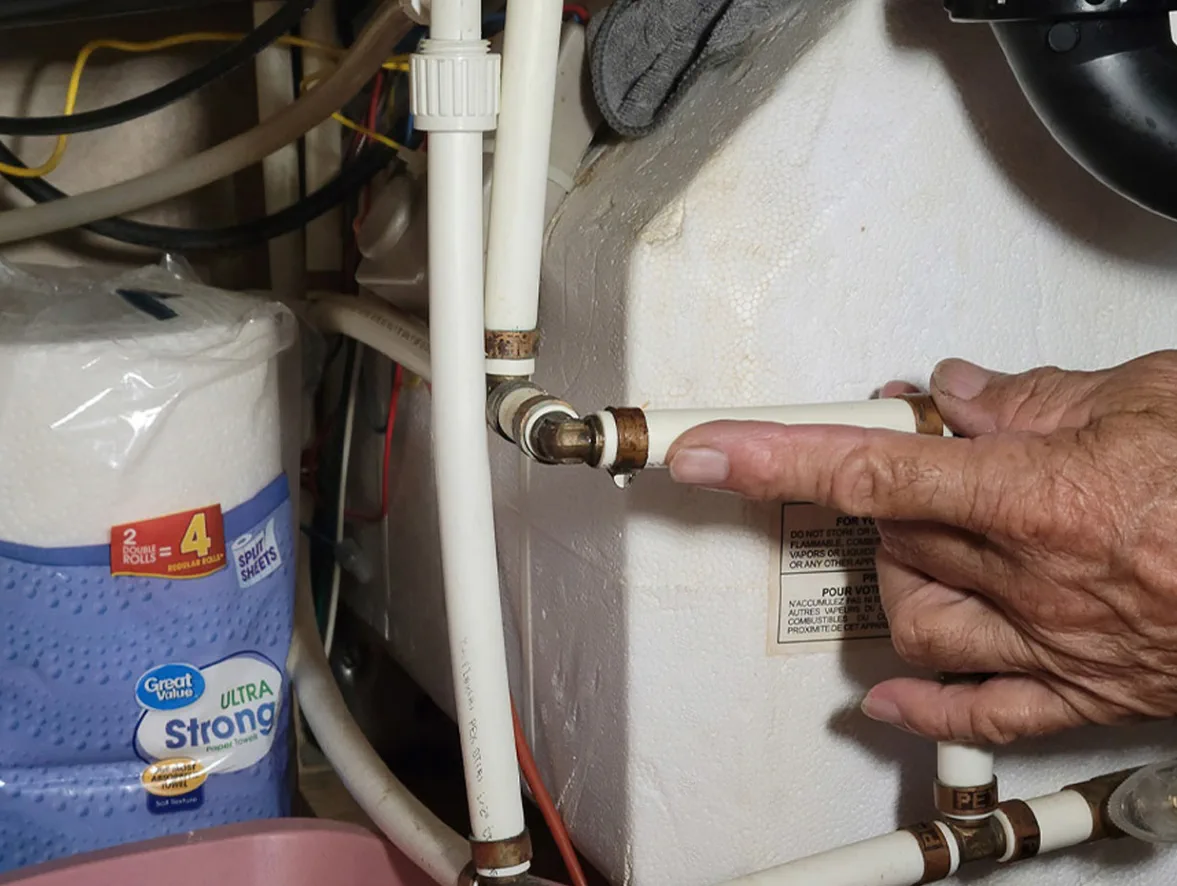
De-winterization happens the opposite direction - March through May in cold states, right before you want to use the RV again. De-winterization takes 1.5-2 hours and costs $155-$220: we reverse the process by opening low-point drains, running fresh water through all lines until antifreeze clears, flushing the water heater, sanitizing tanks, and checking for any leaks or freeze damage that occurred over winter. Most RVs need both services annually if stored in cold weather; mild-climate owners (southern Florida, southern Arizona, coastal California) can skip winterization entirely.
A Coachmen owner in McCall, Idaho had the worst experience - she winterized in October expecting a typical season, but an unexpected November cold snap froze her gray tank outlet line. By late spring, she called us for de-winterization and discovered the freeze had cracked a line inside the cabinet wall.
We did the standard de-winterization first ($185), found the damage during pressure testing, then quoted $420 to replace the compromised section of line. She wished she'd winterized earlier, before the surprise freeze.
Our point: October winterization in mountain areas is not too early. It's exactly right.
Winterization and de-winterization timeline:
- October-November: First freeze risk in northern states - schedule winterization now
- December-February: Mild-climate storage or late-season RV travel
- March: De-winterization season begins in warm regions
- April-May: De-winterization for northern RVers heading out for summer
- June-September: No winterization needed; use your RV or store in mild climates
- September-October: Plan next winter shutdown before temperatures drop
What's your warranty on antifreeze fill work, and what's NOT covered?
A1 offers a 90-day workmanship warranty on every antifreeze fill service - if we miss a line or your system leaks because of our work, we fix it at no charge. Warranty covers labor, not parts (antifreeze is consumable). The warranty applies if you follow our de-winterization instructions in spring: run fresh water through all lines until clear, bleed the water heater, and check for visible leaks.
If you ignore those steps and damage occurs, that's on you. Warranty does NOT cover freeze damage from improper storage (RV parked in a cold garage with no insulation), user error during de-winterization (like running antifreeze-contaminated water back into your tank), or damage from a freeze that occurs between winterization and a late-season warm spell (outdoor temps are unpredictable). If your RV sits unused for six months after antifreeze fill and a pipe cracks from an unrelated freeze, we'll re-inspect and re-treat at standard winterization rates, not warranty.
A Grand Design owner in Boise had us winterize in November 2022. The following February, he decided to use the RV for a weekend trip, so he de-winterized himself - he ran water through the lines but didn't fully bleed the water heater or check for pink antifreeze residue in the toilet tank.
On the trip, his gray tank backed up because antifreeze had gummed up the outlet valve inside the tank. He called us claiming our winterization failed.
We explained the de-winterization process we provided (in writing) required specific steps he skipped. No warranty claim.
But we did come out and re-flush his system for $240 as a courtesy. Read your warranty instructions.
What's covered by the 90-day warranty:
- Missed lines or incomplete antifreeze circulation during our service
- Leaks traced directly to our pressurization or pump work
- Defective antifreeze (wrong type used by mistake)
- Our technician's labor if re-treatment is needed within 90 days