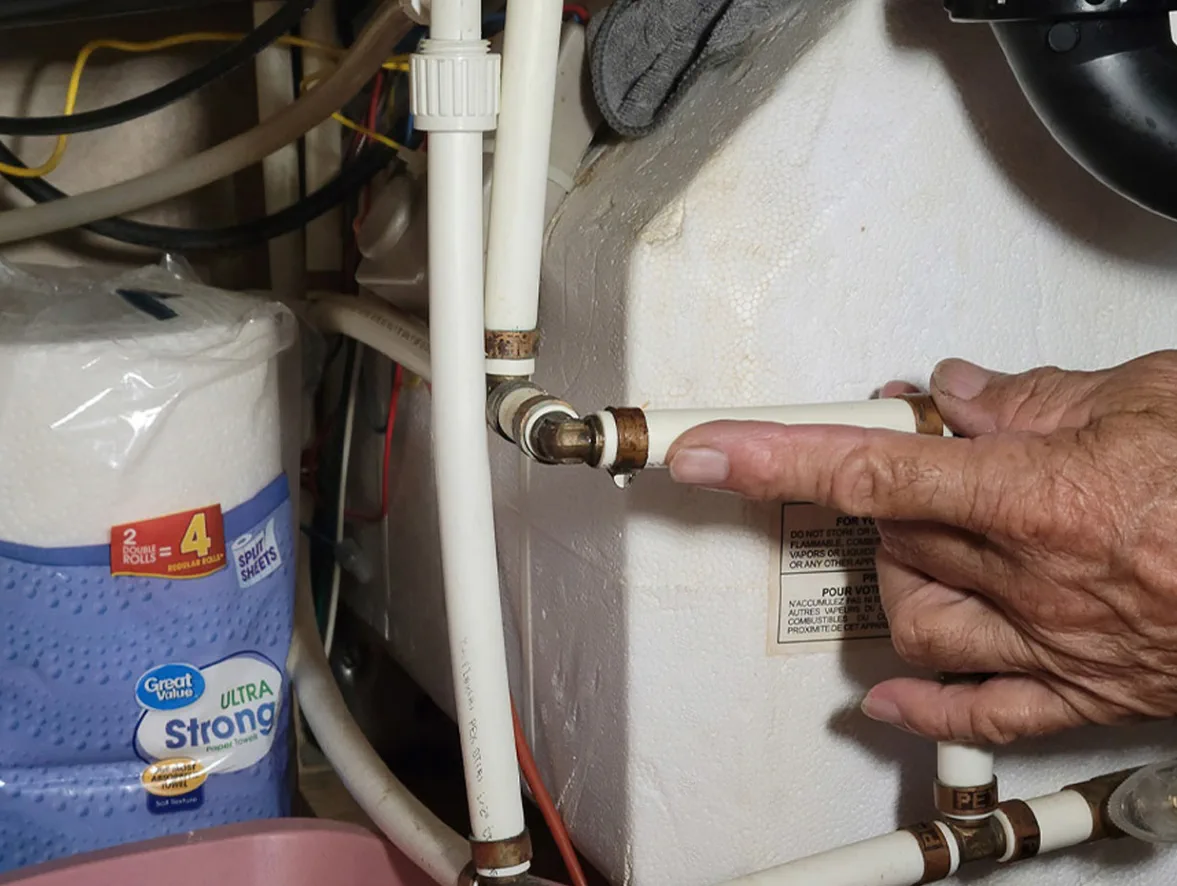
What does a water heater bypass actually do, and why do I need one before winter?
A water heater bypass is a valve kit that redirects water flow around your water heater tank during winterization - so antifreeze goes straight into your lines without sitting inside a $600-$900 Atwood or Dometic tank all winter. Without it, you'd pump expensive (and corrosive) antifreeze through the heater, where it can degrade the tank interior, damage the anode rod, and leave sticky residue that's hell to flush out in spring.
Most RV owners don't realize that antifreeze sitting in a sealed tank can cause sediment buildup and premature failure. The bypass is cheap insurance - a $150-$200 install saves you $800 in replacement costs. It takes 45 minutes to bolt on and requires zero special tools.
We serviced a 2019 Grand Design Imagine last November in Jacksonville. The owner was heading to North Carolina and planned to store the rig in an unheated barn.
His Dometic water heater had never been bypassed, and he'd already winterized three times without one. We installed a standard bypass kit - took us under an hour - and he felt the difference immediately when we flushed it in April.
No smell, no residue, heater fired right up. That's the real story most people skip until it costs them.
Why a bypass protects you:
- Prevents antifreeze from corroding tank interior
- Stops anode rod degradation mid-winter
- Makes spring de-winterization faster and cleaner
- Protects your fresh water tank seal
- Keeps antifreeze cost-effective (less waste)
How do we install and set up a water heater bypass on your rig?
We install a bypass kit in four main steps: shut down your water heater, locate the inlet and outlet lines, install the bypass valve with compression fittings, and test the new path - the whole job runs 45-60 minutes. We use Shurflo or Lippert bypass kits depending on your water system pressure and tank size.
The valve gets mounted near the water heater on the floor or wall, lines get routed with proper support clips to avoid chafing, and we pressure-test at 40 PSI to confirm no leaks. If your RV has a Suburban or Atwood heater - the two most common brands - we've done hundreds. Some rigs (usually older Forest River or Jayco models) have awkward plumbing, and we may need to add 10-15 minutes and an extra fitting, but the base install stays straightforward.
A Winnebago Solis owner called us in Boise with his rig already winterized - wrong way - antifreeze already in the Atwood tank. We installed the bypass anyway and then flushed the heater with a de-winterization process.
Cost him extra time and money, but we got it right. Now he knows: get the bypass on before you winterize. That's the move that saves you headaches.
Installation process checklist:
- Isolate water heater from main fresh tank
- Shut off heater power and let cool 30 minutes
- Install compression fittings on inlet/outlet lines
- Mount bypass valve with proper support
- Route lines away from slide-out mechanisms
- Pressure test at 40 PSI minimum
- Label bypass and tank shut-off for owner
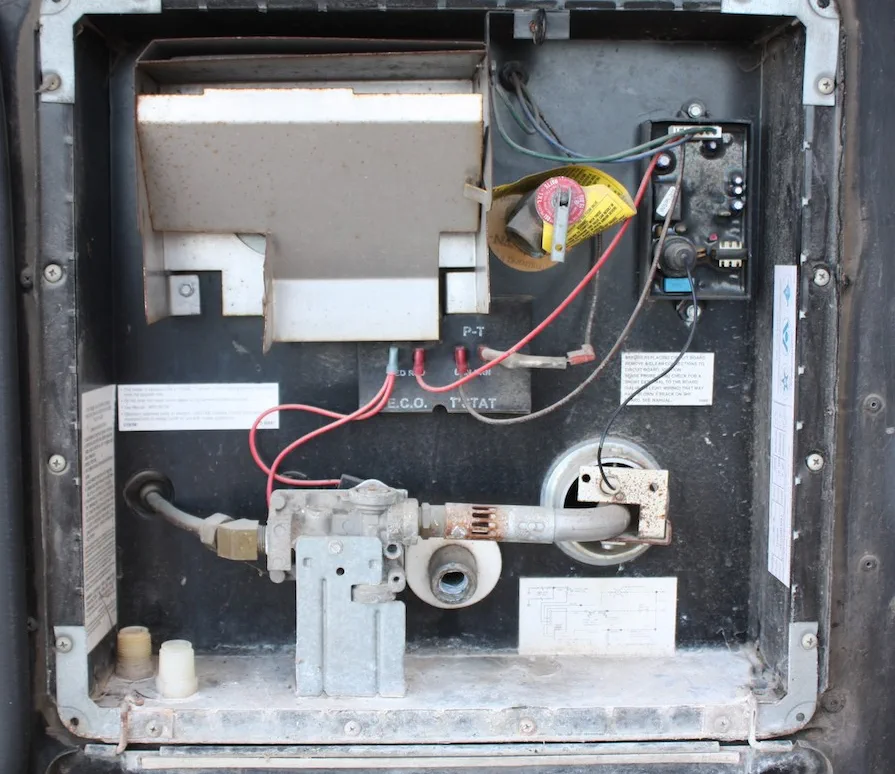
What's the real cost to add or repair a water heater bypass?
New bypass installation runs $185-$245 installed, depending on your water system layout and whether we need extra fittings - that's flat-rate quoted by phone before we roll up. Parts cost us $60-$85 (Shurflo or Lippert kit), labor is straightforward.
Repairs to an existing bypass - leaky fitting, cracked valve, stuck handle - run $95-$150 depending on what failed. If you need the bypass installed as part of full winterization (water blowout, antifreeze fill, holding tank treatment, exterior protection), we bundle it into one package price that ranges $450-$650 depending on tank size and system complexity.
A Tiffin Motorhome with a large freshwater tank and complex plumbing costs more than a 24-foot Keystone travel trailer. We don't hidden-fee you - you get one number, that's what you pay.
A couple with a 2021 Coachmen RV called for winterization before a four-month Arizona trip. They wanted the bypass and full antifreeze treatment.
We quoted $520 all-in, installed it mobile in their driveway, and they drove south knowing the system was bulletproof. Spring came, we de-winterized for $280, flushed the bypass, bled air, tested pressure. That's how it should work.
Cost breakdown by scenario:
- Bypass installation only: $185-$245
- Bypass repair (leak or valve): $95-$150
- Full winterization with bypass: $450-$650
- Spring de-winterization with bypass flush: $240-$320
- Emergency bypass service (2-4 hour response): +$50 rush fee
What parts fail on a water heater bypass, and which brands do we stock?
Most bypass failures are leaking compression fittings (loose connection), stuck valves from antifreeze residue, or cracked plastic T-bodies in cold storage - all fixable in under an hour. We stock Shurflo bypass kits (the most common OEM choice on Forest River and Jayco rigs) and Lippert kits for newer Winnebago, Thor, and Grand Design builds.
Compression fittings are universal and cost $8-$15 each; a full bypass valve assembly runs $65-$95. If your tank has an electric shutoff valve upstream - common on Dometic and Atwood systems - we carry replacement solenoids for $120-$180.
The anode rod inside your water heater is separate and costs $45-$75 to replace if corrosion has eaten it. We carry stock on our mobile units for most common rigs; unusual systems we order same-day and schedule for the next available window.
A 2016 Jayco Jay Flight pulled in with a weeping bypass fitting after four winters of use. We'd installed it originally, warrantied the workmanship, replaced the fitting and tightened the whole assembly for free.
He'd stored it in an unheated garage - ice and thaw cycles had loosened the nut. New owner would have paid us $135.
He paid nothing. That's what our 90-day warranty covers, and this one ran past that, but we know our installs.
Common bypass failure points:
- Compression fitting corrosion (antifreeze exposure)
- Stuck ball valve (sediment buildup in lines)
- Cracked plastic T-connector body
- Loose valve handle or stem seal
- Heater shutoff solenoid (electric valve failure)
- Pinhole leaks from freeze-thaw cycles
When do you install a bypass - before winterization or as part of your existing system?
Install a bypass before you winterize - that's the cleanest approach and the one we recommend to every owner - it takes 45 minutes and saves you problems down the line. If you're winterizing for the first time, we handle bypass installation upfront as part of the full package.
If your rig already has a system but no bypass (older rigs, dealer maintenance gaps, or previous owners who cut corners), we install it on its own or roll it into your next seasonal service. Timing matters: install in fall before you pull out for winter, or in spring during de-winterization if you want one inspection and install in a single visit.
We schedule mobile appointments in our covered metros year-round, and we've got nationwide partners for rigs in other states - call (866) 623-1340 to get on the calendar. Most owners winterize October-November, de-winterize April-May.
A Tiffin owner in Sarasota had never bypassed his heater across three winters. He called us in September asking about winterization.
We quoted him bypass installation plus full treatment, scheduled two weeks out. When we showed up, he mentioned the rig would sit for five months. Perfect timing for a bypass - we got it done before the system went dormant, and he had full confidence his Dometic tank would be pristine when he started up in spring.
Timing guidelines for bypass service:
- New bypass install: 2-4 weeks lead time, schedule in fall
- Bypass as part of winterization: same appointment, no extra delay
- Bypass repair mid-winter: emergency response 2-4 hours in core area
- Spring de-winterization with bypass flush: schedule April-May
- Mobile service across our nationwide network of certified RV technicians
What's covered under your warranty if a bypass fails or leaks after we install it?
We warranty all bypass installations for 90 days against workmanship defects - leaks, loose fittings, improper routing - full repair or reinstall at no cost. Parts carry their manufacturer warranty; Shurflo valves are typically one year, Lippert kits two years.
If a compression fitting weeps or a valve drips within 90 days of our install, we fix it. If it fails after 90 days - say, a fitting corrodes from five winters of antifreeze exposure - that's normal wear and you'd pay standard repair rates ($95-$150).
We don't warranty against freeze damage if you store the rig without proper antifreeze, and we don't cover damage from improper winterization by other shops. Our standard is straightforward: we install it right, test it, label it, and back the work.
You get our 90-day workmanship guarantee on every job. Beyond that, manufacturer defects or seasonal wear are handled case-by-case.
A customer winterized his bypass-equipped rig, forgot to close the bypass valve, then drained the system in sub-zero temps. Ice formed, fitting cracked.
He called us - we explained the bypass worked correctly; the issue was operator error (leaving it open). We still discounted a replacement fitting because he was a repeat customer and honest about the mistake. That's how we handle the gray area.
Warranty coverage details:
- 90-day A1 workmanship warranty on all installations
- Covers leaks, loose fittings, improper routing
- Manufacturer warranty on valve body (Shurflo/Lippert, 1-2 years)
- Does NOT cover freeze damage or user error
- Does NOT cover damage from other shops' winterization
- Repairs after 90 days billed at standard rates