Why does my RV leveling system get sluggish or fail to level completely?
Contaminated hydraulic fluid is the silent killer of leveling systems. Over 5-10 years, moisture, metal particles, and dirt accumulate in your HWH or Lippert Level-Up system's fluid reservoir. The fluid degrades.
Seals weaken. Pump efficiency tanks.
Result: your jacks extend slowly, hesitate, or won't lock. A fluid flush removes the gunk and restores flow.
Most RVs running over 100,000 miles will benefit from a flush. We've seen Forest River, Jayco, and Winnebago units that wouldn't level at all - one flush solved it.
A Tiffin Motorhome owner in Tampa called us last month saying his Lippert Level-Up system was making a grinding noise and taking 45 seconds to level instead of 15. His fluid looked like iced tea - dark, thick, full of sediment.
After we flushed the system and replaced the filter, his jacks responded instantly again. The noise vanished.
Cost him $350 and two hours. Without the flush, his next stop would've been a full pump replacement at $800-plus.
Signs your leveling fluid needs flushing:
- Jacks move slower than normal
- Grinding or whining sounds from pump
- Fluid appears dark, cloudy, or discolored
- Leveling takes 30+ seconds per corner
- Control board flashes error codes
- Jacks stall mid-stroke
- Moisture or sludge in reservoir sight glass
What's the actual repair process when you flush a leveling system?
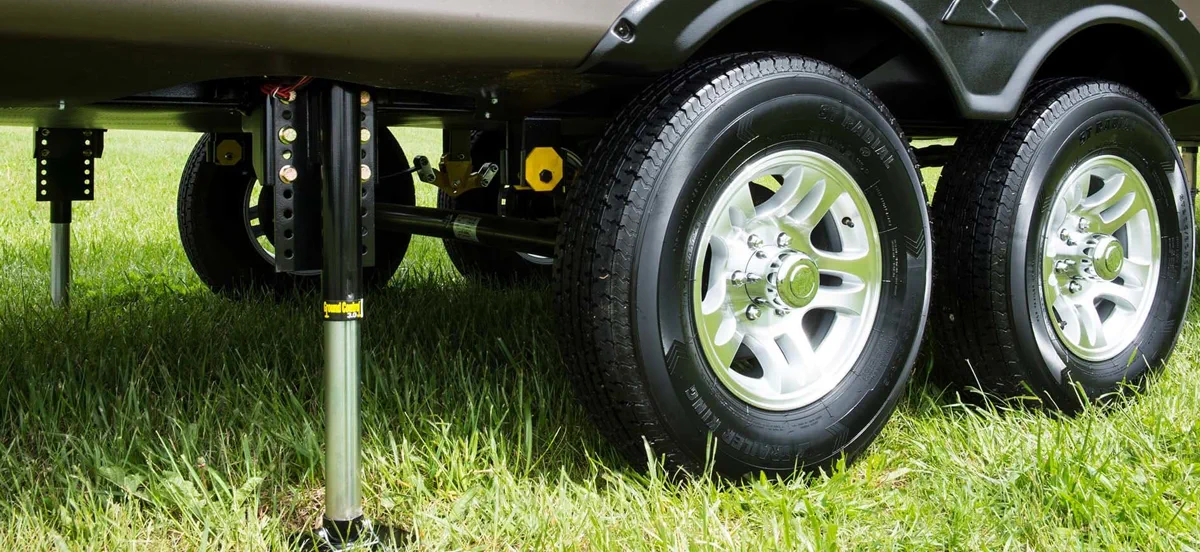
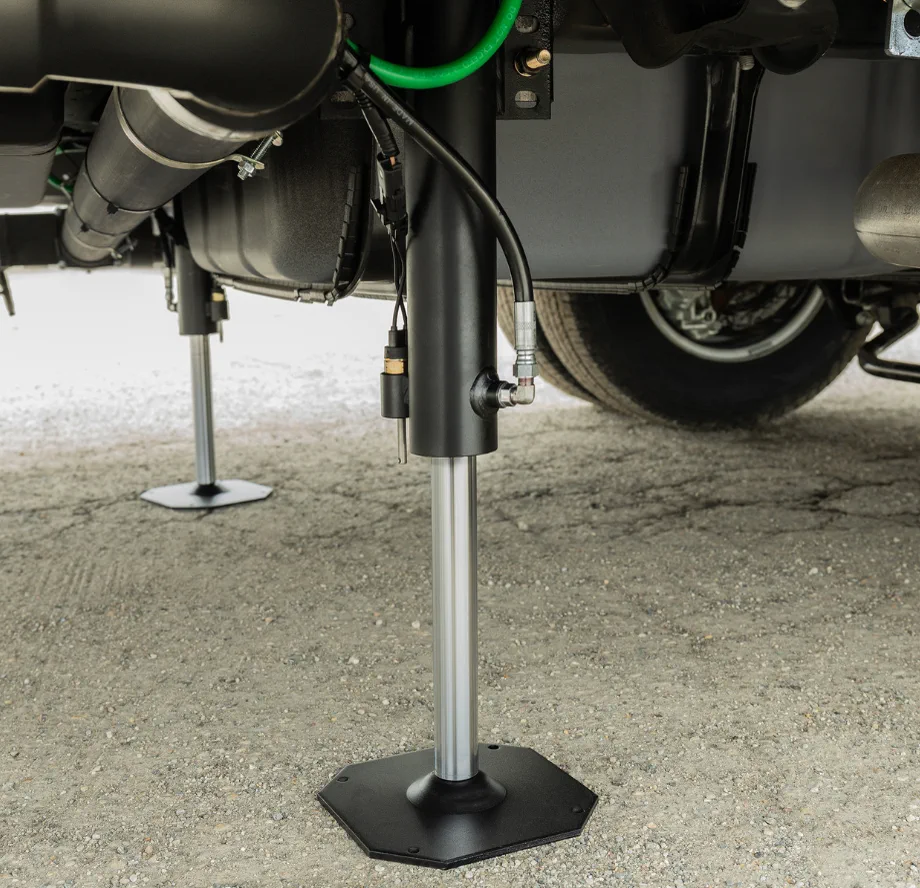
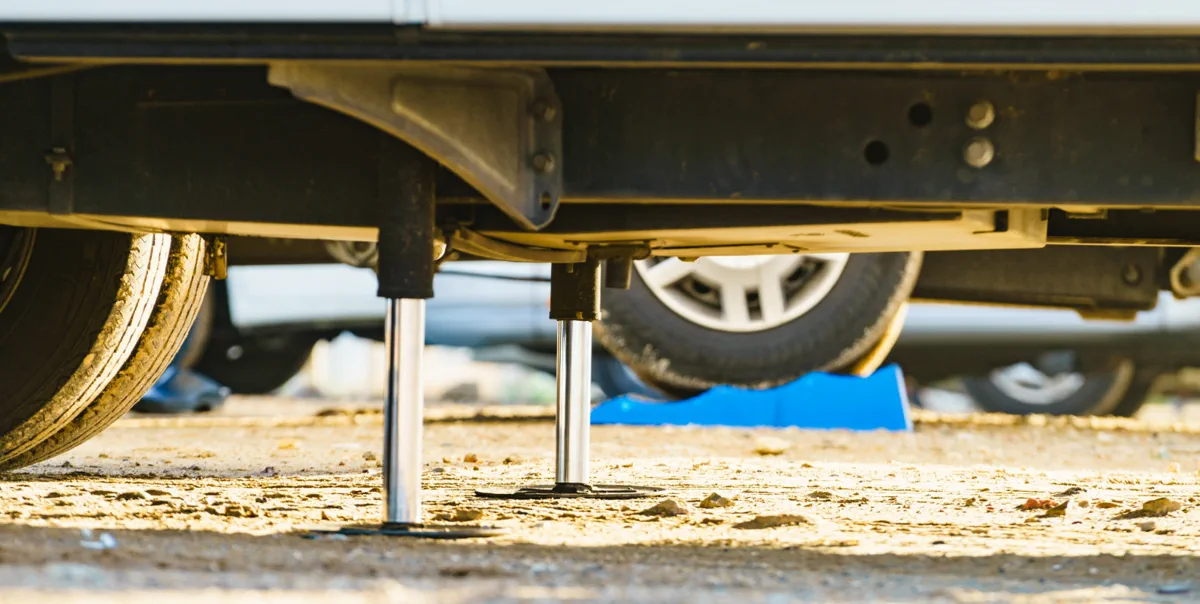
We drain the old fluid, flush the reservoir, replace the filter, refill with fresh hydraulic oil, and test every jack. First, we access your reservoir - usually under the coach or in a compartment. We drain it fully into a pan (we handle disposal).
Then we run a flushing circuit if the system is severely contaminated. We install a new Lippert or OEM-equivalent filter, refill with ISO 32 or 46 hydraulic fluid (depending on your system), bleed air from the lines, and activate each jack 5-10 times to circulate new fluid.
Total time: 1.5 to 3 hours. We test leveling in all four corners before we leave.
A Grand Design RV owner in Boise had us flush his HWH system after his jacks got stuck extended overnight - ice had formed in the lines from moisture-laden fluid. We drained the old fluid, flushed the reservoir with a light solvent, installed a new OEM HWH filter, refilled with fresh fluid, and bled the system.
Cost was $390. His jacks now operate at rated speed year-round, and he hasn't had a freeze-up since.
Fluid flush process steps:
- Access and locate hydraulic reservoir
- Drain old fluid into disposal container
- Flush reservoir interior if contamination is heavy
- Replace hydraulic filter cartridge
- Refill with manufacturer-spec fluid
- Bleed air from pump and lines
- Cycle each jack 5-10 times
- Test all four corners for even leveling
- Verify control board displays no errors
How much does a leveling fluid flush actually cost, and what's included?
A fluid flush runs $280 to $450 depending on system complexity and contamination level. That covers labor, a new filter, fresh hydraulic fluid (usually 2-4 gallons), and a full functional test. HWH systems typically land at $320-$380.
Lippert Level-Up systems run $290-$420. If the reservoir is heavily sludged, or if we need to back-flush lines, you might pay the higher end.
We quote flat-rate by phone - call (866) 623-1340 and describe your symptoms. No shop overhead means our prices stay honest. You won't pay dealer markup.
A Keystone RV owner called from Naples with a Level-Up system that wouldn't level. We quoted $310 for a flush over the phone.
He authorized it. Two hours later, his jacks were working like new.
Another customer had a Coachmen with an HWH system that had moisture in the fluid from a roof leak (separate issue, separate repair). The flush was $395 because we had to flush twice. Either way - transparent price, no surprises.
What's included in the flush price:
- Labor to drain and access system
- OEM or equivalent hydraulic filter
- Fresh ISO 32 or 46 hydraulic fluid
- System bleeding and air purge
- Full functional test all four jacks
- Fluid disposal
- 90-day workmanship warranty
What hydraulic fluid does my RV leveling system actually need?
Your HWH or Lippert Level-Up system runs on ISO 32 or ISO 46 anti-wear hydraulic fluid - not regular motor oil, not ATF. We use Mobil DTE 10 Excel or equivalent, which meets VICKERS and DIN 51524 specs.
ISO 32 is thinner, better for cold climates (Idaho, mountain elevations). ISO 46 is standard in warmer regions (Florida).
Using the wrong fluid will degrade seals, void warranties, and kill the pump faster. We always confirm your OEM spec before filling.
A typical flush uses 2.5 to 4 gallons depending on reservoir size. Never cheap out on hydraulic oil - it's the lifeblood of your jacks.
A Thor Industries coach owner in Nampa had someone top off his leveling fluid with marine hydraulic oil - wrong viscosity. The seals started leaking within weeks.
When we flushed his system, we found cross-contamination. Complete fluid replacement plus two seal replacements cost him $620.
We filled it with the correct ISO 32 fluid for his climate. Lesson: stick with OEM specs, or call us before you top anything off.
Hydraulic fluid specifications for RV leveling:
- ISO 32 (cold climates, mountain RVing)
- ISO 46 (temperate and warm regions)
- Anti-wear hydraulic oil, VICKERS certified
- Never use motor oil or ATF
- Check your manual for exact OEM grade
- 2.5-4 gallon fill volume typical
- Change every 5-10 years or 100k miles
How long does it take to flush a leveling system, and can you do it today?
A leveling fluid flush takes 1.5 to 3 hours on-site, depending on access and contamination. If your reservoir is easy to reach, we're closer to 1.5 hours. If we need to remove panels, disconnect lines, or back-flush, we budget 3 hours.
We operate mobile in our covered metros - no shop delays. In our core service areas (Tampa, Jacksonville, Miami, Boise, Meridian), we respond in 2-4 hours.
Outside core areas or nationwide, we coordinate through our partner network. Call (866) 623-1340 with your location and symptoms. We'll tell you if we can roll today.
Last week a Jayco owner in Clearwater had his leveling fail mid-trip. He called at 9 AM.
We were there by 10:30. Flushed his system, tested it, and he was level and camping by 1 PM.
Total cost $340. That's the A1 difference - we come to you, mobile, fast, no appointment nonsense.
Timeline and availability:
- Flush duration on-site: 1.5 to 3 hours
- 2-4 hour emergency response in core areas
- Mobile service - we come to you
- Flat-rate quote by phone upfront
- No shop wait times
- Can often fit same-day or next-morning
- Nationwide partner network for remote areas
What warranty covers the work, and what if the problem comes back?
We offer a 90-day workmanship warranty on every fluid flush. If the jacks don't perform as promised within 90 days due to our work, we fix it free. That means if we flushed your system and the pump fails because we didn't bleed air properly, we cover it.
What the warranty does NOT cover: pre-existing pump damage, seal degradation that requires replacement, or damage from contaminated fluid that occurred before the flush. If your fluid gets dirty again in six months because you have a slow leak from a damaged seal, that's a separate repair (seal or line replacement). We're honest about what we can and can't promise.
A Winnebago owner flushed his system with us in March. In May, his jacks started moving slowly again - turned out a seal had started leaking before the flush.
We identified it under our 90-day warranty and quoted him $180 for a seal replacement. He authorized it, and we fixed it the same day.
The flush itself was covered; the hidden seal issue wasn't. That's fair, and that's how it works.
90-day warranty scope and limits:
- Covers our workmanship for 90 days
- Free re-service if flush didn't resolve symptoms
- Does not cover pump or seal failures
- Does not cover existing component damage
- Does not cover future contamination
- Does cover air in lines or improper bleeding
- Call us if anything goes wrong within 90 days