Why your RV water tastes off or your fridge ice maker keeps failing
A clogged or expired water filter is the #1 reason RV water turns cloudy, smells, or tastes like chemicals. The sediment filter catches dirt and rust. The carbon filter kills chlorine and odors.
Once they max out - usually every 6 to 12 months depending on source water - your Shurflo or Atwood pump works harder, your ice maker gets mineral buildup, and you're drinking what you wanted filtered in the first place. Most RV owners don't replace until something breaks downstream.
We catch it early. Signs include slow water pressure, murky ice, or a rotten-egg smell from the tank.
We fixed a Grand Design trailer in Sarasota last month where the owner ignored cloudy water for three weeks. The sediment filter had collapsed, sending particles straight into the refrigerator's icemaker inlet valve.
That valve cost $240 to replace - but a $35 sediment filter and a $65 carbon filter would have prevented it. The Atwood water heater was next.
He got lucky the heater element didn't corrode. Now he's on a 6-month replacement schedule and doesn't think twice about it.
What a failing filter actually does to your RV:
- Sediment clogs icemaker inlet valves and shower heads
- Carbon breakthrough lets chlorine taste into coffee and ice
- Mineral accumulation fouls water heater elements
- Pressure drop forces Shurflo pump to cycle constantly
- Bacterial growth in stagnant filter media creates odor
- Hard water scale damages Dometic fridge cooling coils
How we replace your RV water filters - step-by-step
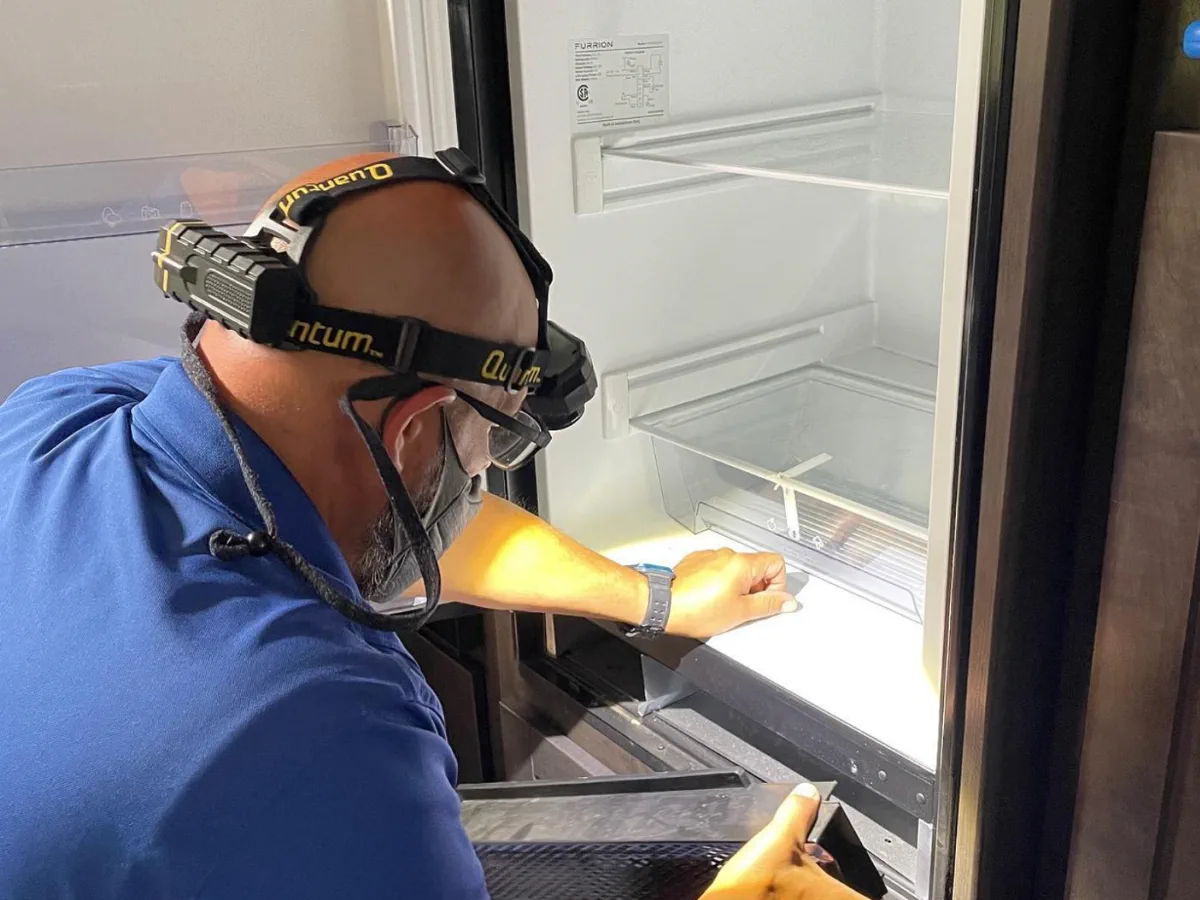
We shut off your water pump, locate your filter housing (usually under the sink or in a cabinet), depressurize the lines, unscrew the old cartridge, and install a new one in about 45 minutes to 90 minutes depending on filter count. Most RVs have a two-stage system: sediment first, then carbon. Some have a third stage for taste/odor or a specialized filter for well water.
We flush the lines after installation to clear air pockets and confirm pressure. If your filter housing is corroded or leaking, we replace the housing too - adds 30-45 minutes and $120-$200 for the part.
A Jayco owner near Boise had a leaking filter bowl that had been dripping into her cabinet for weeks - she didn't even notice because the drip tray was full. When we arrived, the plywood was soft.
We replaced both the Shurflo cartridge housing and the inline water regulator (which was also shot), flushed the whole system, and tested pressure at the tap. Cost was $340 total. She learned that water filter maintenance saves cabinet repairs - lesson learned the hard way.
What happens during your filter replacement visit:
- Pressure test at your tap before we start
- Identify filter type and stage count
- Turn off pump and depressurize system safely
- Remove old cartridge and inspect housing for corrosion
- Install new sediment and/or carbon filters
- Flush system and bleed air from lines
- Confirm pressure and flow at all outlets
- Replace housing if corroded or cracked
What this service costs - no surprises, flat-rate quote by phone
Single sediment-only filter: $180-$220. Two-stage system (sediment + carbon): $260-$320.
Three-stage or specialty filters: $340-$420. Parts are marked up 25% over cost; labor is $65-$85 per hour depending on complexity and location. We quote flat-rate by phone before we roll up.
If your housing is corroded and needs replacement, add $120-$200. If you need a water regulator or pressure gauge installed at the same time, that's another $95-$140.
We don't charge trip fees - you just pay the service rate. No hidden charges. Call (866) 623-1340 with your RV model and filter location visible, and we'll tell you the exact price.
A Winnebago owner in Tampa thought a water filter replacement would cost $500 based on a dealer quote. We quoted him $285 for a two-stage Shurflo cartridge swap with housing flush.
He saved $215 and got it done the next morning. Dealers often bundle filter work with a full 'water system inspection' that tacks on labor you don't need.
We replace filters. That's it. Clean bill.
Pricing breakdown:
- Sediment filter cartridge only: $35-$55
- Carbon filter cartridge only: $45-$75
- Labor per filter stage: $65-$85
- Filter housing replacement: $120-$200
- Water pressure regulator: $45-$70
- Inline water gauge: $25-$40
- Trip fee: $0 (mobile service included)
- 90-day workmanship warranty: included
Real filter brands and cartridges we stock and install
We carry Shurflo, Atwood, and Dometic filter cartridges in stock because those three brands power 80% of RV water systems. Shurflo sediment filters are 20 micron and handle most municipal and well water. Their carbon blocks kill chlorine and taste issues.
Atwood filters are similar but tuned for colder climates and run tighter tolerances. Dometic systems (found in higher-end coaches and some Forest River models) use proprietary cartridges - we stock those too. If your RV uses a less common filter like a Watts or Pentek system, we source it same-day from our supplier network and charge parts-only without upselling.
A Tiffin Motorhome owner in Ocala brought in her coach with a Dometic water system she'd owned for 8 years but never had serviced. The filter housing was original, the cartridge was calcified, and the pressure gauge showed 15 PSI (should be 40-50).
We replaced both the sediment and carbon Dometic cartridges, flushed the tank, and reinstalled a new pressure regulator she didn't know existed. She now gets her cartridges mailed to her quarterly - we stock them, she installs one herself, costs her $50 each time.
Filter brands and systems we support:
- Shurflo 20-micron sediment and carbon blocks
- Atwood water heater inlet filters
- Dometic high-capacity filters for Class A coaches
- Lippert tank-mounted sediment housings
- Watts specialty filters for well water
- Pentek taste-and-odor carbon stage cartridges
- Water regulator cartridges for all major brands
How long this takes - and when we can get to you
Standard two-stage filter swap: 1-2 hours. Add 30 minutes if your housing needs flushing or if we find corrosion.
Add another 45 minutes if we replace the housing itself. In our local hubs in our covered metros, we respond to emergency calls in 2-4 hours. Routine appointments usually land within 3-5 business days.
If you have a nationwide partner network request, we coordinate with a certified tech in your area - same-day or next-day depending on local availability. We work weekdays 8 a.m. to 5 p.m. and weekend appointments by request in peak season.
A Keystone RV owner in Jacksonville needed a filter swap before a three-week road trip. We scheduled him on a Friday morning, completed the job in 90 minutes, and he left with fresh water confidence.
A Coachmen owner in rural northern Idaho called at 6 p.m. on a Saturday with brown water - we had a partner tech there by 8:30 a.m. Sunday morning with cartridges in hand. That's why the partner network exists: we cover the gaps.
Timing and availability:
- Routine filter replacement: 1-2 hours mobile visit
- Housing replacement or repair: add 45 minutes
- Emergency response in core Florida/Idaho: 2-4 hours
- Routine scheduling: 3-5 business days
- Nationwide partner response: varies by region
- Weekend appointments available seasonally
- No overtime charges for standard hours
- All appointments include 90-day warranty
What our 90-day warranty covers - and what doesn't
Our 90-day workmanship warranty covers the filter cartridge installation, housing seal, and pressure integrity. If your filter leaks at the connection point within 90 days because we installed it wrong, we fix it free. If the cartridge itself is defective (rare - manufacturers stand behind them), we replace the cartridge at no labor charge.
What we don't cover: cartridge lifespan (filters clog naturally and that's not our fault), downstream damage that happened before we arrived, or neglect between service visits. If you don't flush your system and mineral buildup damages your icemaker six months later, that's on you, not us.
A Grand Design owner in Clearwater had us replace her water filters in March. By June her water pressure had dropped again - she thought we did bad work.
Turns out she was camping in an area with extremely hard water and hadn't replaced the cartridges. We explained the warranty: it covers our work, not the water source.
She now uses a fourth-stage specialty cartridge for that type of camping - costs $8 more per filter and extends intervals. Our warranty saved her from blaming us for her water chemistry.
What the 90-day warranty covers:
- Cartridge installation and O-ring sealing
- Housing fitment and pressure integrity
- Labor to reinstall if leakage occurs
- Defective cartridge replacement (manufacturer warranty)
- Filter connection fittings we installed
- Does NOT cover natural filter clogging
- Does NOT cover damage before service date
- Does NOT cover skipped maintenance intervals