Dometic Penguin II and Coleman-Mach heat pump diagnosis, recharge, and replacement. Reversing-valve test, defrost-cycle check, R-410A recharge with leak repair, capacitor and contactor swaps. Mobile, on-site, flat-rate quoted by phone before we dispatch.
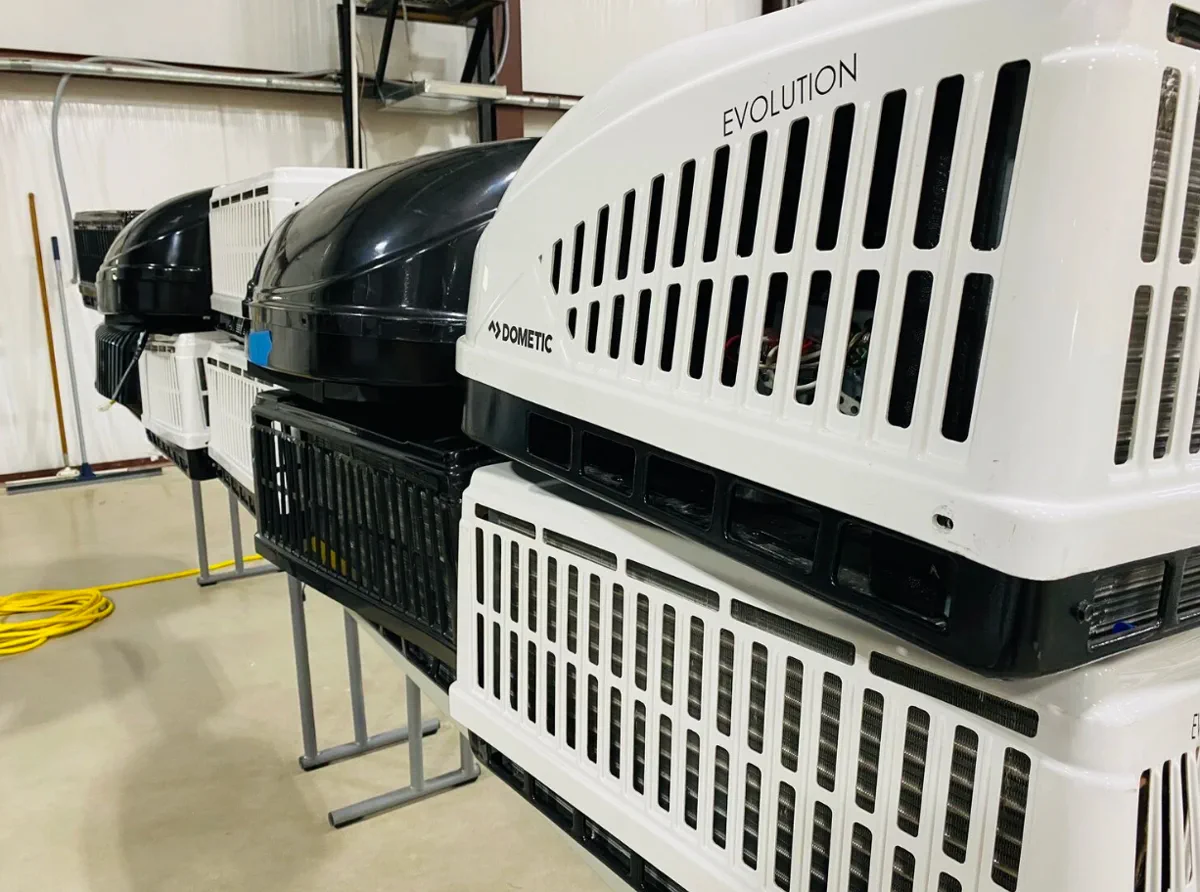
An RV heat pump is a rooftop AC with a reversing valve that lets the refrigerant circuit run in either direction - cool in summer, warm above about 40 F outdoor temp. The package looks identical to a Dometic Brisk II or Coleman-Mach 8 from outside.
The failures we see most often are stuck reversing valves (the unit cools fine but won't switch to heat), low refrigerant from slow line leaks at the rooftop service ports, and weak capacitors that show up as no-cool on a hot afternoon. Below 35 F the heat pump's efficiency drops far enough that you should be on the propane furnace anyway, so most "broken heat pump" calls in winter are actually a thermostat that hasn't been switched to gas heat.
Four patterns cover almost every heat pump call we run:
Summer the unit drops the cabin 20 degrees no problem. First cool morning, you call for heat and you get cold air. Reversing valve stuck or solenoid coil failed. $385-$585 fix on Dometic Penguin II.
Unit runs steady, fan blows, but suction line sweat is light and condenser amp draw is below nameplate. Slow R-410A leak at the rooftop service port or a coil pinhole. Recharge with UV dye + repair = $425-$895.
Compressor starts, runs 30-90 seconds, kicks off, restarts a few minutes later. Could be a weak run capacitor, dirty condenser fins choking heat rejection, or refrigerant overcharge from a previous service. Test all three.
In Idaho fall, you hear the heat pump cycle through what sounds like a "swoosh-thump" every 45 minutes - that's the defrost board running coil thawing. If it never exits defrost or runs constantly, the temp sensor or board is bad.


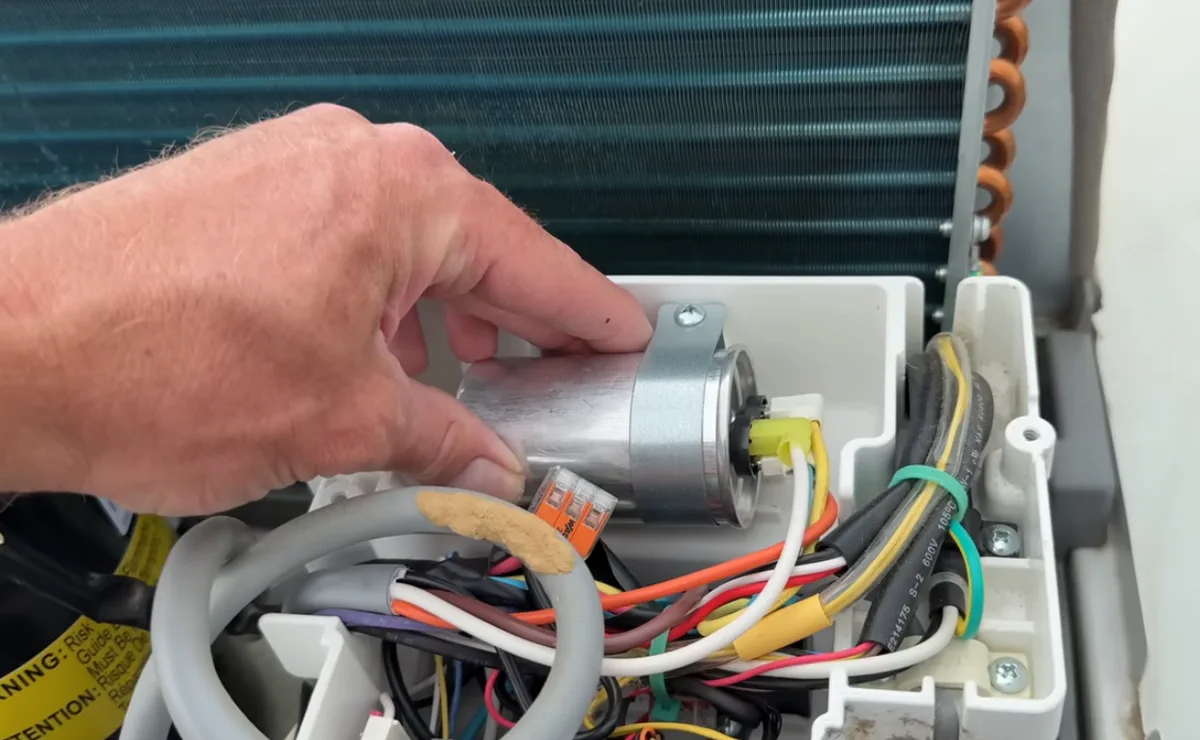
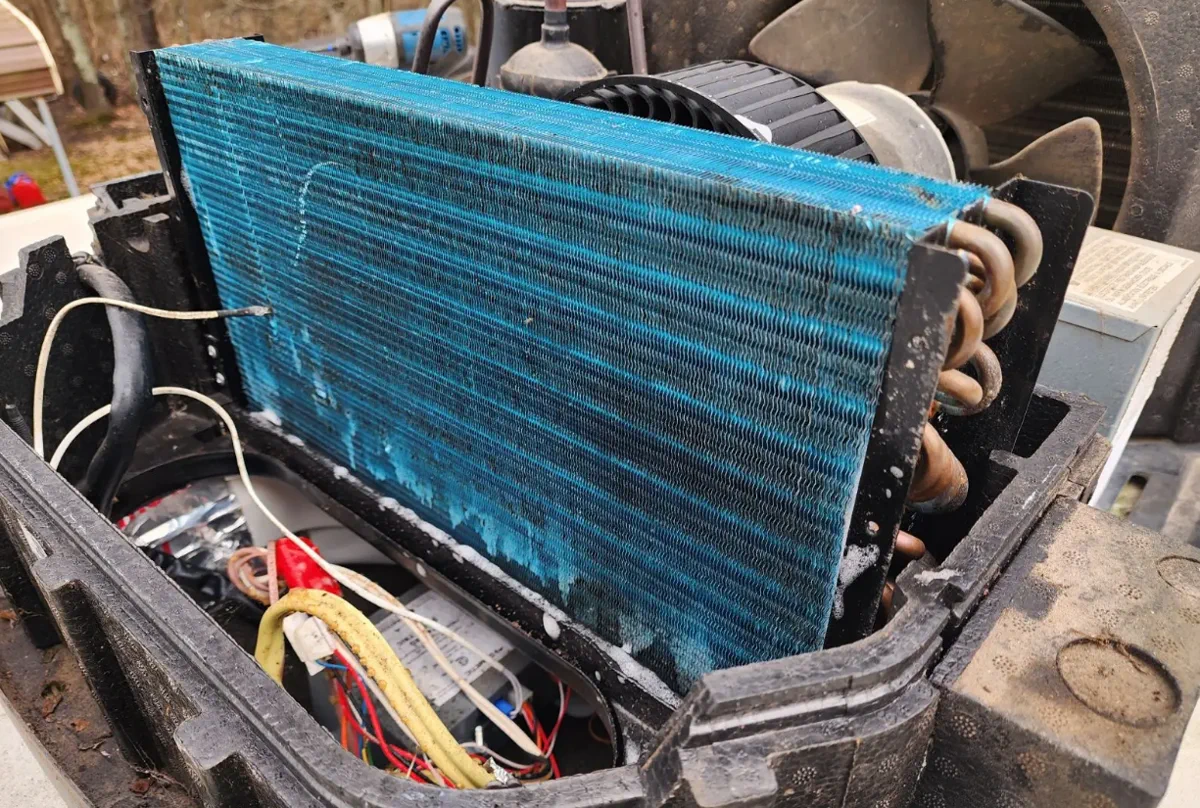
Every call starts with a 30-minute diagnostic. We pull the rooftop shroud, measure suction and discharge pressures with a manifold gauge set, clamp-meter the compressor on cool and heat modes, verify the reversing valve actually shifts when commanded, check capacitor microfarad ratings against nameplate, and inspect both coils for fin damage and biofilm. If the system is low on charge, we trace with UV dye and electronic sniffer before topping up - blind topping is how units get overcharged and slugged.
For replacements, the standard sequence on a 14x14 cutout is: drain refrigerant under recovery, disconnect 120V and 12V, lift the old unit off the roof curb, scrape and prep the deck, set the new unit with a fresh foam gasket and Dicor lap-sealant perimeter, reconnect, evacuate the lines, charge to nameplate, run a full heat and cool cycle, then verify register temps in both modes.
Flat-rate, written quote at your site before any work starts.
| Service | Parts / Brand | On-Site Time | Flat-Rate Range |
|---|---|---|---|
| Heat pump diagnostic (full pressure + electrical) | Manifold + clamp meter | 45 min | $185 flat |
| Capacitor replacement | OEM dual-run | 60 min | $185 - $285 |
| Contactor replacement | OEM 24V or 120V coil | 60-90 min | $245 - $385 |
| R-410A recharge + leak repair | R-410A + UV dye + Schrader / coil | 2-3 hours | $425 - $895 |
| Reversing valve replacement | OEM Dometic / Coleman-Mach | 3-4 hours | $385 - $585 |
| Defrost board / sensor | OEM | 1.5 hours | $285 - $445 |
| Coil cleaning + drain flush | No-rinse evaporator cleaner | 60-90 min | $135 - $185 |
| Full heat pump replacement (15K BTU) | Dometic Penguin II / Houghton 9.3kW | 5-7 hours | $1,800 - $2,400 |
A1 RV Repair quotes a phone range before scheduling, then writes you an exact quote at your site before turning a wrench. No hourly creep, no after-the-fact "while we were up there," no diagnostic surcharge.
Almost every RV heat pump on the road today is one of three brands. They share the standard 14x14 roof opening, so cross-brand swaps are routine.
A1 backs every heat pump repair with a 90-day workmanship warranty. Parts carry separate manufacturer warranties - typical 1 year on Dometic and Coleman-Mach, 2 years on Houghton. We document refrigerant charge weights, suction and discharge pressures before and after service, and register parts in your name.
If a recharge we did leaks back inside 30 days, we re-charge free including labor. Beyond 30 days the warranty covers leak repair labor at no charge if the leak is at a fitting we touched. New compressors carry an OEM warranty separate from our 90-day window.
Nationwide mobile coverage from a network of certified A1 RV Repair technicians, with same-day response in our core metros. Click any city for local response times and to book online.
Yes, we work wherever your RV is parked - campground sites, home driveways, storage lots, or anywhere else we can safely set up alongside the rig. For heat pump work, we need to run the unit under load to diagnose refrigerant pressure, compressor output, and airflow, so shore power is ideal.
If you don't have a 30-amp hookup available, we carry a generator rated to handle the startup draw. On-site, we pull the shroud, check capacitors and contactors, read pressures on both the heating and cooling cycles, clean the coils if fouled, and verify the reversing valve is switching properly. If we find a refrigerant issue or a failed compressor, we'll tell you on the spot whether a repair makes sense versus a full unit swap, so you can make that call before we order parts.
A heat pump runs one refrigerant loop to move heat in either direction - pulling warmth from outside air to heat your rig in cool weather, then reversing to cool it in summer. A standard RV AC unit only moves heat one way (out), so you need a separate propane furnace to handle heating.
The operating cost difference is real: a heat pump uses electricity you may already have on shore power, while a furnace burns propane that you have to haul and refill. The tradeoff is efficiency at low temperatures - most heat pumps lose meaningful heating capacity below 40°F and stop working entirely around 30-35°F, so if you're running through a hard winter in Idaho or heading north, a propane furnace stays reliable when a heat pump won't.
In Florida's Treasure Coast winters, where overnight lows rarely drop that far, a heat pump handles the whole season without touching a propane tank. If you're not sure which setup fits your travel pattern, we can walk through it when we're on-site diagnosing your current system.
Capacitors in RV heat pumps typically last 5-7 years under normal seasonal use, but frequent cycling - running the unit hard through hot summers or cold winters - shortens that window. The capacitor handles the high-amperage surge the compressor needs to start, and every start-stop cycle puts thermal stress on it.
Degradation is gradual: you may notice the compressor taking longer to kick on, the unit running but not cooling or heating effectively, or a hard start that trips the breaker. Left alone, a weak capacitor eventually fails completely and the compressor won't start at all.
At $180-240 for parts and labor, replacing a marginal capacitor before it quits is straightforward preventive work. When we're on-site for any heat pump call, we test capacitor microfarad rating as a matter of course - if it's reading more than 10% out of spec, we'll recommend swapping it while we already have the unit open.
For common failures like a weak capacitor, a faulty thermostat, or a system that's low on charge, a phone quote is usually straightforward - describe what the unit is doing and we can give you a flat-rate number based on your RV year, make, and model. Compressor and reversing valve problems are harder to quote remotely because the symptoms overlap with other failures, and we need to run the unit through heating and cooling modes, check pressures, and listen to the compressor cycle before we can confirm what's actually failed.
If you're not sure which category your problem falls into, walk us through it - we'll tell you honestly whether a phone quote is reliable or whether we need eyes on the unit first. Either way, skip the guesswork on these; a misdiagnosed heat pump repair can cost you a second service call.
We work on heat pumps in Forest River, Jayco, Winnebago, Tiffin, and every other major manufacturer you're likely to pull up in. The reason brand doesn't complicate the job is that the climate systems across these rigs run the same core components - Dometic and Coleman-Mach units dominate the market, and the refrigerant circuit, reversing valve, and control board layouts follow the same service logic regardless of what name is on the coach.
Where manufacturer matters is the roof cutout dimension and the ceiling assembly, which can vary enough to affect how we pull the unit. We check those specs before we show up so we have the right gasket kit and hardware on the truck. If your rig has a dual-zone setup or a heat strip paired to the heat pump, we handle that as part of the same call.
Depends on the dealership, but most won't claim a voided warranty simply because you used a certified independent shop. Many of our techs hold RVIA and RVDA certifications, and the rest bring years of hands-on RV repair experience - the same standard of work dealers use to justify their own rates.
When we finish a job, you get a detailed work order that lists exactly what was done, what parts were installed, and how the system tested out afterward. Bring that document if a dealer raises questions. Warranty denial is sometimes used as a first response rather than a last resort, so if you get pushback, contact us and we can supply supporting documentation on parts sourcing, repair procedures, and the condition of the system when we left it.
Compressor replacement is coach-side work and we handle it on-site - no shop required. The job runs roughly 5-6 hours: we recover the existing refrigerant, unbolt and remove the failed compressor, set the new one, reconnect the refrigerant lines, pull a vacuum to check for leaks, recharge to the manufacturer's spec, and run the system through a full heating and cooling cycle before we close up.
We carry the recovery and recharge equipment on the truck, so there's no waiting on a specialty crew. The one situation where a shop visit makes sense is if your chassis or engine systems need attention at the same time - that's outside our scope and belongs with a general mechanic. Beyond that, on-site is faster and avoids towing a non-running rig across town.
Flat-rate pricing applies seven days a week, including nights, weekends, and holidays - the diagnostic fee and repair cost are the same regardless of when you call. What changes after hours is logistics, not price: we confirm parts availability before dispatching so we're not showing up without what we need to finish the job.
For heat pump failures, that usually means verifying whether the issue is electrical (reversing valve, capacitor, control board) or refrigerant-related, since refrigerant work requires a certified tech and sometimes a follow-up visit if a specialized recovery machine is needed. If your rig is sitting in a campground in July with no cooling, we treat that as an emergency dispatch and work to get someone to you as fast as conditions allow.
Same flat-rate pricing in every city. Same RVIA-certified mobile crew. Same parts-on-truck approach so most calls finish in one visit.
Often booked together with this repair. Same crew, same flat-rate, same on-site visit.