What's wrong with my RV slide topper and how do I know it needs replacement?
A damaged slide topper shows tears, cracks, permanent creases, or UV degradation that expose the fabric or allow water to pool on top of the mechanism. We see this constantly on 2008-2015 Forest River and Jayco models where the topper fabric has baked under Florida sun for years. Carefree and Lippert Solera toppers are designed to last 8-12 years in moderate climates, but Florida full-time ownership cuts that to 4-6 years.
Real damage means water intrusion, mold in the slide mechanism, and eventual motor failure if left alone. The fabric itself isn't structural - it's a weather seal - but a failed seal turns into a $2,000 repair when water reaches the motor and gears.
We worked on a 2014 Winnebago Adventurer last month where the owner noticed water dripping inside the cabinet when the slide was extended. The topper had three horizontal stress cracks from years of open-close cycles combined with sun exposure.
Replacing that Lippert topper cost $650 and took 3 hours. Had the owner waited another season, hydraulic seals would have failed and the bill would have doubled. Don't ignore visible damage - call us for diagnosis.
Signs your topper needs replacement:
- Visible tears or punctures in fabric
- Permanent crease that doesn't flatten out
- Water pooling or dripping inside slide cavity
- Fabric separation from roller tube
- White or gray chalky residue from UV breakdown
- Topper material flaking off
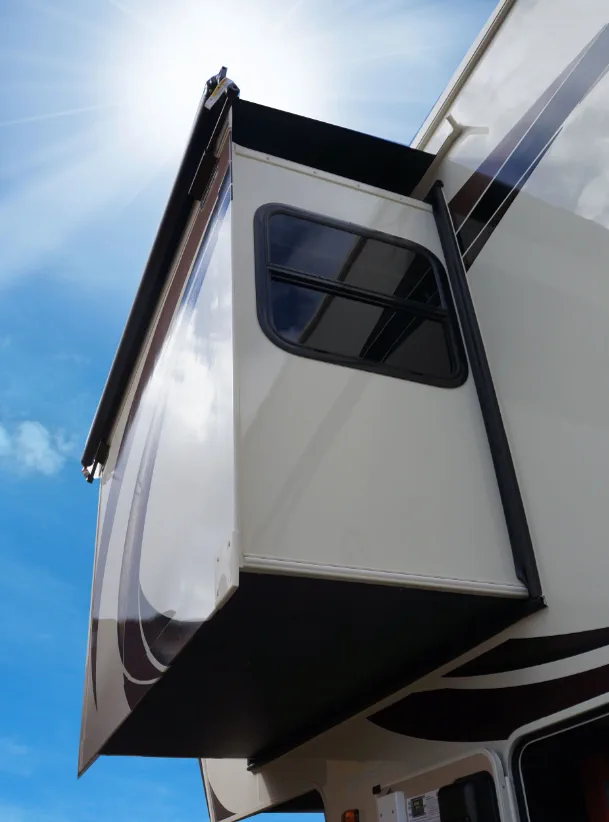
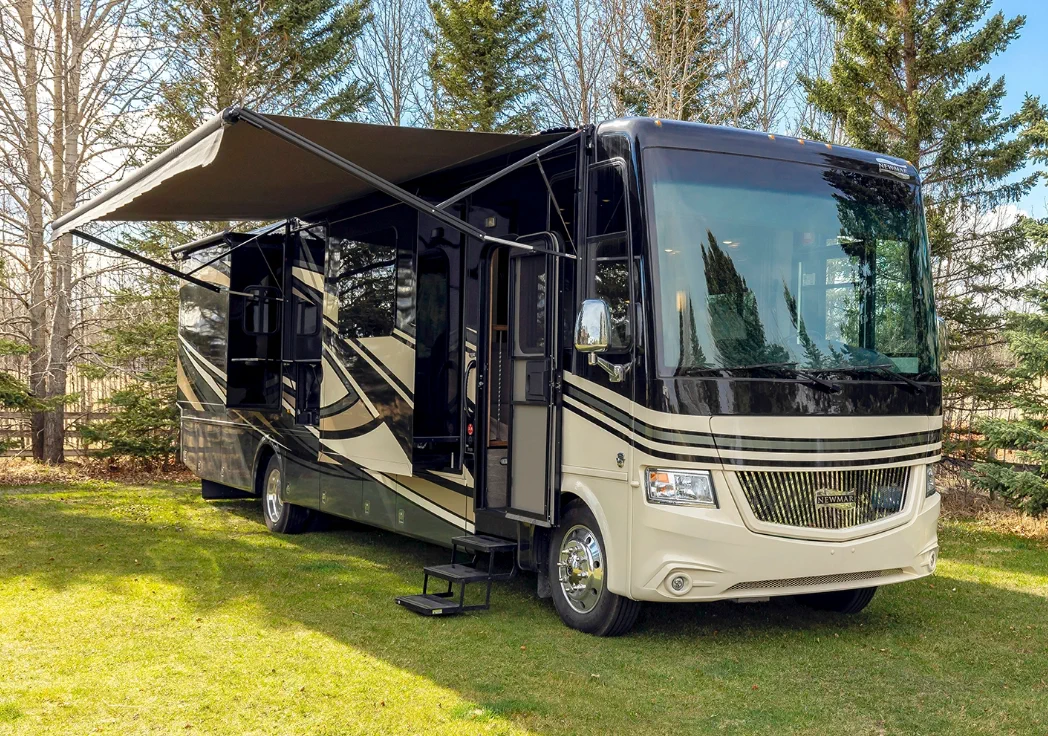
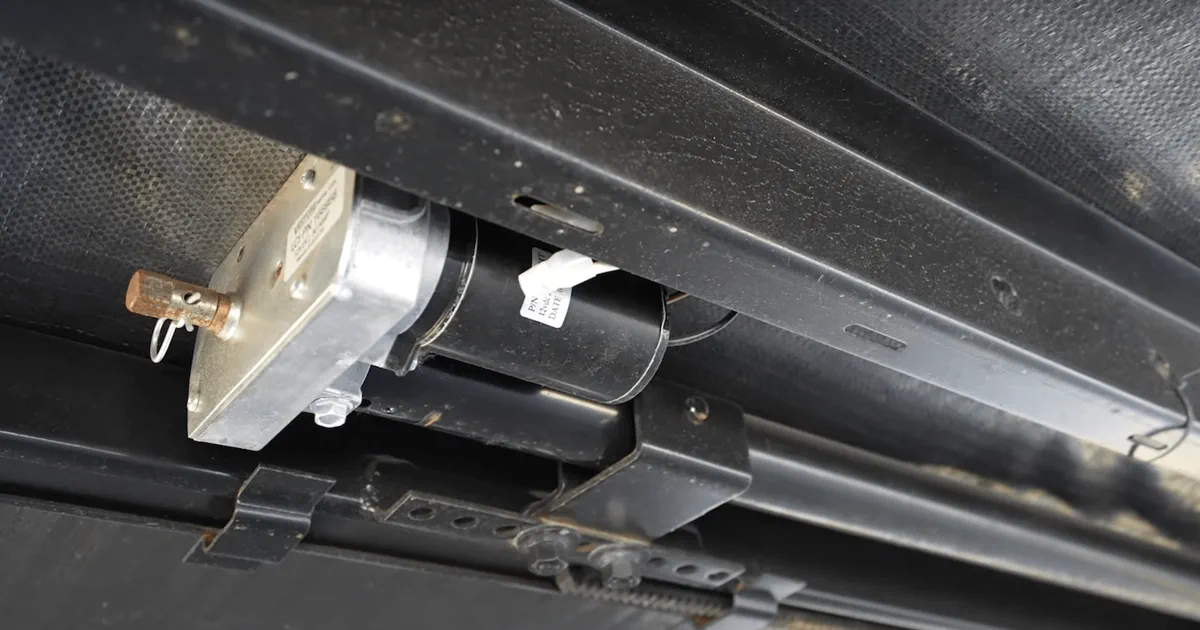
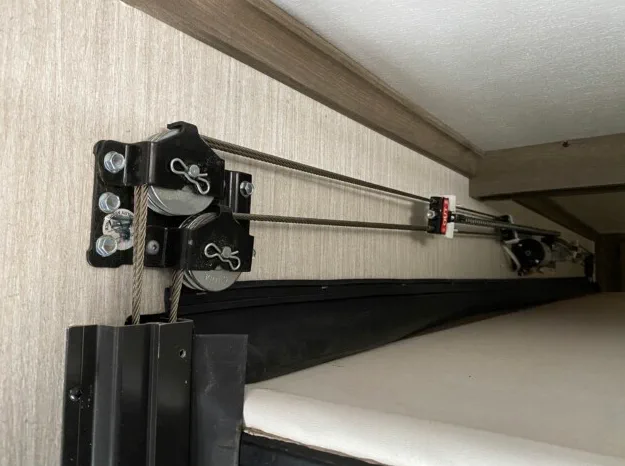
Signs your slide topper needs replacement
Four conditions confirm the topper is past saving. Catching these now prevents secondary leaks into the slide-room top seal and decking underneath.
1. Visible tear, hole, or pinhole
Tree branch, hail, or UV degradation has left a hole in the fabric. Water now drips onto the slide roof every rain. Replace fabric, $385-$685.
2. Sag that pools water
Spring tube has lost tension or fabric has stretched. Water sits on the topper instead of shedding. Re-tension or full replacement, $245-$685.
3. UV chalking and brittle fabric
Fabric flakes off or chalks white when wiped. Material has lost waterproofing chemistry. Replacement only - re-coating isn't possible.
4. Edge fraying or end-cap separation
Wind has worked under a frayed edge or pulled the end cap off. Either fails the seal at the slide perimeter. Edge or end-cap repair, $245-$385.
How do we actually replace a slide topper - what's the step-by-step process?
Topper replacement requires removing the old roller assembly, unrolling or unstitching the damaged fabric, cleaning the tube, installing new fabric, and rerolling or reattaching to the mechanism. We tension the spring tube to factory spec and test through full extend/retract cycles before sign-off.
- Inspect roller tube for corrosion or damage
- Remove old topper material completely
- Clean tube and inspect end-cap hardware
- Install fresh fabric (UV-grade for Florida)
- Re-tension spring tube to factory spec
- Cycle slide test for water-shed performance
Slide topper replacement pricing
| Service | Parts / Brand | On-Site Time | Flat-Rate Range |
|---|---|---|---|
| Topper fabric only swap | Carefree / Solera / Dometic | 2-3 hours | $385 - $585 |
| Full kit replacement (fabric + tube) | Carefree / Solera | 2-3 hours | $485 - $685 |
| Spring tube re-tension | OEM tension spec | 1-2 hours | $185 - $345 |
| End-cap replacement | OEM end cap | 1 hour | $165 - $245 |
| UV-grade fabric upgrade | Carefree Solera UV-grade | +30 min | +$85 - $125 |
| Emergency Eternabond patch | Eternabond Roofseal | 30-45 min | $145 - $245 |
What does slide topper replacement cost and how is pricing determined?
Slide topper replacement typically costs $385-$685 in labor and parts combined, depending on slide size, topper type (fabric-only vs full kit), and whether the spring tube needs replacement. A small bedroom slide on a Class B comes in at the low end; a 14-foot living-room slide on a fifth wheel runs higher because of fabric square footage and tube length.
Common related issues we look for during the replacement:
- Slide-room top-seal deterioration - water that's been pooling under the topper often reaches the seal first.
- Slide-roof Dicor lap sealant cracking from chronic standing water.
- Mounting bracket corrosion from long-term moisture exposure.
Which brands of replacement toppers do we stock and recommend?
We use OEM-spec Lippert and Schwintek replacement toppers because they fit the original mechanisms without modification and carry the same weather resistance as factory parts. Lippert makes roughly 60% of slide-out systems sold in RVs manufactured after 2005; Schwintek handles most older and some specialty applications. Both companies make toppers in multiple fabric types - standard marine-grade vinyl (most common), EPDM-reinforced versions for extreme climates, and bonded styles for seamless operation.
We don't use generic aftermarket toppers because fit and adhesion quality varies wildly, and a $150 savings on parts becomes a $2,000 problem when water starts leaking. We keep Lippert toppers in stock at both our local hubs in our covered metros; Schwintek takes 3-5 business days if we need to order.
A Tiffin Motorhome owner in Stuart had a topper fail on a Lippert mechanism. The dealer wanted to order a generic aftermarket topper and charge full labor.
We had a genuine Lippert topper in stock, installed it that same afternoon for $620 flat-rate, and the owner was satisfied because it was OEM-spec. That's the difference - we know which parts work and which ones don't.
Topper brands and coverage we support:
- Lippert - 60% of modern RVs, stock on hand
- Schwintek - older models and specialty slides
- OEM original specifications - no generic substitutes
- EPDM and vinyl fabric options
- Bonded and stitched attachment styles
- Weatherproof UV-stabilized materials
How long does a slide topper replacement take and can we do it the same day?
A typical slide topper replacement takes 2.5 to 4 hours from arrival to road-ready, depending on slide size and complexity. We respond within 2-4 hours in our core service areas (grea
What warranty covers the topper replacement work and does it cover future water damage?
All slide topper replacement work carries a 90-day workmanship warranty covering faulty installation, stitching failure, or adhesive breakdown - but it does not cover future sun damage, impacts, or normal wear after 90 days. We stand behind the labor and materials we install. If the new topper develops seam separation or the adhesive fails due to our installation error within 90 days, we fix it free.
The replacement topper fabric itself usually carries a 2-3 year manufacturer warranty from Lippert or Schwintek against material defects, but that's separate from our labor warranty. UV damage, impact damage, and thermal stress after 90 days are not our responsibility - that's normal RV wear.
A customer had a topper installed by us in January, then drove through hail in Arizona in June and the topper tore. The hail damage wasn't covered by our warranty because it was impact damage, not installation failure.
But if that same topper's stitching had failed in March due to our workmanship, we would have re-stitched or replaced it at no charge. Know the difference - we warranty what we control, not what weather does.
What our 90-day warranty covers:
- Stitching failure or separation
- Adhesive breakdown from poor application
- Misalignment that we caused during installation
- Does NOT cover sun, impact, or hail damage
- Does NOT cover normal wear after 90 days
- Does NOT cover damage from storage or neglect