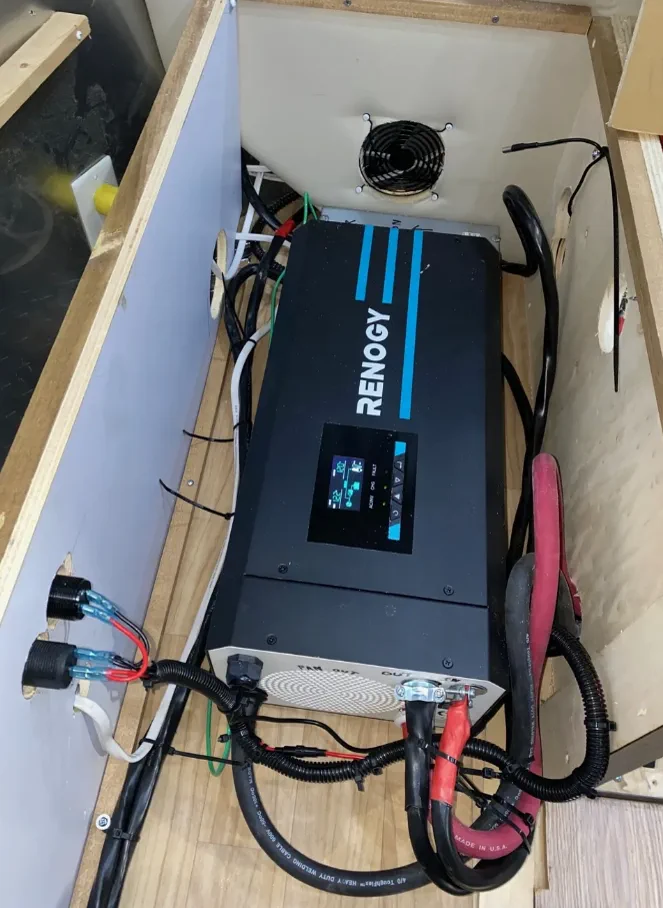
What exactly gets checked in an RV Systems Audit?
A Systems Audit is a methodical walk-through of every major system on your RV. We test your fresh water pump and tank (Shurflo or Dometic brands), pressurize the gray and black tank lines to catch leaks before you own them, verify propane solenoids and regulators fire correctly, confirm your 12V battery bank charges from both shore and generator, load-test your 120V panel, run your AC unit (Dometic or Coleman-Mach), exercise slide-outs and leveling jacks (Lippert or HWH), and bench-test appliances. We document everything on a NRVIA-style inspection sheet with photos.
A 2019 Grand Design we inspected last month had a hidden water intrusion in the kitchen cabinet - caught it before the buyer took possession. That's the point.
A customer from Boise called us about a 2015 Jayco fifth-wheel that looked clean. During the audit, we found a Progressive Dynamics converter that was not charging the battery, a Carefree awning with a stripped motor, and pinhole leaks in the fresh water line.
Retail repair cost on all three: about $2,100. He negotiated $1,800 off the asking price and closed the deal. Without the audit, he would have discovered these issues on his first trip - alone, tired, and out of pocket.
Systems we pressure-test, load-test, and document:
- Fresh and gray water tanks with pump verification
- Black tank dump valves and line integrity
- Propane regulator and solenoid function
- 12V battery charging from shore and generator
- 120V breaker panel and outlet polarity
- AC compressor startup and cooling output
- Generator load test (Onan, Cummins)
- Slide-out motor and seal condition
- Leveling jack response and sensor function
- Interior lights, water heater, and appliance operation
What symptoms or red flags does an audit catch before they become expensive?
Water intrusion and soft floors are the #1 hidden killers we find - they cost $5,000-$15,000 to fix after you buy. During an audit, we listen for spongy subfloor under the sink, check caulk and sealant condition around windows and vents (real EPDM or TPO roof seams degrade), and use a moisture meter on suspect areas. We also catch non-obvious stuff: a dead 12V converter means your fridge won't run without shore power.
A stuck propane solenoid means you can't cook or heat water. A slide-out that binds halfway out?
That's a $2,000-$4,000 motor replacement on a Schwintek or Lippert unit. Most sellers don't advertise these things. We find them before your money is gone.
A 2016 Winnebago Brave came to us from a Florida buyer who almost closed. The bathroom floor felt slightly soft near the toilet.
We tested it - 28% moisture in the subfloor versus the normal 12-15%. The toilet flange was leaking into the structure.
Repair estimate: $3,200. He used our audit report to cancel the deal and move on.
The seller eventually had to disclose it and dropped the price by $3,500. That audit fee paid for itself in one phone call.
Red flags our audit catches:
- Soft or spongy subfloor near water fixtures
- Visible or latent water stains on walls and ceilings
- Non-functioning water heater (often propane solenoid)
- Dead or sulfated 12V batteries not holding charge
- Slide-outs that bind or refuse to retract
- AC that cools weakly or not at all
- Propane smell without any obvious leak source
- Generator that cranks but won't sustain load
- Cracked or missing sealant on roof penetrations
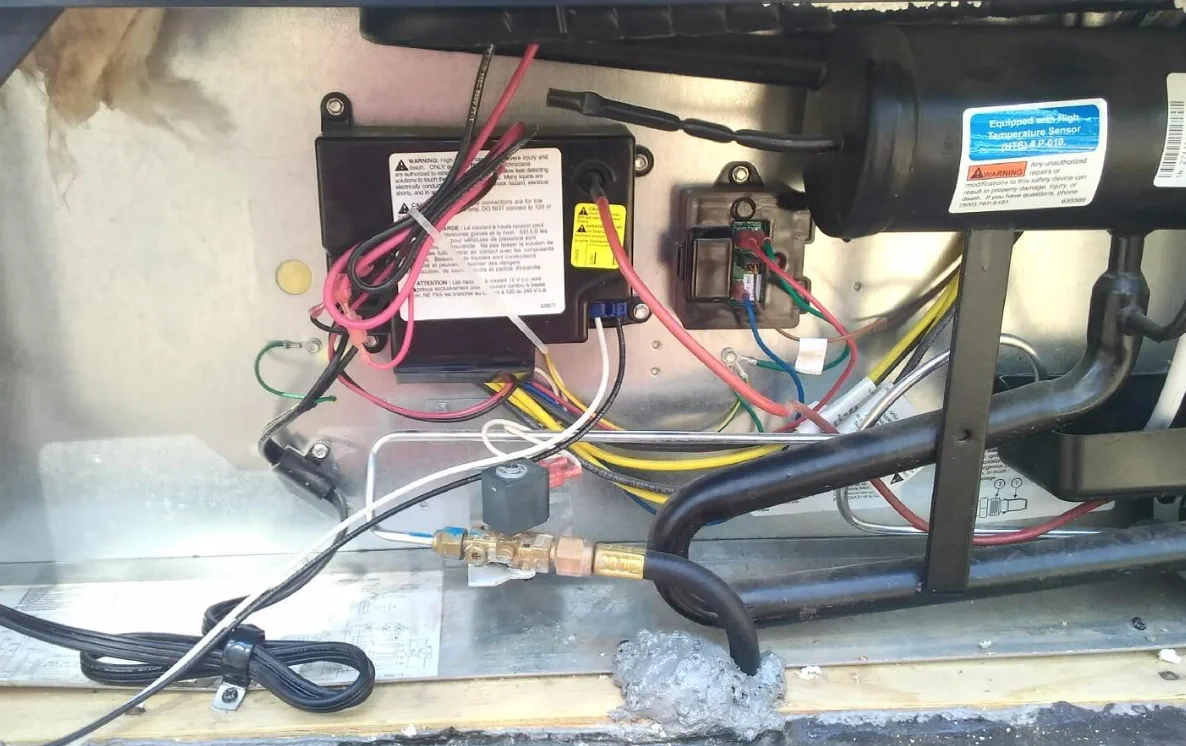
How do we actually run the test - what's the real process?
Our tech shows up with a pressure tester, multimeter, load bank, and moisture meter. We start with a walk-around to note obvious damage or neglect. Then we fill the fresh water tank, run the pump, open every faucet and check for leaks at connections.
We pressurize the gray and black lines to 40 PSI and listen for hissing (that means a pinhole or cracked fitting). We kill the main breaker and test the 12V system: we measure battery voltage under load, confirm the converter is pushing amperage, and check the engine alternator output if the RV is a class A or B with a chassis alternator.
We plug into shore power and load-test the 120V panel - we draw amp load on multiple circuits to catch undersized wiring or bad breakers. We fire up the propane, light the stove, test the water heater, and run the AC to full cool.
Last, we document it all with photos and upload your report within 24 hours. Total time: 2.5-4 hours depending on RV age and size.
A 2012 Forest River Class C came in from a customer in Idaho who was worried about the generator. During the audit, our tech pressure-tested the fuel lines, load-tested the Onan unit at half and full power, and found it was running lean (improper fuel supply).
The injectors weren't getting enough volume. We noted it in the report with a repair estimate of $450-$600.
The customer used that data to negotiate the asking price down by $500 and fixed it herself the next month with a local shop. That's how information saves money.
Step-by-step audit process:
- Initial walk-around and notes on exterior condition
- Fresh water tank fill and pump pressure test
- Gray and black tank line pressure testing at 40 PSI
- 12V battery voltage and charging circuit load test
- Shore power polarity and 120V circuit load verification
- Propane regulator and all appliance ignition test
- AC compressor and blower startup and cooling confirmation
- Generator load test at 50% and 100% capacity
- Moisture meter check on high-risk floor areas
- Photo documentation and same-day report upload
What does a Systems Audit actually cost, and does it include a repair estimate?
A full Systems Audit runs $400-$800 depending on RV length and age - we quote flat-rate by phone. The charge covers the 2.5-4 hour inspection, all pressure and load testing, moisture metering, and a detailed NRVIA-style report with photos. If we find a problem - say a bad Atwood water heater or a Lippert slide-out motor that won't move - we include a separate repair estimate on that item so you know the fix cost before you decide to walk or negotiate.
We don't charge extra for the estimate. Most RVs in the $30,000-$60,000 range run $500-$650.
Older motorhomes or larger fifth-wheels run $650-$800. Call us at (866) 623-1340 and we'll give you an exact number based on your model.
A Coachmen Class B van owner in Tampa paid $475 for the audit. We found a faulty water heater solenoid ($180 repair), soft flooring that needed localized subfloor replacement ($1,200), and a cracked window seal ($120).
Total repairs: $1,500. She used our report to negotiate $1,400 off the asking price, closed the deal, and fixed the most critical item (the floor) right away.
The audit paid for itself five times over. Without it, she would have discovered the floor issue after the first rainstorm.
What the audit fee includes:
- Full 2.5 to 4 hour on-site inspection
- Pressure testing and load testing all systems
- Moisture meter check on vulnerable areas
- NRVIA-style 100-point inspection report
- Color photos of any defects found
- Written repair estimates for items needing work
- Same-day or next-day report delivery (email)
- Phone consultation to review findings
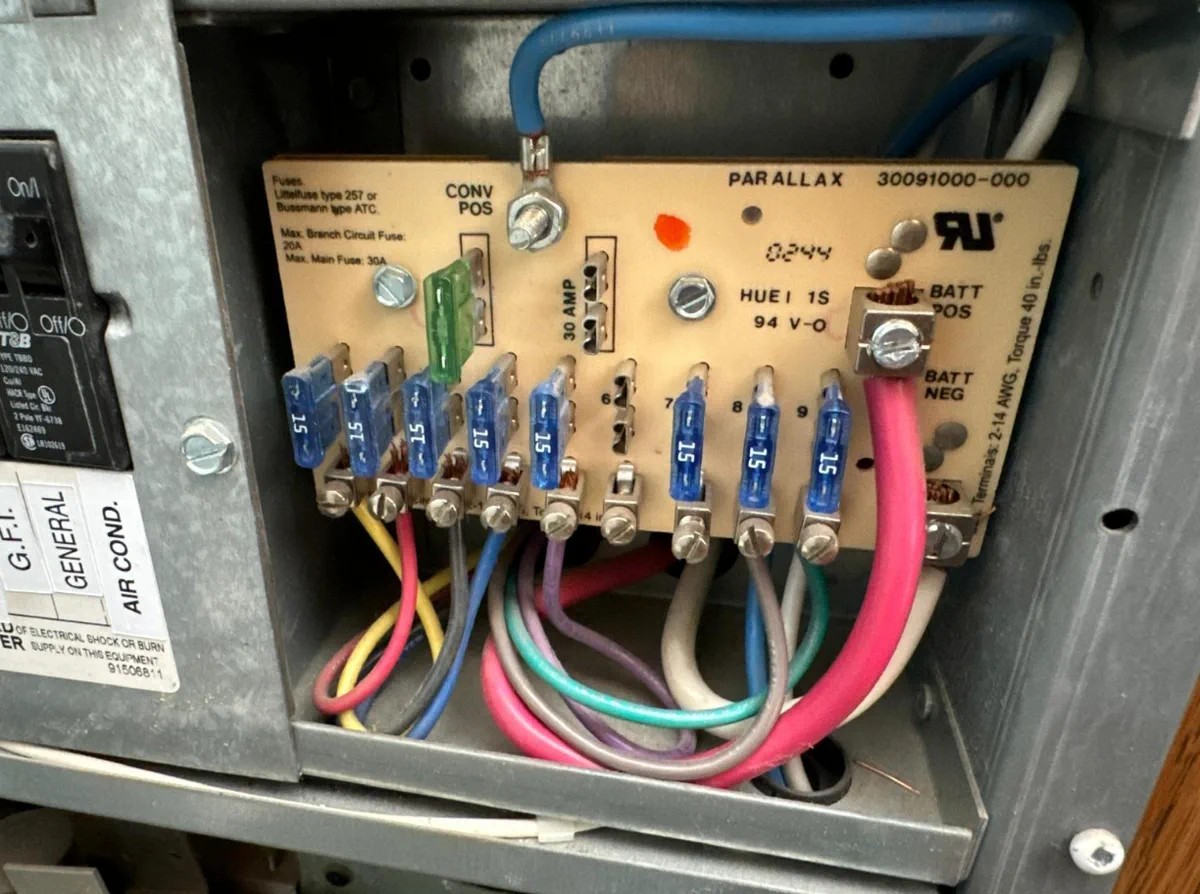
How long does the full report take - and what do we actually put in it?
We deliver your report within 24 hours - usually same day. The report is a multi-page PDF with a checklist of all major systems, photos of any red flags or failed components, and a summary section at the top with the critical items flagged. If your fresh water pressure is low, we tell you why (failed pump, clogged filter, cracked line).
If your AC isn't cooling, we document the compressor amp draw and outside temperature to help a technician diagnose it later. If your slide-out binds, we take a video of it and estimate the repair.
We also note cosmetic items (torn upholstery, failed caulk) because those are dealer negotiation points. You get a clean, professional document that dealers, banks, and warranty companies accept. We've sent reports on Forest River, Jayco, Winnebago, Tiffin, Grand Design, and Keystone rigs - every brand uses the same system categories.
A buyer in Nampa, Idaho received our report on a 2014 Tiffin Allegro on a Tuesday afternoon. He was meeting the seller Wednesday morning.
He printed it out, highlighted the three critical items (bad converter, water heater solenoid, and a roof leak), and walked into the negotiation with data. He knocked $2,700 off the price in 20 minutes.
The seller respected the documentation. That's why we prioritize turnaround - your timing matters.
Report sections and what you get:
- Executive summary with critical findings flagged in red
- System-by-system checklist with pass/fail notes
- Color photos of any defects, leaks, or wear
- Component brand names and model numbers documented
- Detailed repair estimates for failed items
- Moisture meter readings if soft spots found
- Test results (voltage, amperage, pressure in PSI)
- Cosmetic notes for negotiation leverage
- Technician notes on likely causes of failures
What if the RV is out of state or you're buying from a private seller - how does that work?
If you're in our covered metros, we come to you in 2-4 hours. If you're out of area, we have a certified partner network across the US - we coordinate the inspection with a trusted shop in your state, you pay us the same flat rate, and we review their report to make sure it meets our standard. You still get our seal of approval and our 90-day workmanship warranty on any repairs we later perform if you bring the RV to us. We've worked with shops in Arizona, California, Colorado, and the Midwest - places where RV buyers cluster. Just call (866) 623-1340 with the RV location and we'll tell you if we have a partner nearby or if we need to send one of our techs to travel.
A customer bought a 2017 Grand Design in Scottsdale, Arizona - too far for our mobile unit. We coordinated with a trusted Arizona partner, they ran the full audit, found a Dometic refrigerator on the fritz and a bad water heater solenoid, and sent us the report.
We reviewed it, added our notes, and gave the buyer our report. Six months later, the customer trailered the RV to Florida for work.
We handled both repairs under our standard warranty. That's how the nationwide network works - you get consistent standards everywhere.
Partner network coverage and how it works:
- Direct A1 mobile service in our covered metros
- Certified partner shops in 35+ states
- You pay the same flat rate regardless of location
- Partners follow A1 inspection standard and checklist
- Report goes through A1 review before delivery to you
- Repairs done by A1 later are covered by our warranty
- Call ahead to confirm partner availability in your area