Why your RV needs an LP detector and when to install one
LP detectors prevent the cold-shower surprise and the mid-winter furnace shutdown. They're battery-powered sensors that trigger an audible alarm when propane pressure drops below usable levels - typically 1-2 PSI remaining in your tank. Most detectors mount on the water heater compartment wall or furnace frame and draw minimal power (one 9V battery per year).
A 2018 Jayco Jay Flight we serviced in Jacksonville last year had zero warning before losing heat; the family discovered it at midnight. Installing a detector costs $300-$350 and takes a single service call. It's especially critical if you boondock, travel seasonal routes, or run dual tanks without a reliable switchover system.
We installed a low-pressure detector on a 2021 Grand Design Reflection in Boise after the owners' furnace quit mid-trip. They had a working LP system but no early warning when the primary tank ran dry.
The detector - a standard Propane Services Inc. model - wired directly to their existing 12V panel and now alerts them at 20% tank capacity. That gave them time to locate a propane fill or swap to a backup tank. For RVers who don't want a separate gauge upgrade, a detector is the cheapest insurance available.
When to install an LP detector:
- No fuel gauge or gauge stopped working
- Boondocking more than 2 weeks per trip
- Dual-tank setup without switchover valve
- Winter travel through freezing climates
- History of unexpected propane lockouts
- Solo or remote travel with minimal support nearby
What symptoms tell you a detector install is overdue
Guessing when your tanks are empty is a sign you need a detector right now. The classic red flag is your furnace cutting out without warning, or discovering you're out of hot water mid-shower. Some RVers tap their tanks (seriously - they actually knock on the metal) or rely on weight guesses.
Others find out the hard way during a cold night or when guests arrive. A detector eliminates that guesswork and costs less than a single emergency propane delivery call.
We've seen Forest River Sunseeker owners in Florida lose heat during unexpected cold snaps because they had no way to monitor remaining fuel. A detector with a loud alarm (85-95 dB) gives you 30-60 minutes to act instead of facing a frozen plumbing bill.
One Winnebago Travato client called us after their water heater failed twice in three months. Turns out they were running out of propane but had no way to know until appliances shut down.
A Dometic water heater doesn't restart automatically when pressure comes back up; they'd lose hot water until manually resetting the unit. We installed a low-pressure detector and suddenly they could plan refills on their schedule, not the furnace's schedule. The detector costs under $350 installed - way cheaper than repeated service calls or a failed furnace bearing.
Red flags pointing to detector need:
- Furnace cuts off without prior warning
- Hot water heater goes cold unexpectedly
- Tapping or weighing tanks to check level
- Multiple appliances failing in same week
- Traveling in unfamiliar areas with few LP stations
- RV older than 2010 with no pressure gauge

How A1 installs an LP detector - the step-by-step process
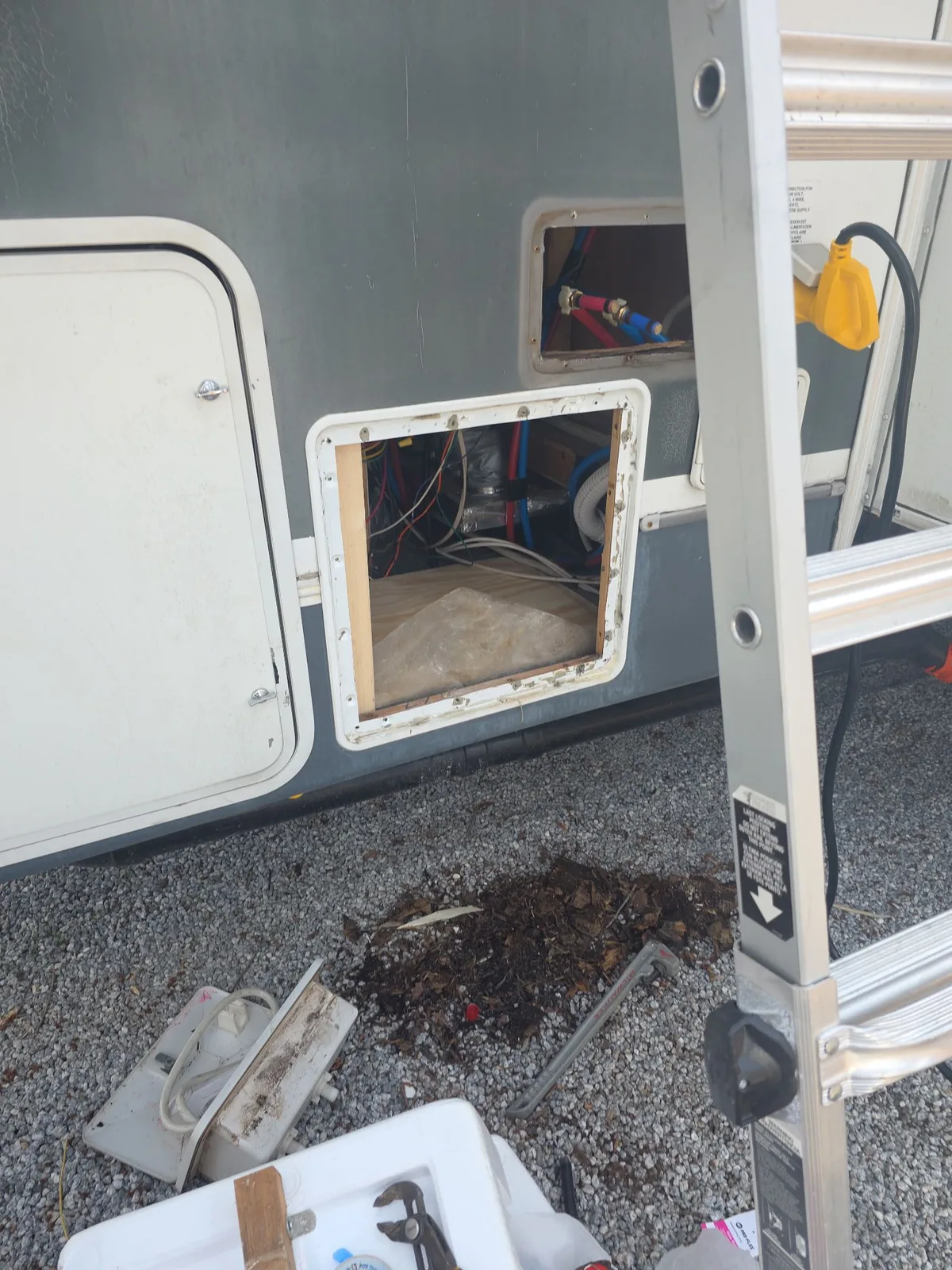
We run the detector wiring alongside your existing LP lines, test pressure response, and calibrate the alarm for your specific tank setup. Installation starts with locating your main LP tank shutoff and water heater or furnace compartment - usually 15-20 minutes of inspection. We then run a dedicated 12V wire (typically 2-conductor, 18-gauge) from your RV's battery or auxiliary panel to the detector location, mounting the sensor unit with stainless fasteners to resist corrosion.
The detector body (roughly the size of a deck of cards) uses a pressure-sensing diaphragm that activates a relay switch; when LP pressure drops, the alarm sounds. We test it immediately by temporarily blocking propane flow to confirm response time and alarm volume.
Final step includes labeling wire runs and documenting battery replacement intervals. The entire process takes 1.5 to 2 hours, depending on wire routing and tank accessibility.
A 2019 Coachmen Apex we worked on in Tampa had a tight battery compartment under the driver's seat. Instead of running wires through the main cabinet (which would have required removing furniture), we routed the detector circuit along the exterior frame using automotive-grade conduit and tie-downs.
The detector itself mounted on the outside wall of the propane locker, protected by a Dicor sealant cap. That routing saved the customer from interior tearing and kept moisture out of wiring. We tested the alert by closing the tank valve - detector went off perfectly in under 30 seconds.
Installation steps we perform:
- Inspect tank location and compartment accessibility
- Route 12V detector wiring safely from panel to sensor
- Mount sensor unit with corrosion-resistant fasteners
- Confirm 12V power and battery state at detector
- Activate test mode to verify alarm response and volume
- Label wiring runs and document battery type for owner
- Provide written alert protocol and battery lifespan
LP detector parts, brands, and why quality matters here
We use industry-standard detectors like Propane Services Inc. or Safer or Suburban-compatible models - all proven in RV service for 10+ years. These aren't the cheap junk-box units; they're designed for mobile use with redundant pressure-sensing and battery backup features. A quality detector runs $140-$220 depending on sensitivity range and alarm type.
We also supply stainless hardware, UV-resistant wire, and a 9V Energizer or equivalent battery rated for 12+ months of duty. The pressure diaphragm is the wear component - it typically lasts 5-7 years before sensitivity drifts.
We source replacement units from established LP suppliers, not discount warehouses, because a faulty detector is worse than no detector. Cheap sensors can false-alarm or fail to trigger, both dangerous conditions.
We installed a detector on a 2017 Tiffin Allegro Red on a return trip to Idaho and discovered the previous owner had tried a $40 online detector. The wiring was corroded, the diaphragm was stuck, and the alarm didn't sound even when we dropped tank pressure to zero.
We removed that unit entirely and installed a Propane Services Inc. model with proper 12V wiring and a corrosion-sealed junction box. The customer said, 'I didn't know it mattered this much.' It does - your life literally depends on that alarm working in winter.
Quality detector components we install:
- Propane Services Inc. or Safer brand sensor unit
- Stainless 316L fasteners (won't rust or corrode)
- Marine-grade 2-conductor 18-gauge wire with jacket
- Weatherproof wire connector block with silicone seal
- Fresh 9V Energizer alkaline battery (12-month rated)
- Dicor or equivalent sealant around exterior mounts
- Optional: wireless alert module for sleeping area
Timing and cost - what you'll actually pay and how fast we install it
A standard LP detector install runs $280-$380 flat, takes 1.5 to 2 hours, and we can schedule you within 2-4 hours if you call in our core service area (greater Tampa/Orlando or Boise metro). The price includes the detector unit ($160-$220), professional-grade wiring and hardware ($40-$60), labor ($80-$120), and 90-day workmanship warranty. If your RV has a complex tank setup - dual tanks, external regulators, or buried LP lines - add $100-$150.
We quote by phone at (866) 623-1340, no surprise charges. We do not require your RV in a shop; we come to you - driveway, RV park, or storage lot. If you need it same-day and we're booked, we'll refer you to a partner network shop in your area.
A Keystone Cougar owner in Ocala called with an urgent request - leaving for a winter journey in two days. We had him scheduled within 3 hours, installed the detector during lunch, and he was on the road by evening.
Total cost was $320 including a wireless alert module (extra $40) so he could hear the alarm from the bedroom. No dealer could've turned that around faster. Our mobile model means we don't have shop backlog; you get your slot quickly because we're already in your neighborhood.
Cost and timing breakdown:
- Detector unit: $160-$220
- Wiring, hardware, sealant: $40-$60
- Labor: $80-$120
- Dual-tank or complex routing surcharge: $100-$150
- Standard install window: 1.5 - 2 hours
- Emergency response (core area): 2-4 hours
- Warranty: 90 days on workmanship
Warranty, maintenance, and what to do when the alarm goes off
We warranty all detector installations for 90 days against wiring failure, loose connections, or mounting defects - but not battery replacement (that's annual maintenance you handle). The 9V battery needs changing every 12 months; set a calendar reminder the day you install it. If the alarm sounds while you're driving, close the main LP tank valve immediately, crack a window, and pull over safely.
Do not use any LP appliances until you refill the tank and verify normal pressure. A false alarm (rare) usually means a weak battery or a sensor past its usable lifespan - call us and we'll diagnose at no charge if it's within 90 days.
After 5-7 years, pressure diaphragms can drift; we recommend a bench test during annual service. Replacing a worn sensor costs $100-$150 parts and labor.
One 2020 Grand Design Imagine owner's detector went off at 2 AM while parked in Sarasota. They called us immediately, we talked them through closing the tank valve and securing the RV. The alarm was legitimate - their secondary tank was genuinely low.
They refilled next morning and verified operation. That detector did exactly what it cost $350 to do.
Without it, they would've discovered the empty tank mid-week when utilities closed. We also told them about our 5-year maintenance check; in year six, we'll bench-test the diaphragm and replace it if drift exceeds 15 percent, keeping the system in spec.
Maintenance and warranty coverage:
- 90-day workmanship warranty on wiring and install
- Annual 9V battery replacement (owner responsibility)
- No warranty on battery exhaustion or age-related drift
- Diagnostic call at no charge within 90 days
- 5-year recommended maintenance bench test
- Sensor replacement at year 6-7 if drift detected
- Keep owner manual and batch code for reference